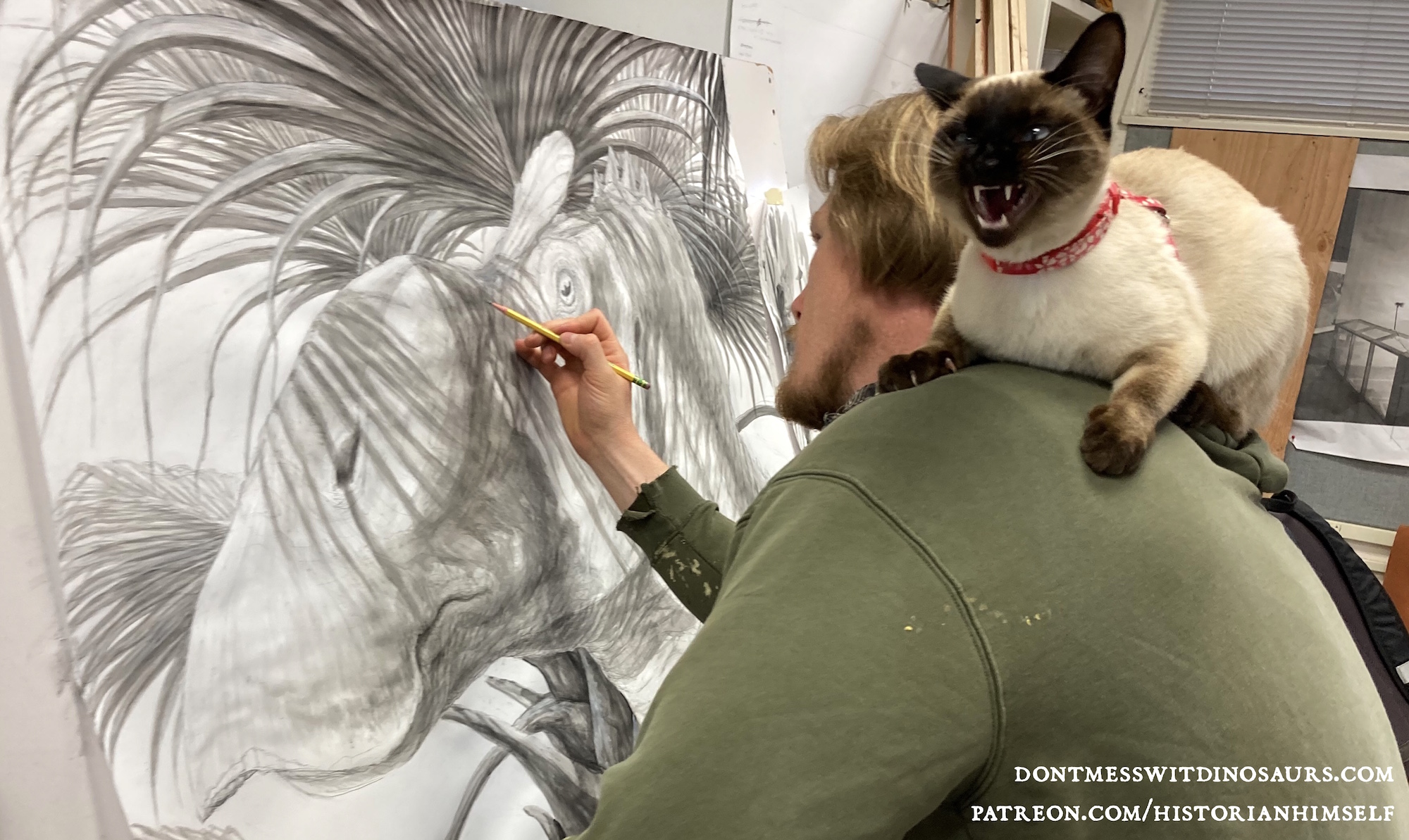
Finally got around to putting this paleoartprocess video together.
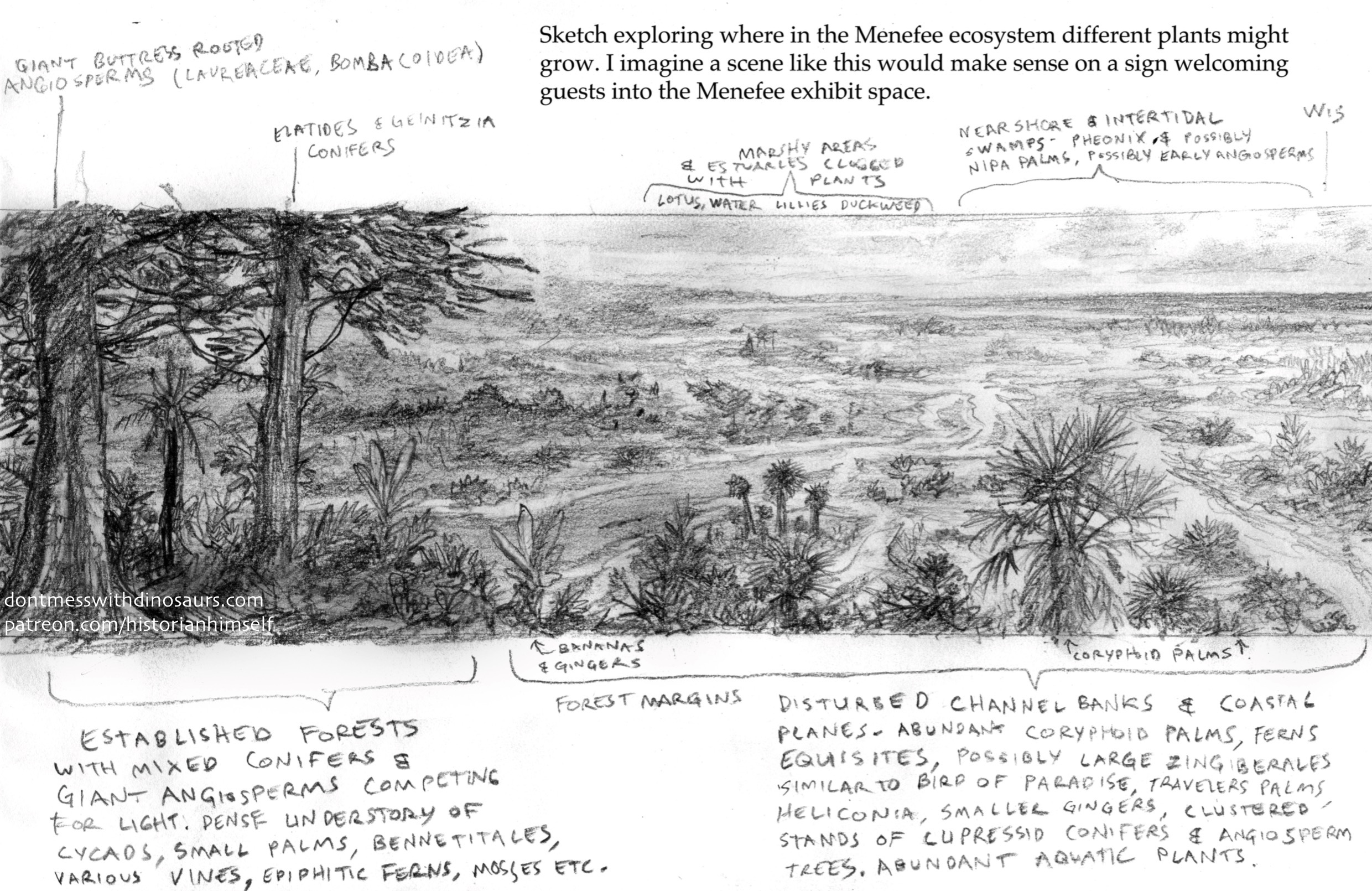
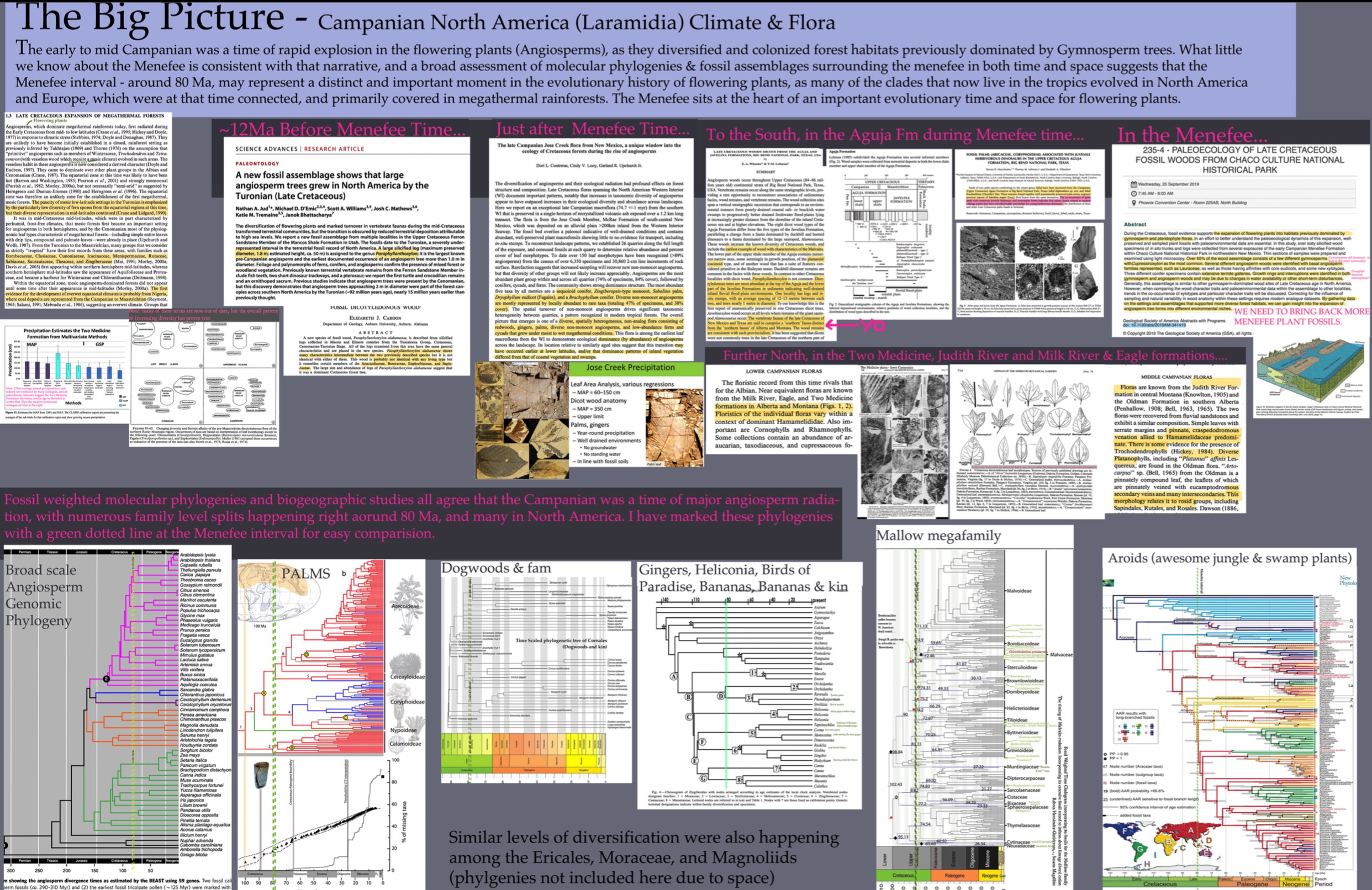
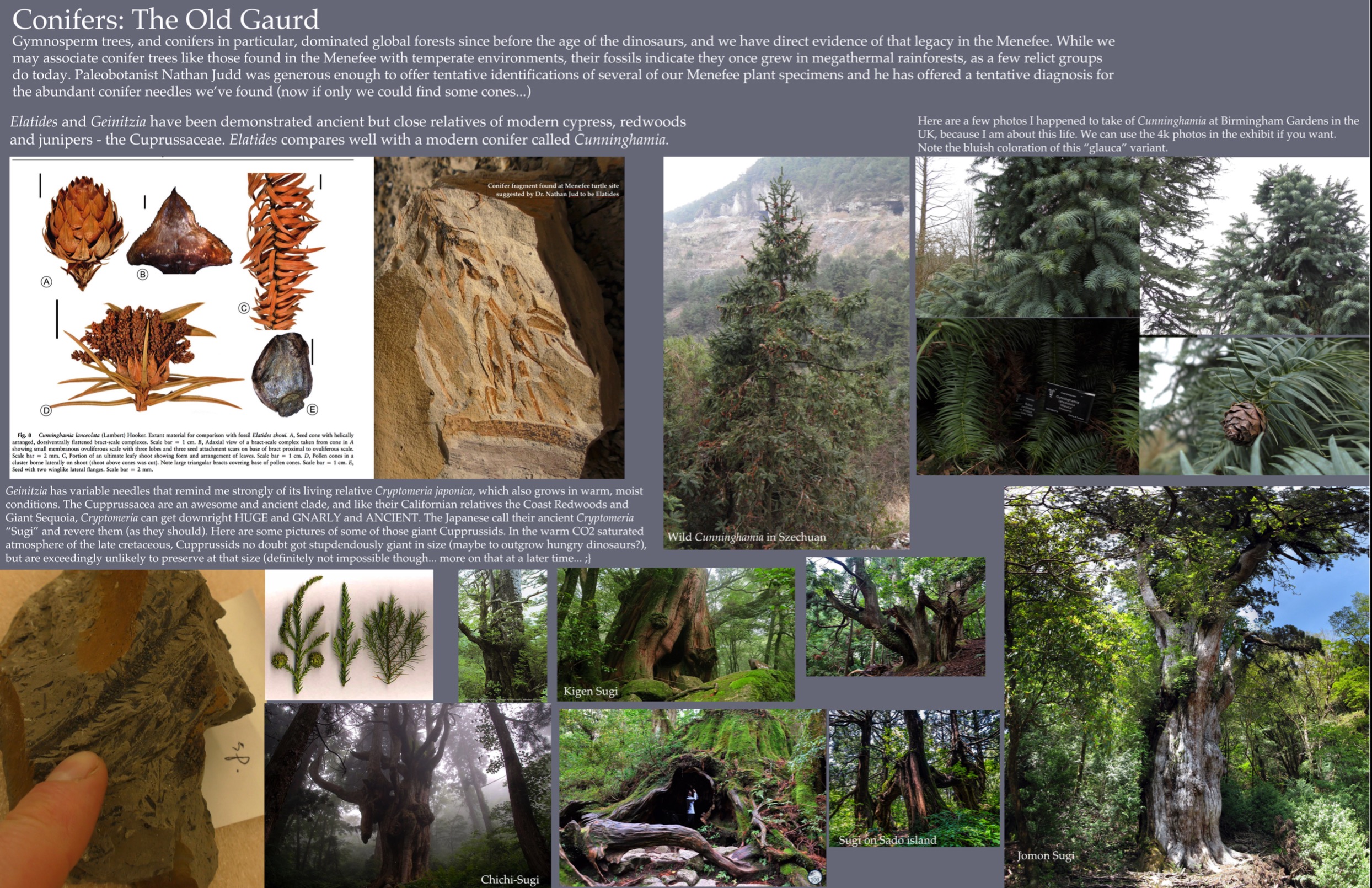
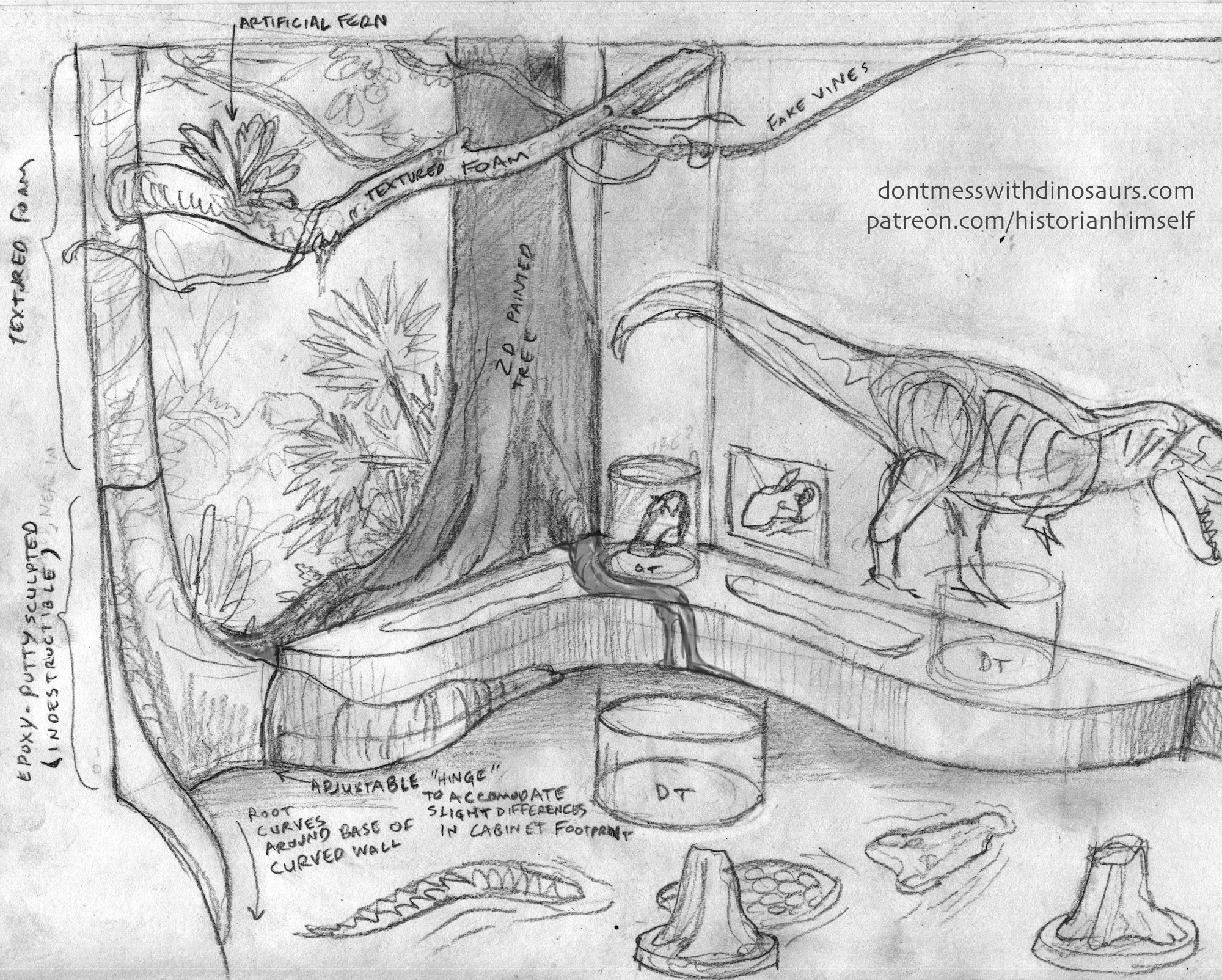
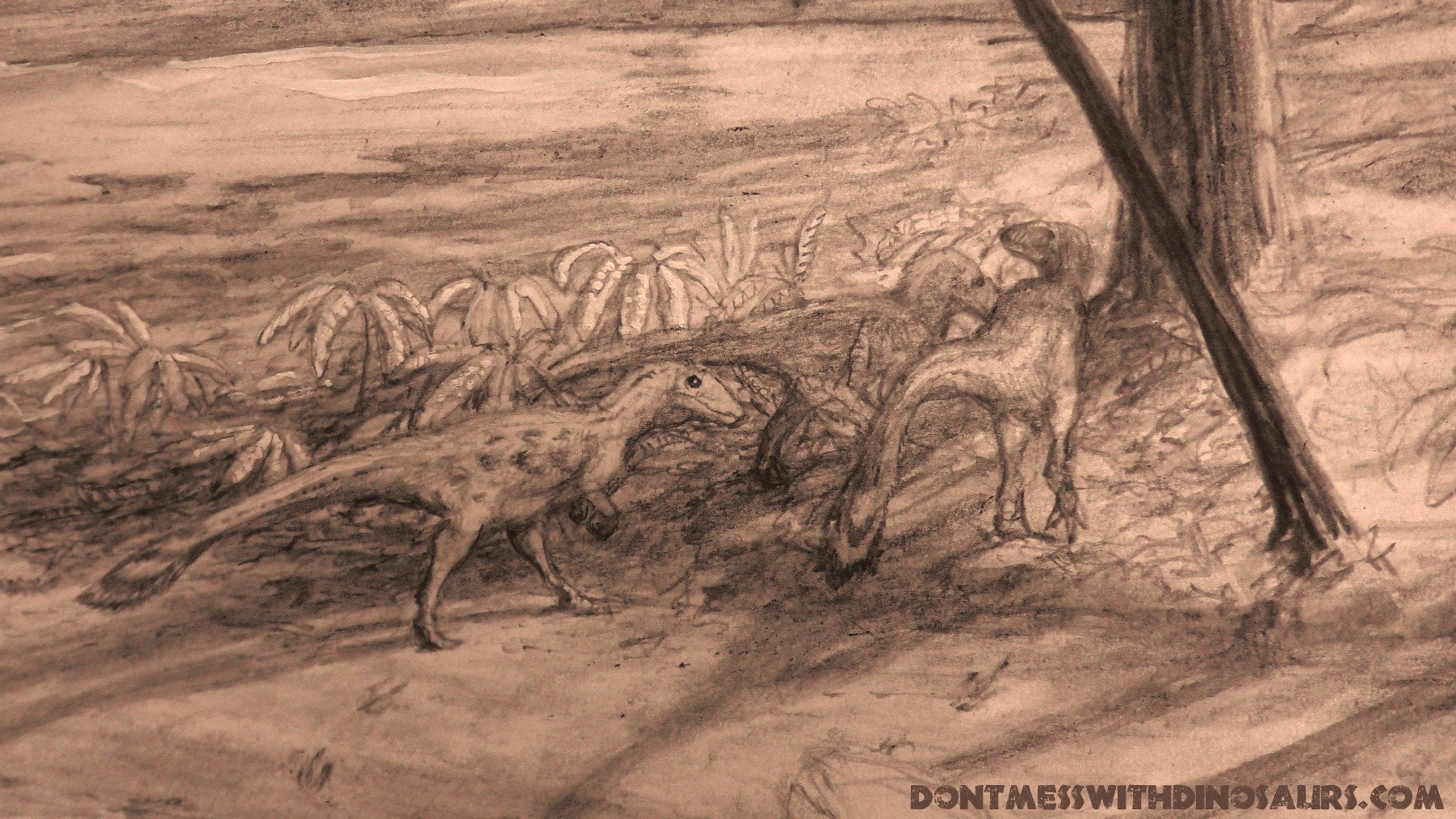
A lot of sketching and research went into this mural, and I’ve posted a BUNCH more process imagery on my patreon. Here are a few sketches and a few pages from a big literature review reference packet I put together.
At some point I think it would be cool to do some scicomm about the amazing paleoecology of the late Cretaceous and what the Cretaceous fossil record tells us about the evolution of our modern tropical and subtropical ecosystems, including many of the clades of flowering plants we humans now rely on for food, timber, rubber, and medicine..
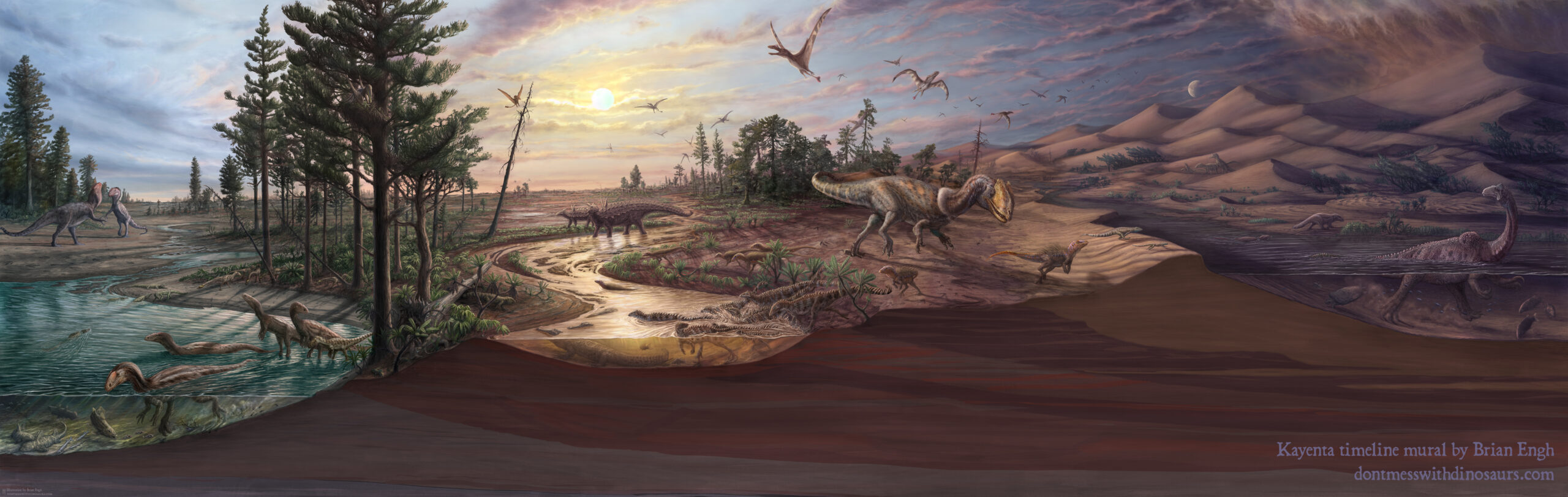
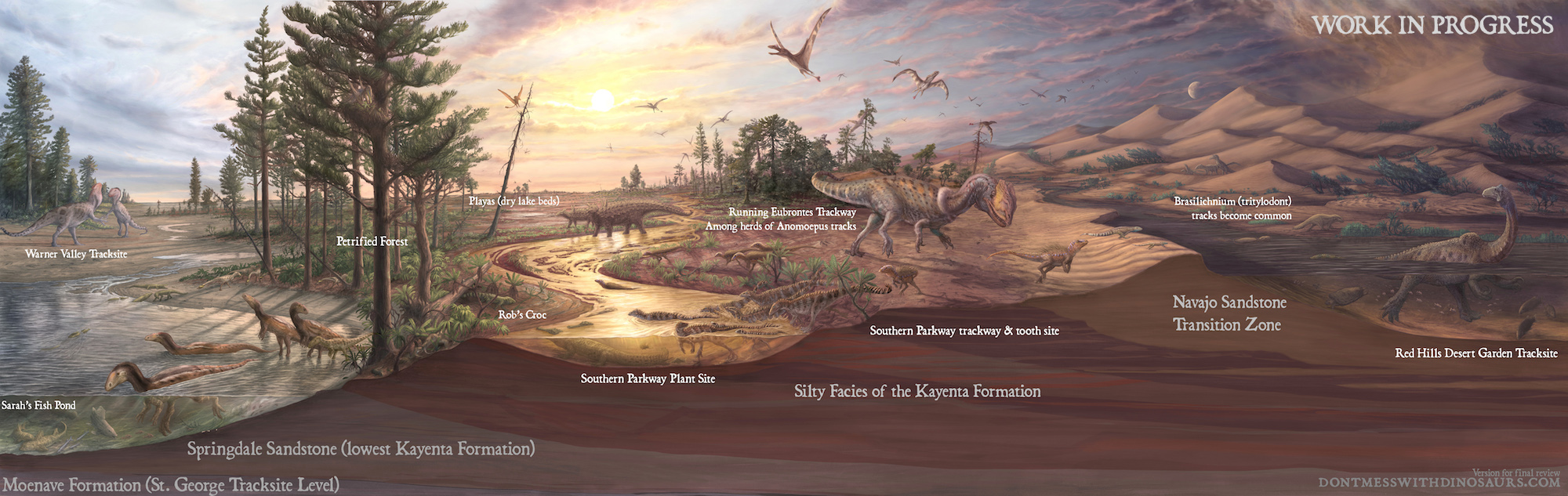
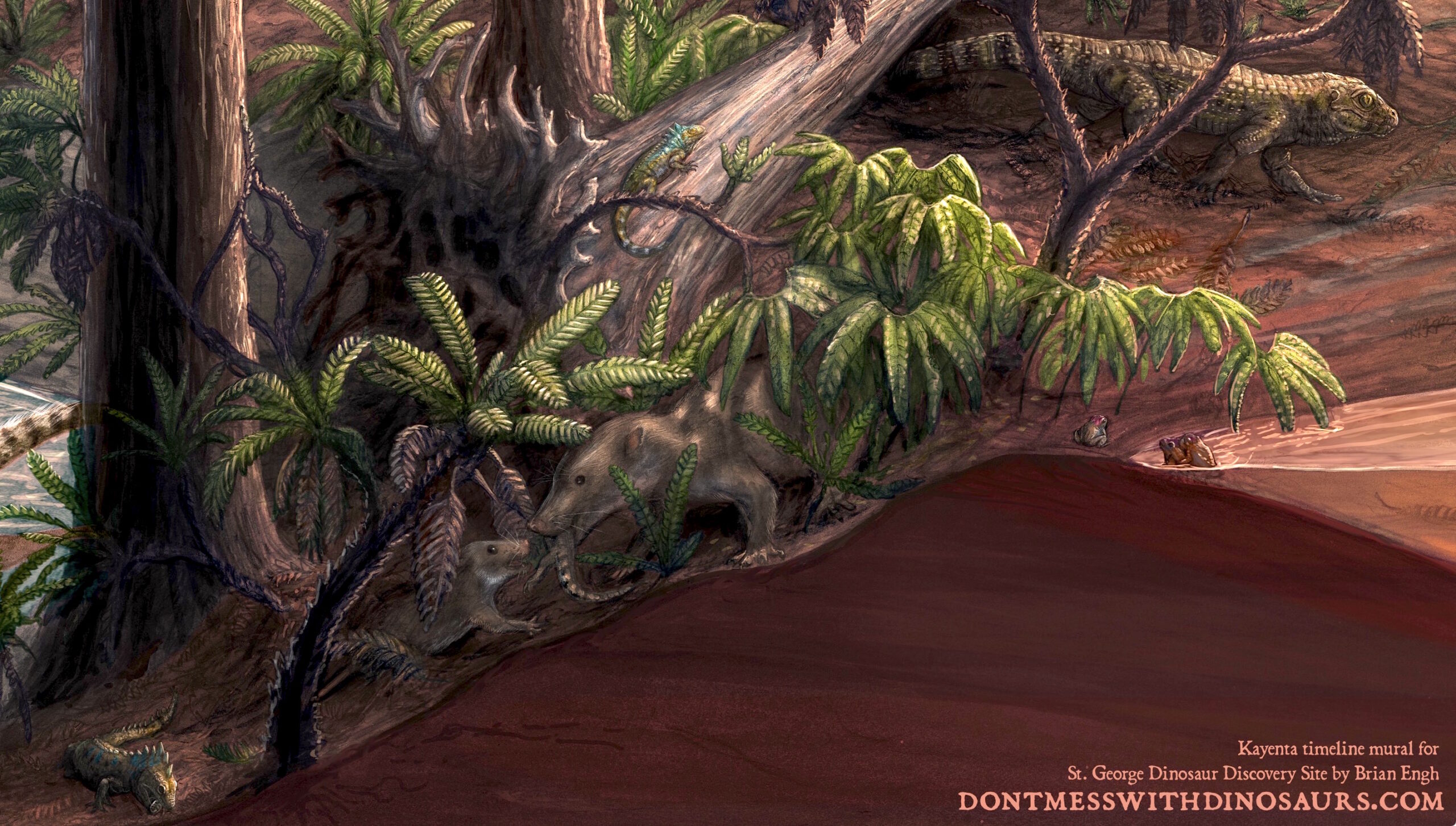
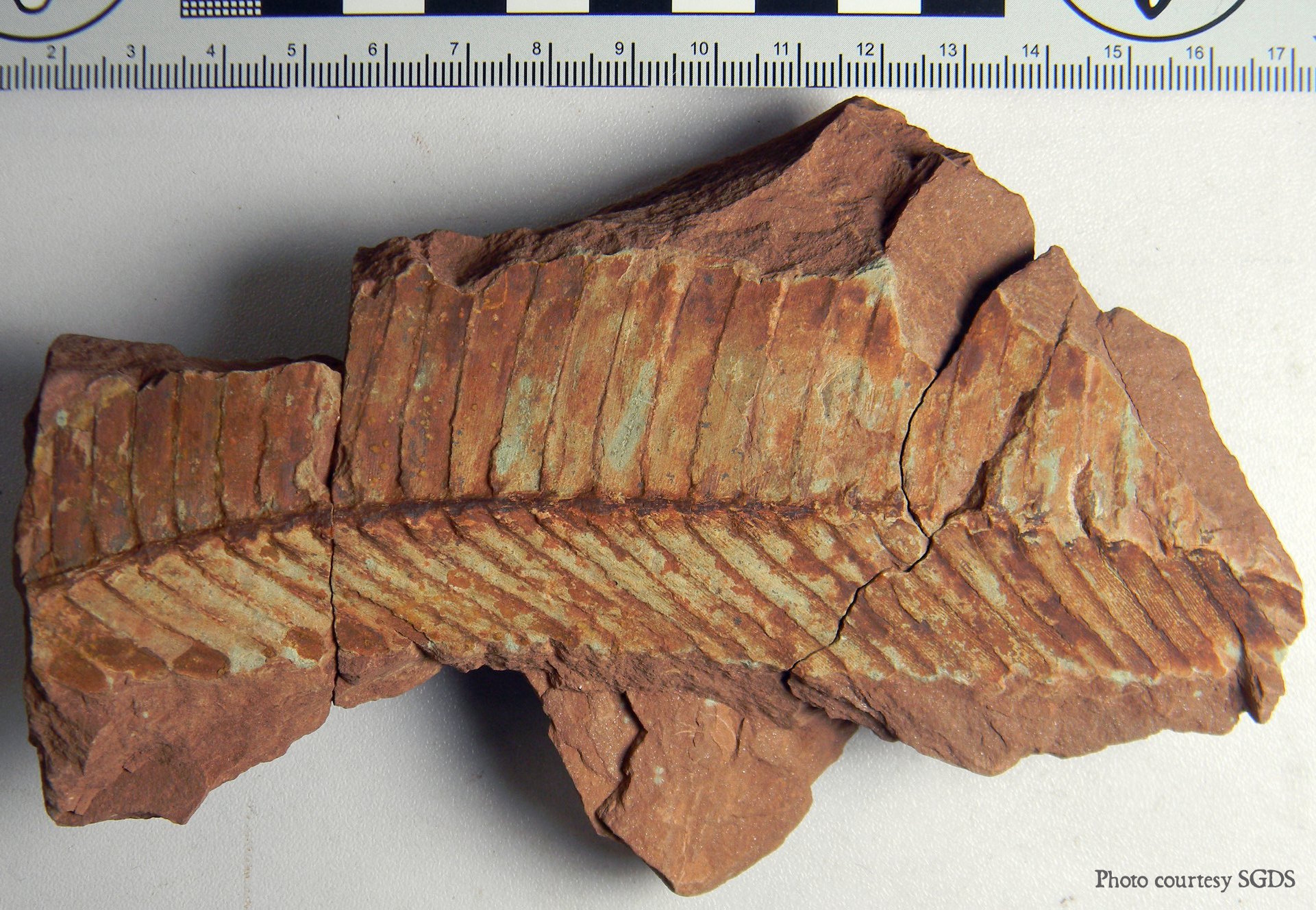
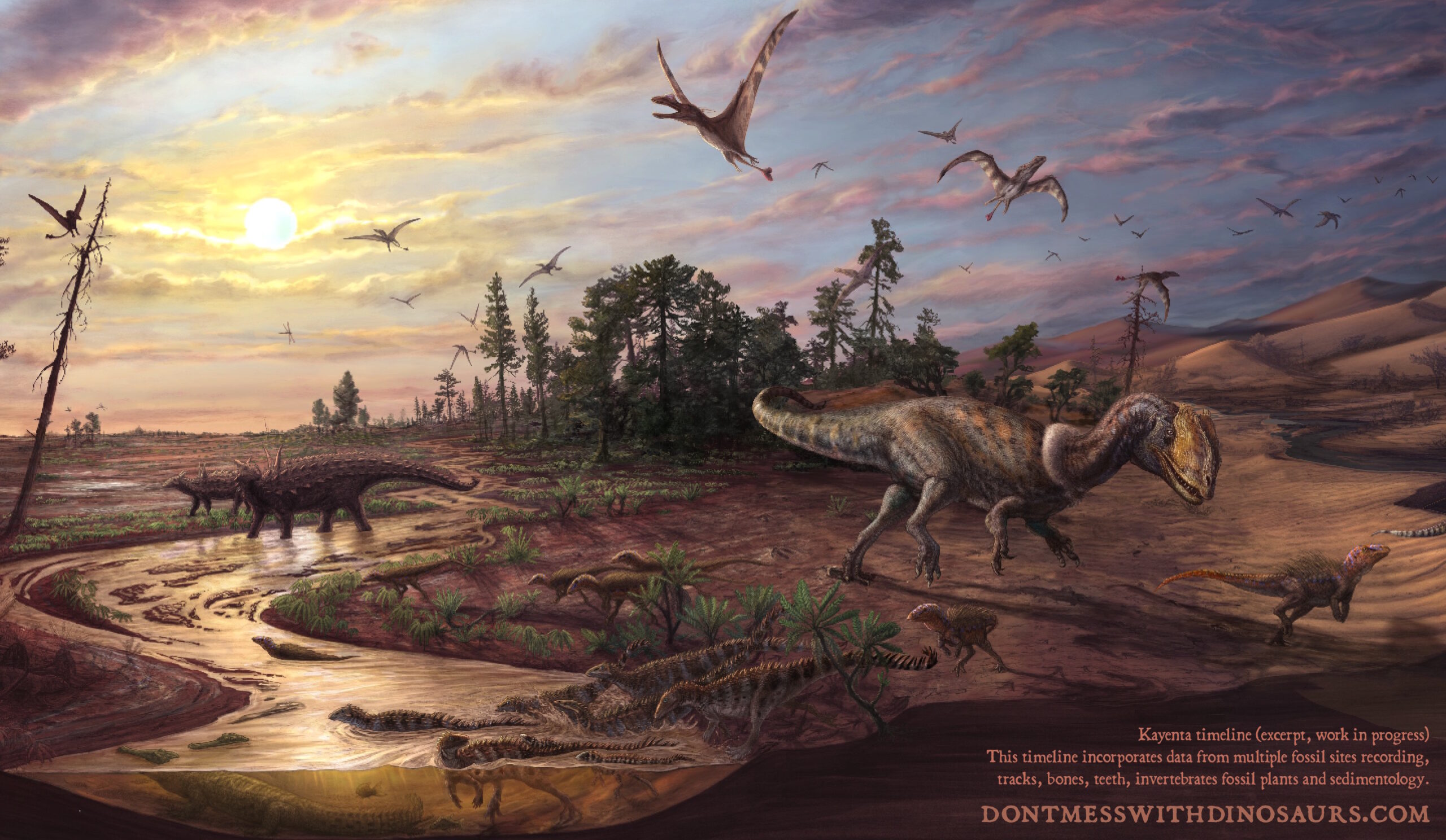
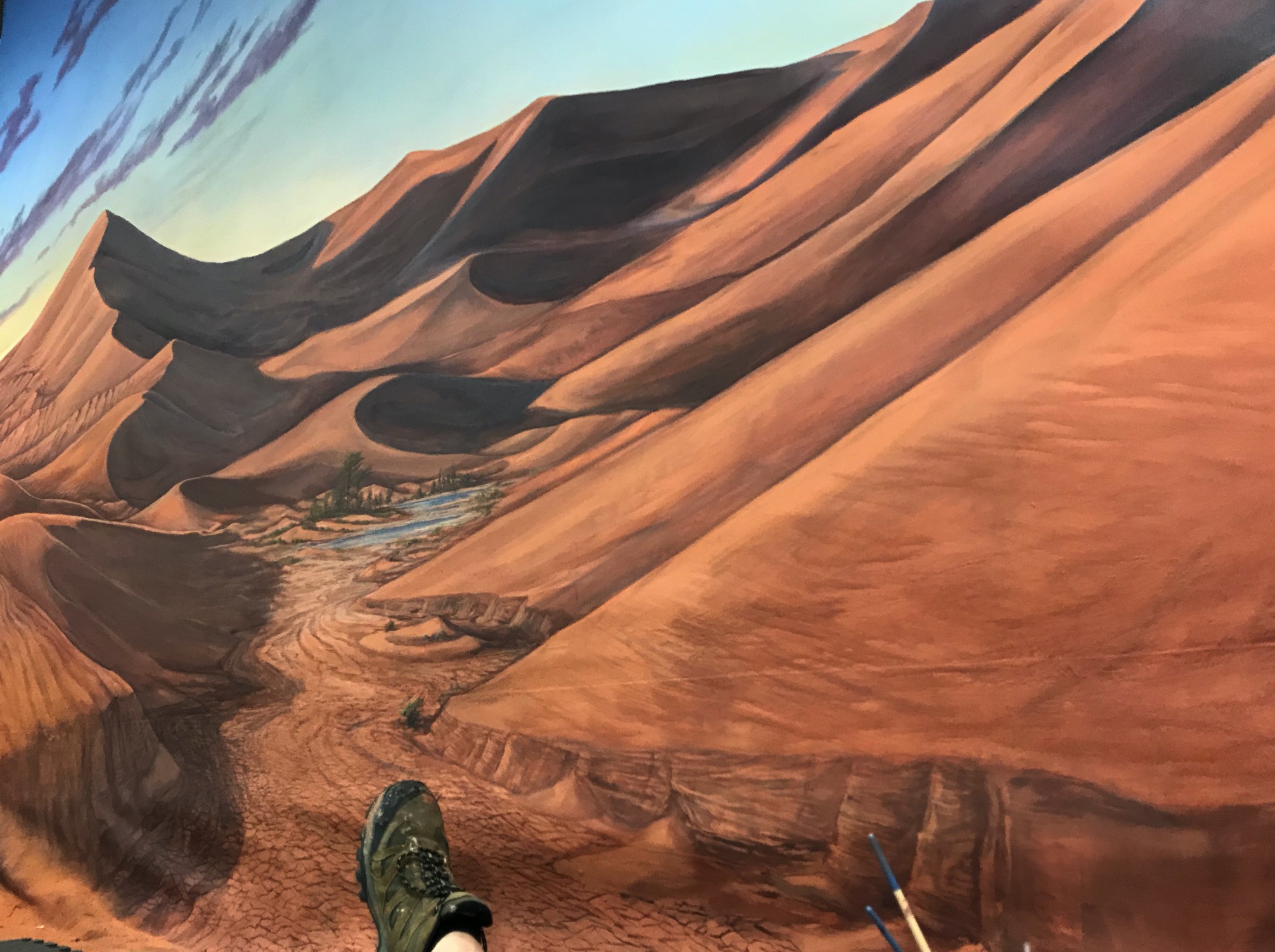
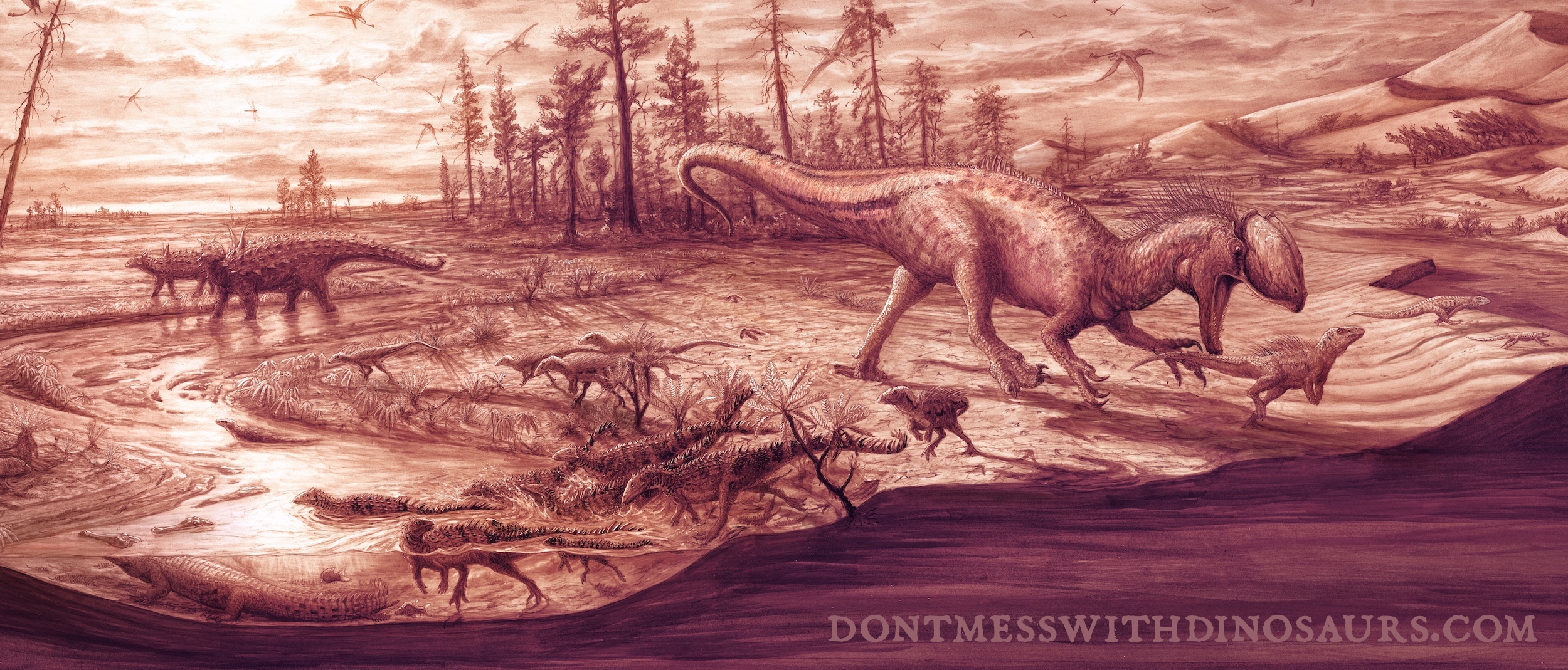
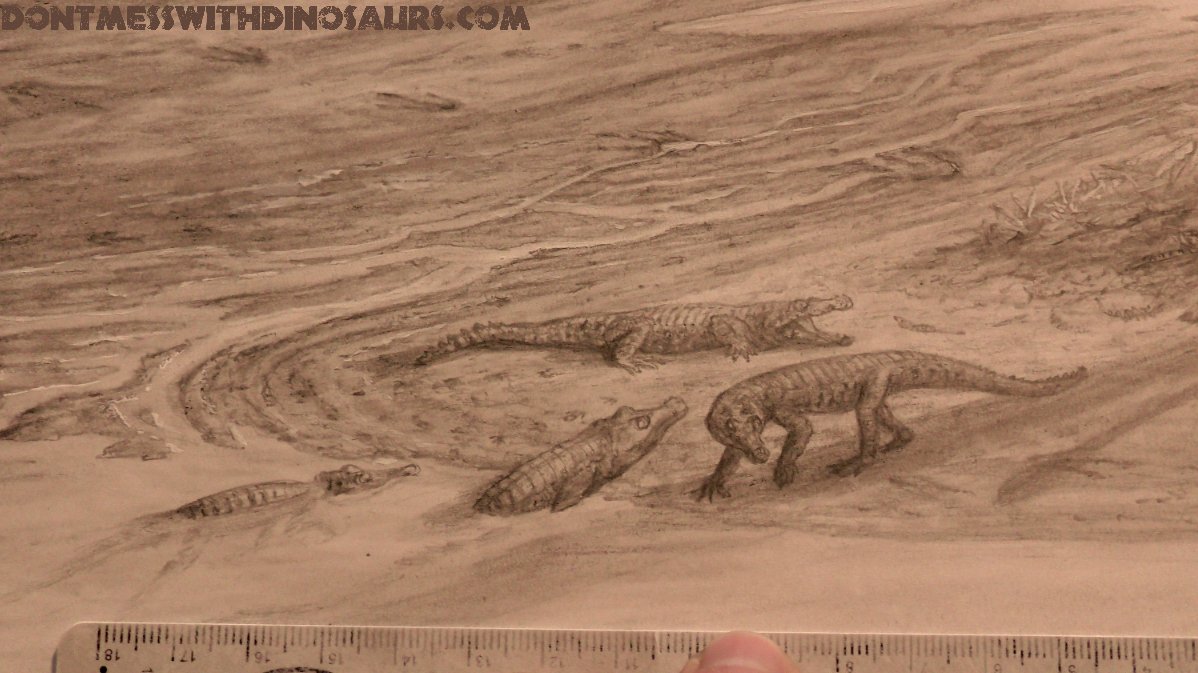
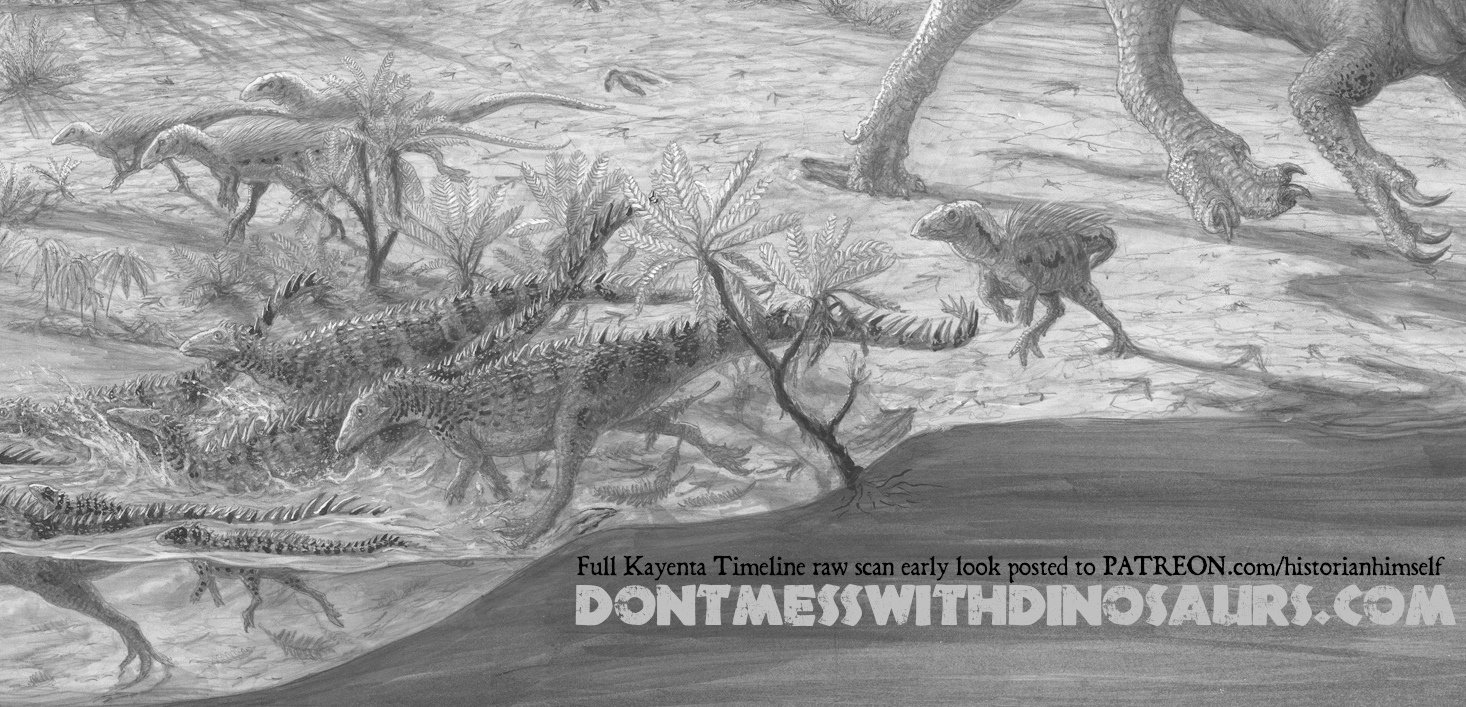
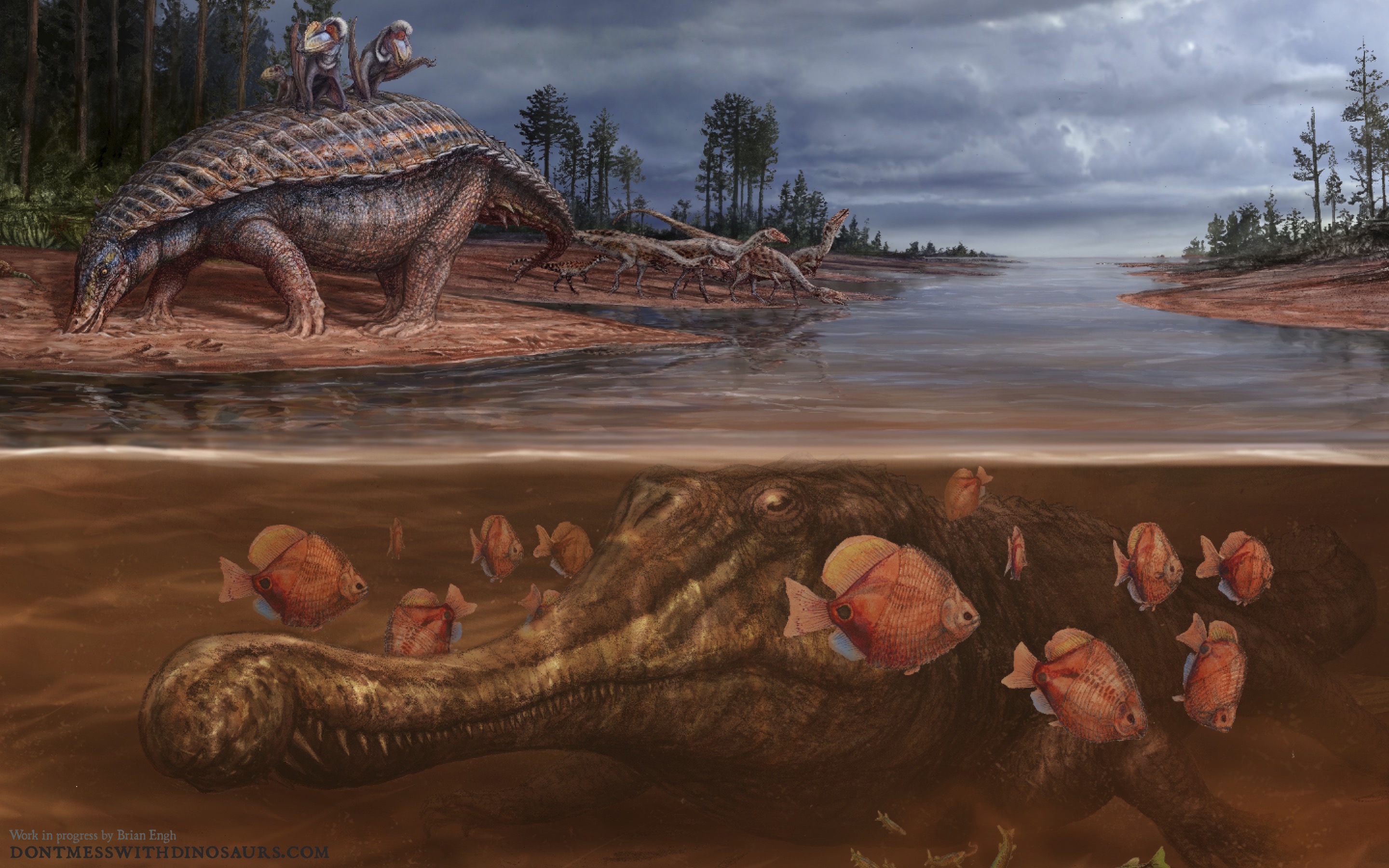
After 4.5 years of research, drawing and digitally painting I am finally finished with illustrating this massively complex paleoenvironmental reconstruction and the digital mural will soon be printed and installed by the museum as part of their Dawn of the Dinosaurs exhibit. This mural represents a changing early Jurassic landscape at the beginning of the age of dinosaurs, and it is based on a number of new fossil sites discovered in and around St. George Utah, as well as fossils from nearby Northern Arizona.
The above pictures are (relatively) tiny, low res version of this mural which is detailed enough to be printed 5m long. It’ll have to do for now because the larger versions take forever to load and crash browsers.
I don’t want to give TOO much away before it’s all printed up and installed at the museum (which you all should visit, even if you have to migrate on foot across thousands of miles like Jurassic dinosaurs did), so I held a top secret HD live stream for the people who helped fund the completion of this project through my patreon and the gofundme campaign held by the St. George Dinosaur Discovery Site.
If you want to see the full livestream you’ll need to support my art on patreon, or make a donation to the museum.
In this clip, a supporter of the project asks if we can know for certain if any of these environments actually existed at the same time as one another. The short answer is basically yes, some fossil sites and stratigraphic interbedding strongly suggest that some of these environments transitioned into each other in time and space. The long answer is a 6 minute rant with a bunch of specific details about the Kayenta formation and the challenges and uncertainties of interpreting paleoecologies, which you can see here:
I’m sure I could have been more concise, but I often have a hard time expressing my love for the infinite detail of reality in just a few words.
If you’ve been following along, this project has been in the works for a LONG TIME, in part because it is the single most detailed illustration I have ever done by several orders of magnitude, and in part because budgetary challenges, global pandemics, and other projects have interrupted the illustration process on multiple occasions through the 4.5 years this mural was in the works.
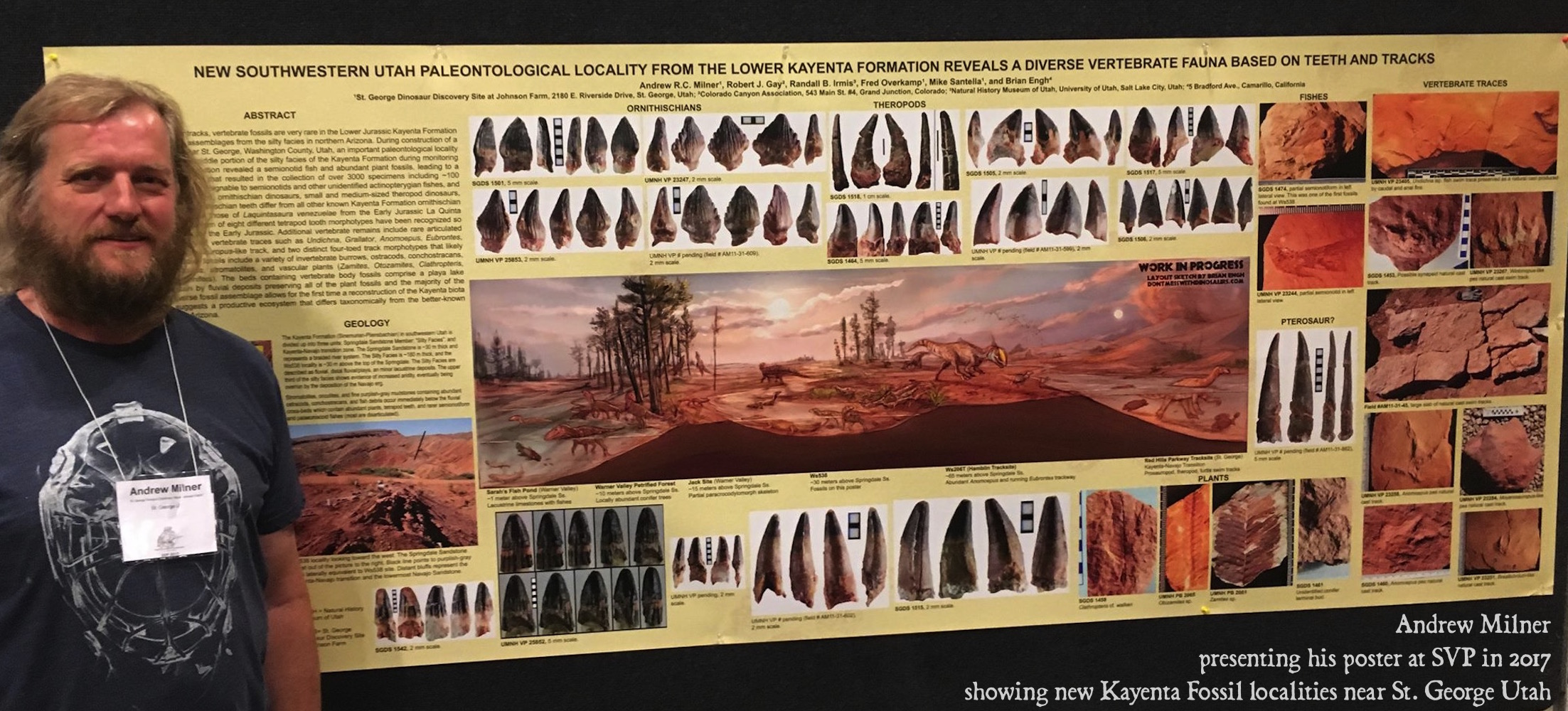
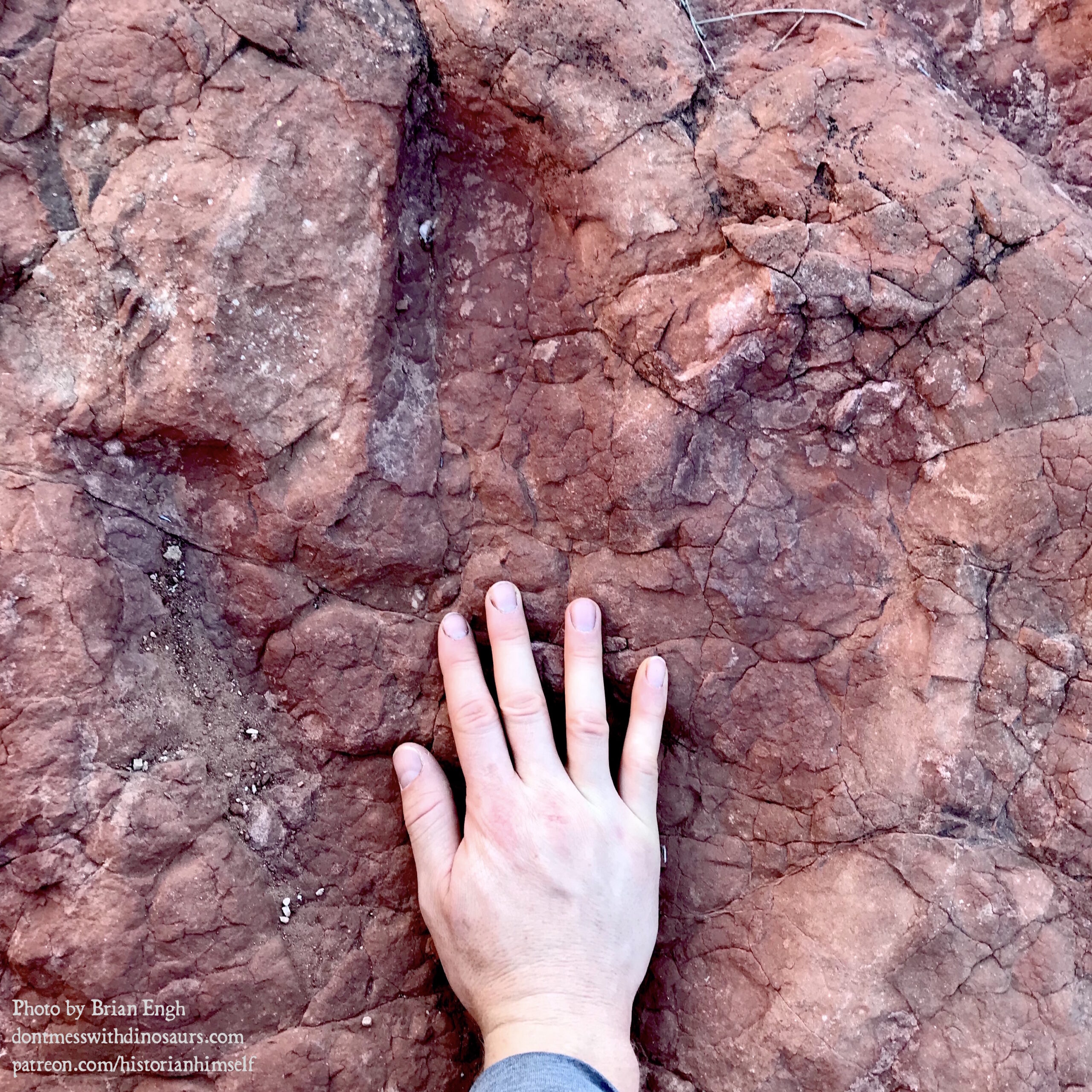
The seeds of this project were sewn way back when I was working on the Mastodon mural for Western Science Center. I made a super quick trip out to St. George Utah to meet with SGDS paleontologist Andrew Milner to see the fossil sites he wanted to incorporate into the mural. We found bone and footprints and I was shown one of the most gorgeous stratigraphic sections I have ever seen. The landscape around St. George is absolutely stunning. I (shoddily) recorded Andrew’s field interp in this video:
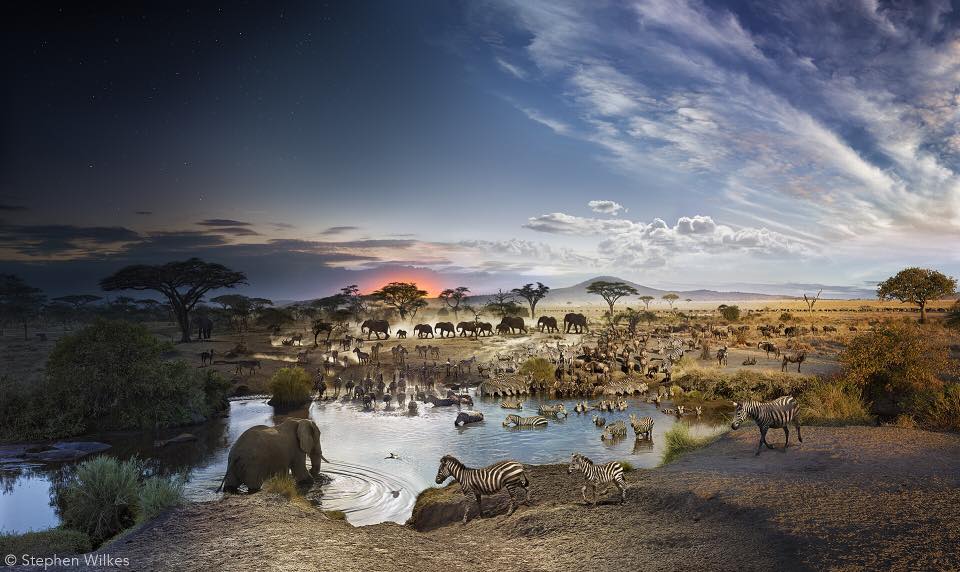
It became clear from that field visit that what we were embarking on was far more ambitious than I realized. MULTIPLE site-specific paleoenvironmental reconstructions transitioning into one another as the landscape and climate shifted through time. I had seen this time-composite image of all the animals that visit a waterhole in the Serengeti by Stephen Wilkes and it set my mind on fire with the possibility of creating paleoart that attempts to show something similar but over far vaster time scales.
I was SO TURNST UP about this idea. Unfortunately the SGDS museum only had the budget for one small paleoecological scene. So, I did something that artists shouldn’t do, I took the project on anyway.
From gathering fossil reference & insights to learning and figuring out how to display the stratigraphy, the learning curve was grueling on several levels. While the early Jurassic is known for having a sparse fossil record, the actual diversity of animals suggested by even the fragmentary record is pretty astonishing. Considering the abundance of tracks and skeletal fragments my finished mural is honestly way too sparsely populated.
It should probably look more like the above Serengetti scenes, but these kinds of layouts are complicated, and even just rendering a single animal represents many hours of work…and this mural has over a hundred animals… and then there’s the plants – some of which are gorgeously preserved.
At some point along the way the museum’s short-term priorities shifted, so we did a hard pivot and focused on the museum intro video, which was another ambitious multi-year project that involved the creation of several creature puppets to help bring the early Jurassic to life in a live-action location. That project, and all of the important early theropod research that informed the Kayenta timeline ended up all feeding into this video:
It was not easy, but with hard work, perseverance, and the help of some great artist collaborators as well as the support of patrons and gofundme supporters we got it all done.
My huge thanks go out to St. George Dinosaur Discovery site paleontologist Andrew Milner for everything he did to make this project happen and to show me the amazing sites he and his volunteers have found. I also owe a huge debt to gratitude to SGDS Director Diana Call, paleontologist Jerry Harris, and the whole staff at SGDS. It should also not be understated how crucial the suppor of my patreon supporters and all of the people who supported the completion of this mural on gofundme were to getting this done. Yall saved my life on so many occasions. Much love, respect, and gratitude.
At the start of years past I’ve written review posts showing the art I made in the previous year, but when I sat down to do that this year something else started to take shape. If anything, 2020 and especially 2021 for me were distinctly characterized by working with teams of artists to accomplish paleoart projects far larger than I could have possibly completed by myself.
I’m proud to say that the projects I executed were funded well enough that everyone who worked with me was paid a decent living wage, and I kept my cohort busy for many hundreds of hours through a difficult year when a lot of people needed some extra cash to carry them through. I wish I could have hired and paid out even more, but I’m really happy that paleoart projects I landed helped keep artists other than myself busy with paid work. I also realized that with the completion of this fiscal year, paleoart has been my primary income for more than 5 years, and I have seen financial growth every one of those years.
This is not how pursuing a career in paleoart was supposed to go though.
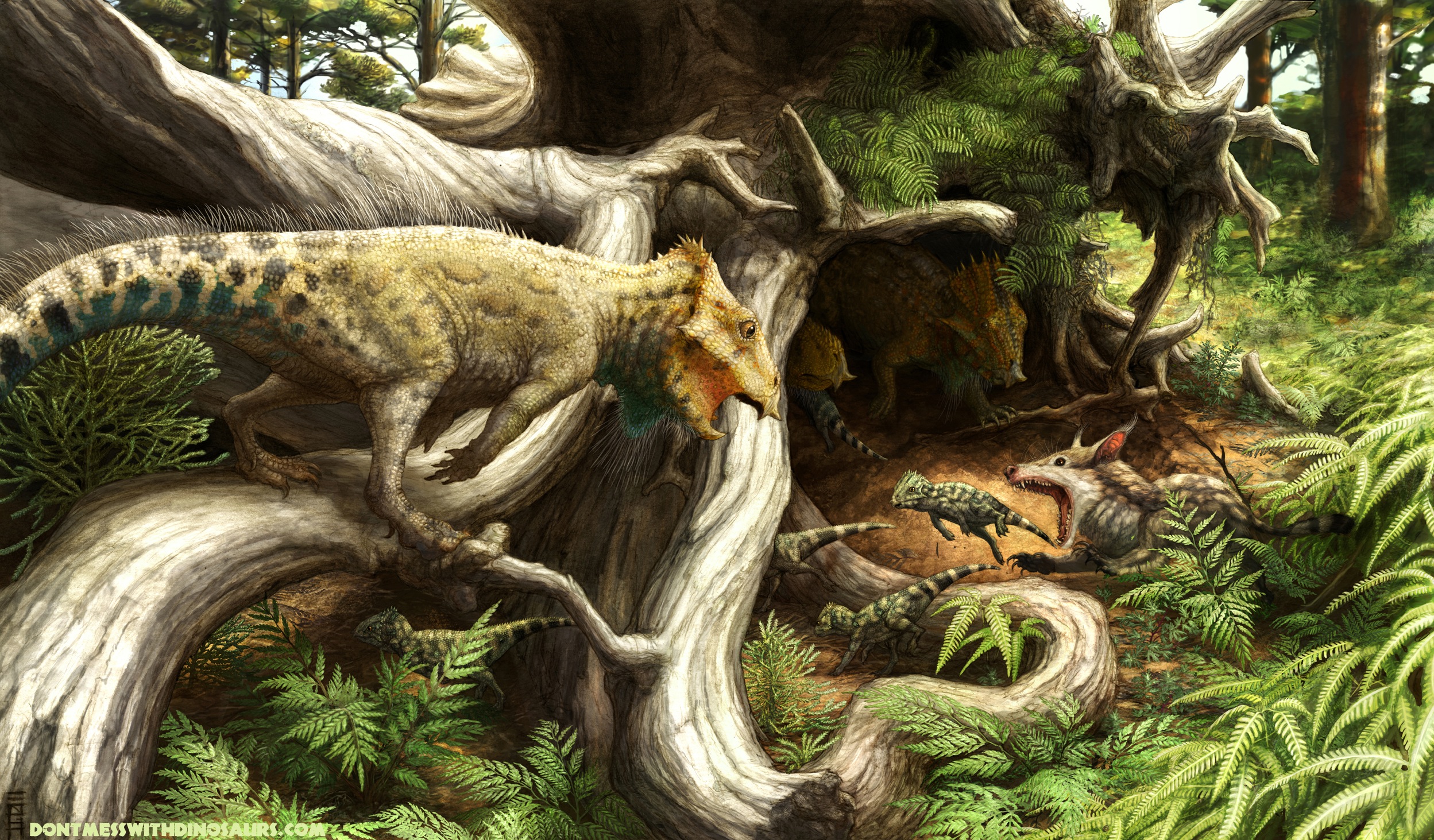
The Aquilops americanus artwork that launched my career in paleoart in 2014.
But successful artists for whom paleoart made up a significant or primary portion of their paid work were out there, they just weren’t the most vocal people on social media. James Gurney had been sharing his insights and process for years. Julius Csotonyi had risen to a preeminent level in the art form and his work seemed ubiquitious in exhibits, books and magazines. And sculptors such as Gary Staab always seemed busy with huge ambitious projects. If I could elevate my skills to where I could produce art of a similar quality, could I too eke out a living? Or would I be stealing commissions from these great artists I looked up to? Naturally, I wasn’t sure, but I’ve always been passionate about nature, and I find the art & science of prehistoric life fascinating to learn about and fun to create. Also, back in 2014 I was living on an extremely lean artist’s budget and wasn’t really happy with the work I was doing in the entertainment industry, but I figured I could always fall back on entertainment industry gigs if decent paying paleoart commissions couldn’t be found. What did I have to lose?
So I went all in on trying to get more commissions in paleoart.
It wasn’t easy, but by 2016 I was working on paleoart full time, and it has been my main focus & source of income ever since. At the time of writing it’s looking like I am already booked for most or all of 2022. I am also happy to report that more of my paleoart jobs are coming in the form of video-making projects, which is rewarding because I have always considered myself a storyteller and filmmaker first, and an illustrator second.
But how did this happen? How am I still here, 8 years on, doing paleoart full time for 6 of those years, and not impoverished? I ask myself this with some regularity, and I get asked this _all the time_ on my youtube and other social media channels. So, how does one become a professional paleoartist?
I want to see talented artists enrich and elevate this developing art form, which I feel is on the brink of emerging into a period of broader awareness and interest among the general public. So instead of recapping last years projects (again) I started writing up some of the guiding practices that I think have helped me to develop & sustain a growing professional business as a paleo artist.
Before I go any further though I have to acknowledge that my clients who have gone to bat for me to find funding and create opportunities to keep me busy are a HUGE part of the equation. It cannot be overstated that most of my clients didn’t just shoot a few emails and hire an artist, they made a case to those who control funds at their various institutions or granting agencies to hire a professional paleoartist. In many cases I was fortunate that they made the case for my work specifically. The efforts my clients together made it possible for me to develop the skills that continue to pay the bills, and several of my clients hired me multiple times over the years, which has lead to amazing experiences in the field and the development of life-changing friendships. My huge thanks goes out to all of my collaborators & scientific advisors. I also need to give a shoutout to my patreon supporters who have helped keep the budget balanced when the unexpected challenges of complex art projects cause things to take longer than expected. I also am forever indebted to my hard working and supportive family, who have welcomed me home when my life was falling apart in 2015, or whenever I just needed a place to crash between jobs & living situations. I recognize that having that safety net is a huge privilege and my art has benefited from it greatly.
That being said, here are some recommendations to paleoartists based on things I have been doing that have helped keep my art business busy and growing. Sorry if the order of this list is a little weird. I put these in order of imporance first, then reshuffled a few of them further down so that it flowed from one idea to the other better. But these first 5 are the most important by far.
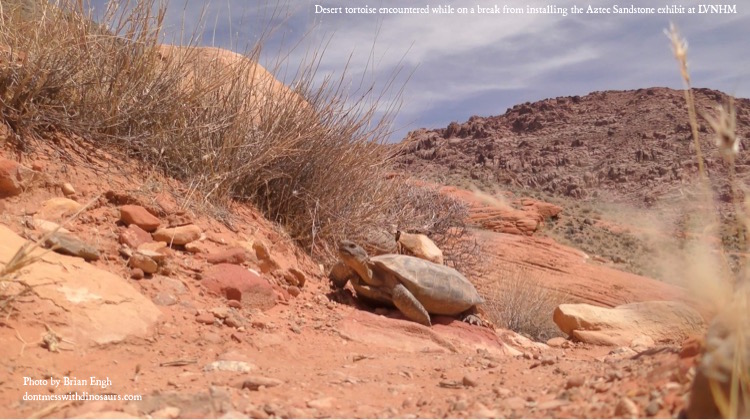
Go outside
Every decent composition or novel idea I’ve ever had for a piece of paleoart has come from spending time in nature. If you want to visualize ancient ecologies you need to be a naturalist in our living ecologies. I believe that paleoart at its core should be an excercise in attempting to learn from, appreciate, and spread appreciation & respect for nature. A lot of paleontologists, collections managers, natural history magazine authors, and exhibit designers also spend a lot of time outside, hiking, photographing, hunting for fossils etc., which means that many of them have also developed innate instincts for what nature looks like. This makes them discerning clients. Successful professional quality paleoart needs to appeal to the most discerning viewers. Honor nature with your artistic efforts, and those who honor nature with their own efforts will recognize what you’re trying to do.
Also, in my experience, participating in field work in both field biology and paleontology has been a huge source of inspiration for me, but I recognize that this is impossible for some people in some financial or physical/geographic situations. That said, if you are interested in participating in field work, get in touch with your local museum or nearby universities about volunteer opportunities. If you cultivate relationships and/or demonstrate your value as a person who puts in work and is willing to learn new skills, you may find yourself with opportunities to help out in the field that cost you no more than your time and energy.
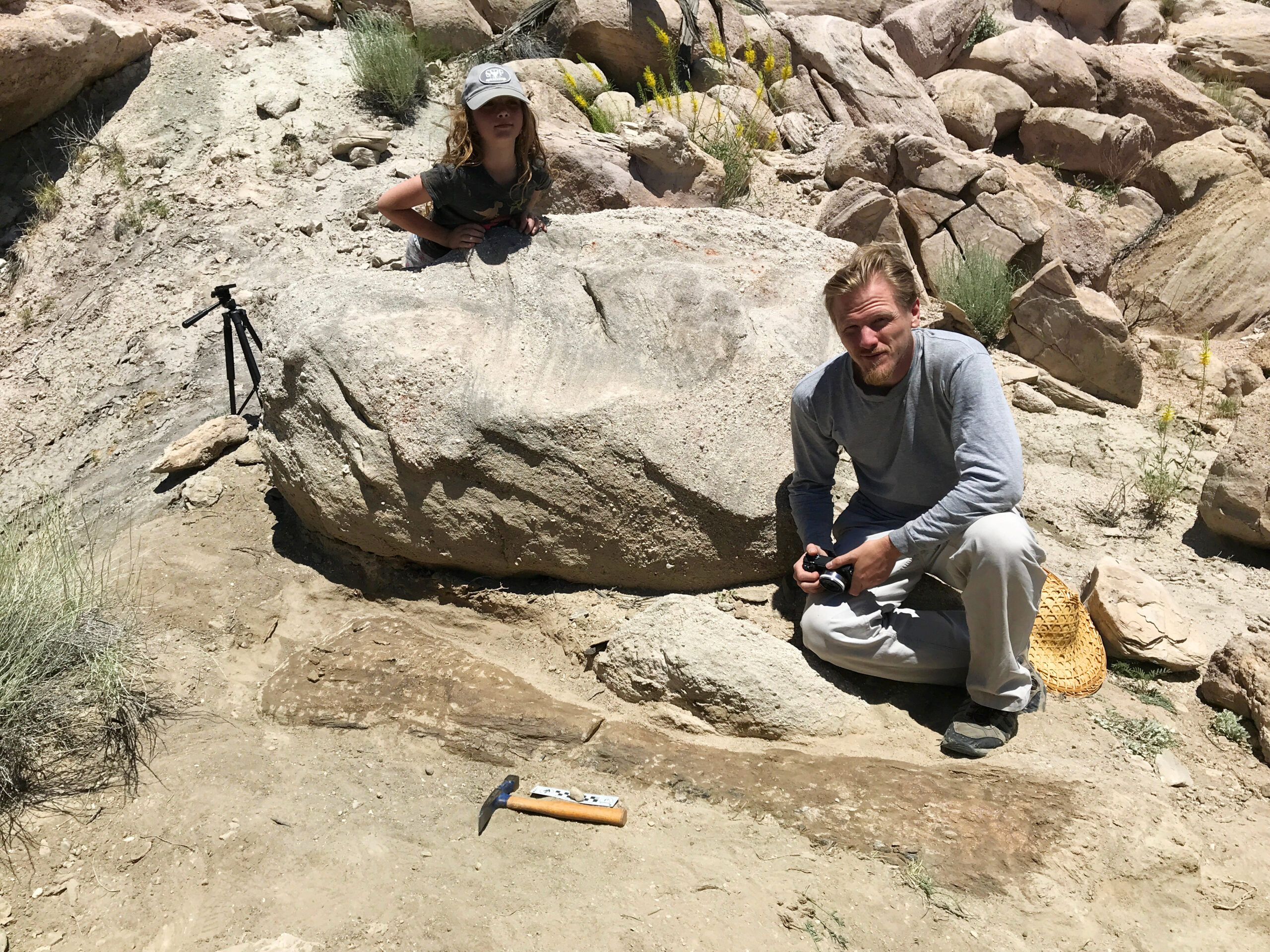
Brachiosaurus humerus found with Mathew Wedel & Thuat Tran. Photo by Mathew Wedel.
Practice your craft and try to improve and innovate in your art every day
I cannot stress enough how much art fundamentals matter. If you want to be a professional artist it’s a really good idea to practice constantly so that you get at least as good as other pro artists in the field you want to work in. This does not mean copy them though. This means develop your style and your perspective to a level of quality and uniqueness that it is undeniably yours, and undeniably beautiful. If your art is unique, eye-catching, beautiful to look at, detailed, has great composition, and clearly took significant skill to execute people will be more likely to hire you and more likely to pay you what you need to live. It’ll also just be easier to enter a conversation with an expert if you work clearly reflects a dedication to your art and a willingness to do hard work that working professional scientists can see and relate to. My first paleoart commissions were from people who basically said “hey cool arts” which opened the door to me asking them questions, which lead to conversations, which (eventually) lead to commissions.
Ask (politely) to be paid what you’re worth, and explain your financial needs to potential clients
Figure out your daily/monthly/yearly expenses and approximate work time for a piece of a given size/level of detail and charge what you need to in order to cover your expenses + whatever extra you can get to hold you over until the next commission. To put it bluntly, a client that cannot cover your daily expenses is not worth a day of your time. They need to do the groundwork to come up with the funding to hire a professional artist. That said, do not be rude to them, even if they reveal they have no idea what it takes to stay afloat as a professional artist.
As has been bemoaned by many illustrators and paleoartists, artists who subsidize their art by other means of income (or family support) can sometimes undercut professional artists who survive solely on their art. Perplexingly enough, the people most vocal about this issue are sometimes the same people perpetuating the problem. This seems especially true in paleoart, where even skilled artists will post “commission menus” advertising breathtakingly low rates for complicated illustrations. Why you would show how low you’re willing to go from the outset of a business transaction is completely beyond me.
In my experience the concern about professional artists being price undercut by amateurs is in fact over-inflated. Not that it doesn’t happen, but I do not think it’s what’s holding artists back. From what I’ve experienced first hand, the famine mentality in paleoart is due primarily to the fact that paleoartists are simply not asking for enough money to actually sustain an art business. All too often artists are so flattered that a client (especially a renowned paleontologist or big fancy museum) wants to pay them anything to work in an artform they’re passionate about, they agree to doing it for far too little money. But that big fancy museum or paleontologist probably has the money to pay you what you’re worth.
I think it’s extremely important for artists to understand that if you have developed a style or perspective that is unique to who you are as an artist and a client approaches you, they’re approaching you because they want to hire you. Let me say that again for the kids in the back whose teachers are constantly telling to stop drawing during boring ass classes like English literature (where kids are taught the totally un-marketable skill of analyzing the the work of successful creatives): young artists, if you are being true to yourself and making high quality art that is in your style and from your perspective, clients may want to hire you.
If a client wants to hire you, that means when they say “We have a budget of $500 and would like to commission one of your full color highly detailed illustrations” it is completely reasonable and within your power for you to reply “I would absolutely love to do this commission because I am really interested in how _____mastodons did ______ to ____’s ___holes, but given how much detail and research I put into my full environment scenes to ensure that every plant and animal is appropriate and well reconstructed, that piece will take me at least 3 weeks of full time work to complete. As such I can’t afford to do an illustration at full detail for less than $___(3 weeks of expenses + extra to survive + a little extra in case they try negotiate you down a bit).” If you are the artist they want you can and should ask for what you’re worth. Sometimes they wont have the money, that’s OK. If you’re going to be grossly underpaid your time is better spent focusing on developing your unique style that clients can’t get anywhere else.
Oh and look at that, a week or two later another client with a reasonable budget appears and now you’re free to start on their project immediately.
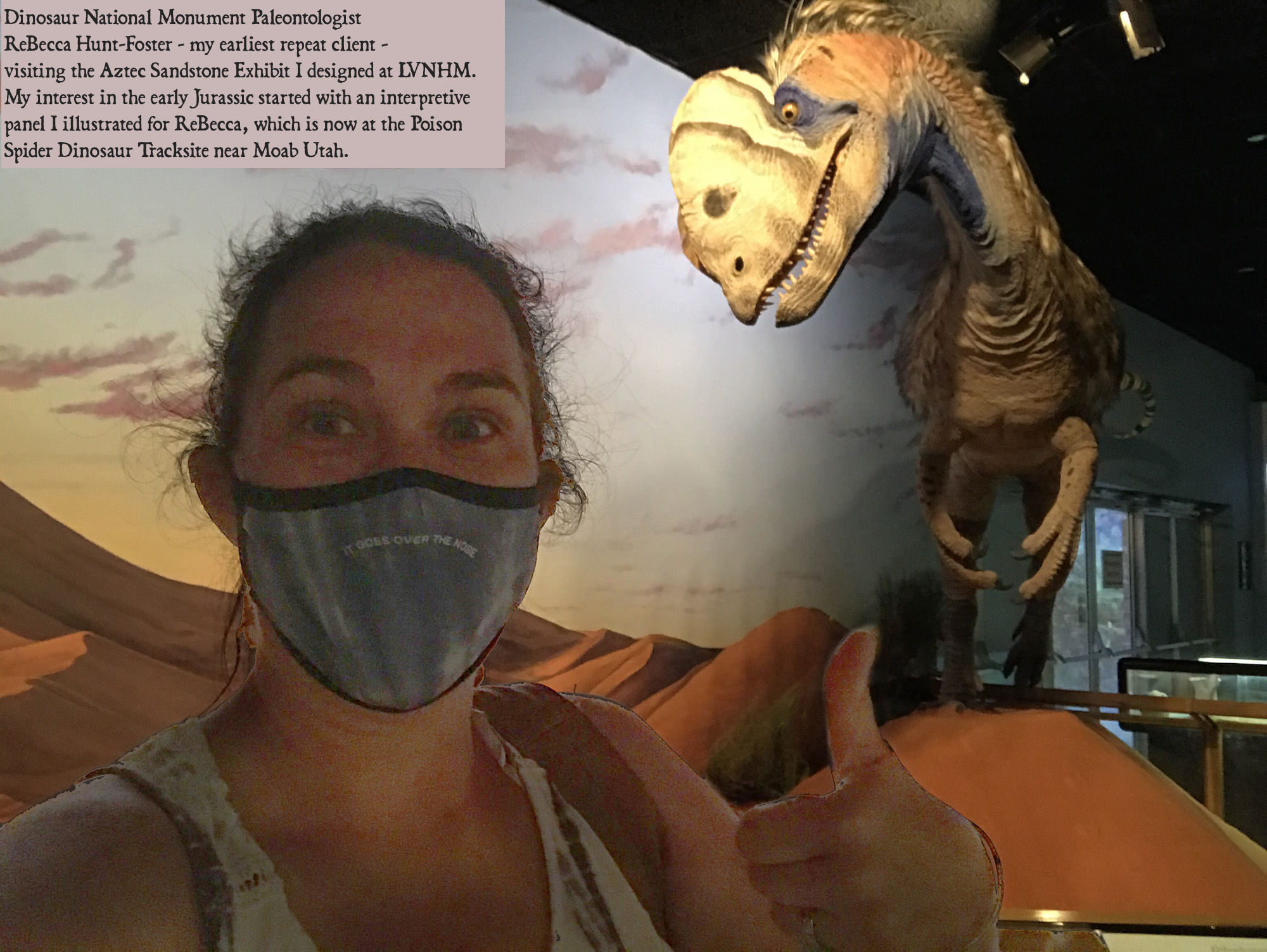
There’s also another cool thing that can happen when you ask for what you’re worth. On more than one occasion clients who approached me revisited their budgets after getting my bid in order to figure out how to find the funding to pay me what I asked for. ReBecca Hunt-Foster was the first to do this for me, and it was incredibly validating. In her case I had even included in my bid that it would be best if I could actually see and photograph the track site in order to illustrate it accurately. Her finding the money thus afforded me the opportunity to make my first field trip to Utah. It was just a few hundred bucks to pay for gas, food and a camp site, but it changed my life. That bid, which I later learned was higher than all the others ReBecca received, indicated that I took my work seriously. I wouldn’t just be painting a few dinosaurs on a track site I’d never seen as a side-job. I would be immersing myself in the research and the field site and trying to do the best site-specific reconstruction I possibly could.
Your commission prices should reflect your worth, and a significant ammount of your worth is based on your intention (and then, of course, your follow through on that intention).
Photo by Rebecca Hunt-Foster
The famine mentality in paleoart is largely a misperception about what clients are actually looking for. Sometimes the main deciding factor for clients hiring an artist is not the artist’s price, but what the artist is bringing to the table in terms of aesthetics, skill, dedication, and willingness to listen to and creatively incorporate the input of the client (and other experts where applicable).
Network, and wherever possible, show up in person
All of these client interactions and communicae mentioned above and following below are made easier, more comfortable and can be practiced more regularly if you network and develop face to face interactions with people. In the pre-covid times that meant showing up in person to museums, national parks, universities, talks, and conferences. In our current weird times that often means setting up video chats or a phone calls. These more human conversations are superior for understanding and getting to know each other and a lot more efficient when it comes to making sketches, asking questions, sharing research refs and sorting out details of projects. Also, sometimes real friendships develop, and those are ultimately more valuable than the few commissions you might work on together.
Work under clear written agreements
Although building face to face relationships and trust is important, you will always benefit from having a written agreement of some form to ensure everyone is on the same page. I also usually send a follow up email right after a productive meeting to summarize key takeaways in writing so that we can reference it later when drafting a final work agreement.
Detail matters
On the scientific side of paleoart, researchers and museum exhibit designers appreciate a depth of detail that at least attempts to pay homage to the complexity of life and the research that has been done to date. Among the general public, a lot of people like to look at art that has a lot of specific details to engage the viewer’s eye. But detail doesn’t just mean carefully rendering each scale or hair in sharp focus (though that is often appreciated by clients), what I really mean by detail is the incorporation of research and both scientific and aesthetic ideas that give images of prehistoric life depth and nuance. In reconstructions of ancient animals it means things like picking colors that reflect hypotheses about life habits or the paleoenvironment, reconstructing soft tissues according to inferences from ecology and modern analogues rather than just shrink wrapping, or incorporating scars or injuries if pathologies have been found in the skeletal record. In paleoenvironmental scenes that detail means getting the plants and bugs and traces and even the sedimentology right. All of these subtle references deepen the sense of story and life history for the viewer, even if they don’t know about the science behind them. And in my experience merely showing a genuine interest in incorporating the research of scientists working outside of “charismatic megafauna” leads to enthusiastic sharing of surprising discoveries and insights that have never been depicted before. This broad incorporation of detail can lead down some really interesting rabbit holes of research and collaboration, which often spark new visual ideas.
Innovate, but with the input of experts
This point may seem pretty strait forward, but it can be tricky. In it’s simplest form, if you’ve already done lots of reading and your research inspires an idea that seems crazy or novel but maybe plausible based on what you’ve learned, do try to reach out to researchers with your question. That said, sometimes experts are very busy and don’t have time to email back, others prefer a phone call. Others might have seen some silly shit you posted on twitter or on your weird website and gotten the impression that you’re an unfiltered lunatic, unprofessional, and/or bafflingly arrogant for going against the norm and presenting your highly speculative paleoart as maybe plausible (gulp). All that is to say there’s some decorum and tact to reaching out to people for input (especially academic scientists) and it can be tricky. Especially bad is if your questions reflect that you haven’t actually done a decent amount of research first (they definitely don’t have time to educate you from the ground up).
That being said, missing a few details and niche scientific papers is totally OK, as long as you’re asking good questions of the right people, not just reading paleoart blog articles & social media groups which sometimes erect and promote hypotheses about paleoart reconstruction without consulting with experts or specialists in the fields of research pertinent to the reconstructions. Often a lot of interesting fossils and insights that can inform paleoart are not published. That said, it is not satisfactory to act on rumor or grainy internet photos, which is why paleoartists need to reach out to and talk to the people that really know what’s been collected, what’s been seen in the field, what’s been suggested in the literature and by whom. Also, it’s good to talk to people in various fields of research to get a sense of who within a given field of research does the most thorough work and is thus broadly respected by their colleagues.
The main thing to remember when reaching out for input on an idea that seems novel or craaaaazy in paleoart is to acknowledge what you don’t know, and pose questions or disagreeing hypotheses in a polite & friendly way. You will soon learn that many experts don’t agree on a lot of things. Embrace the uncertainty, there is room for creativity and interesting discourse there.
Oh and don’t forget to send polite follow up emails. Just because you haven’t heard back from somebody doesn’t necessarily mean they don’t want to hire you. They might just be busy.
Bring multiple products & options to the market
Sometimes a client wants a full color illustration for too little money, but the money they have might be enough for a black and white sketch. Or, sometimes the client alludes to having more money, in which case maybe you can create some animations with the illustrations you make, or maybe do a sequential series of illustrations to tell a story. There are so many ideas to explore. You, as the creative need to share your creative ideas. Suggest things offhand and see what gets your client excited. The more different things you can create, the more likely you will be busy with work.
Work with researchers to develop projects
While it may be true that there are not an over-abundance of people going around with an already established project looking for an artist to hire, there are certainly a lot of researchers who are interested in developing projects with paleoartists. Some of them might not even realize it yet. Building projects from the ground up will necessarily mean more front-end investment on your as an artist, but this can be a really rewarding route to take as your ideas and efforts will help to bring new things into existence that would have never existed without you and your scientific collaborators working together. Again, be the creative, put ideas out there. Don’t wait around for opportunity to fall in your lap.
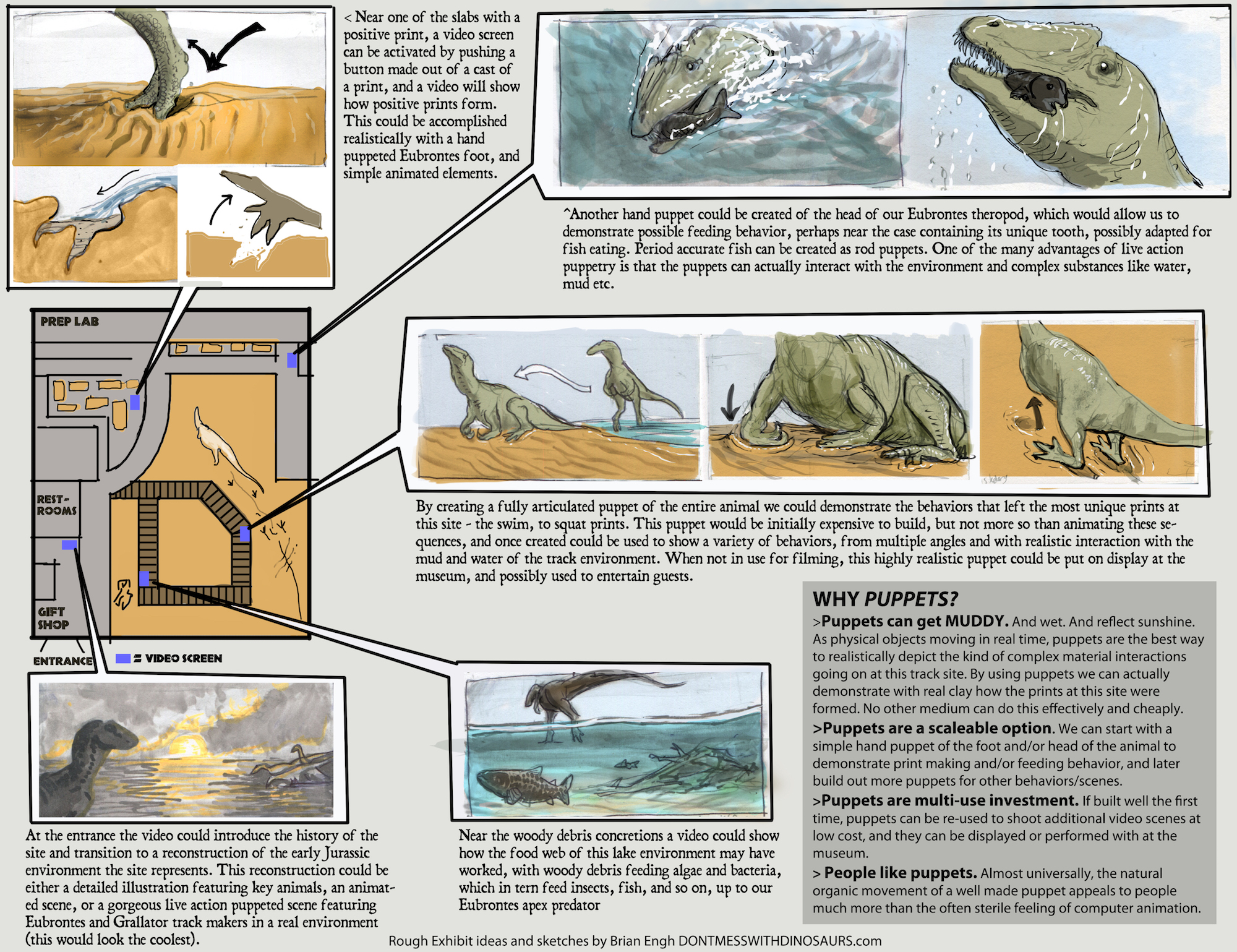
Video kiosk plan pitched to SGDS
Develop diverse revenue streams
Here is a list of revinue sources/ways my paleoart has brought in income:
-Grant funding from friends groups and natural history societies
-Museum exhibit funds from museum’s annual budget
-Research funds set aside for outreach & publicity
-TV documentary production funds
-Exhibit funds donated by a private donor outside the museum
-Crowd funding
-Selling my body (i mean for food, to cannibals)
-Petty cash from the descretionary funds of university & museum departments (for small jobs)
-Selling prints at outreach events
-Selling printed stuff like t shirts etc online
-Selling originals
-Licensing art for use in books, magazines, exhibits etc -Patreon
Develop your own projects toward becoming profitable or at least powerfully promotional
I mentioned before that if a client can’t afford to pay you a living wage you’re probably better off working on your own art. There are always fundamentals to improve on, always new ideas & styles to explore. The stuff artists do for passion often becomes the foundation to a portfolio, a style, a career. That being said, we live in amazing times when artists can actually self fund a lot of stuff. So, wherever possible, look for ethical ways to make some money off of the art you do independently, and try to grow this over time.
Play the long game
Own all your copyrights. Even if a client sends you a contract that says you’ll be signing over your copyright, politely decline that contract and explain to them that you need to retain your copyright because this is essential to your income as a professional artist. I have never had a client decline working with me for this reason. They usually totally understand, and will either talk to their legal department or ask if you have a contract you can send them. One of the handy contract types I’ve used a few tims is called a “materials for use” contract, where the client pays the artist for their time creating the art (aka “materials”) + a licensing fee to use the artists materials. The terms of the license are laid out in the contract. Very few things feel like free money like getting money for art that you already got paid to make. Again, make sure your time writing emails & drafting contracts is covered. At this point I don’t license anything for less than $100, and that is in line with the lower end of licensing fees for some magazines & book publishers.
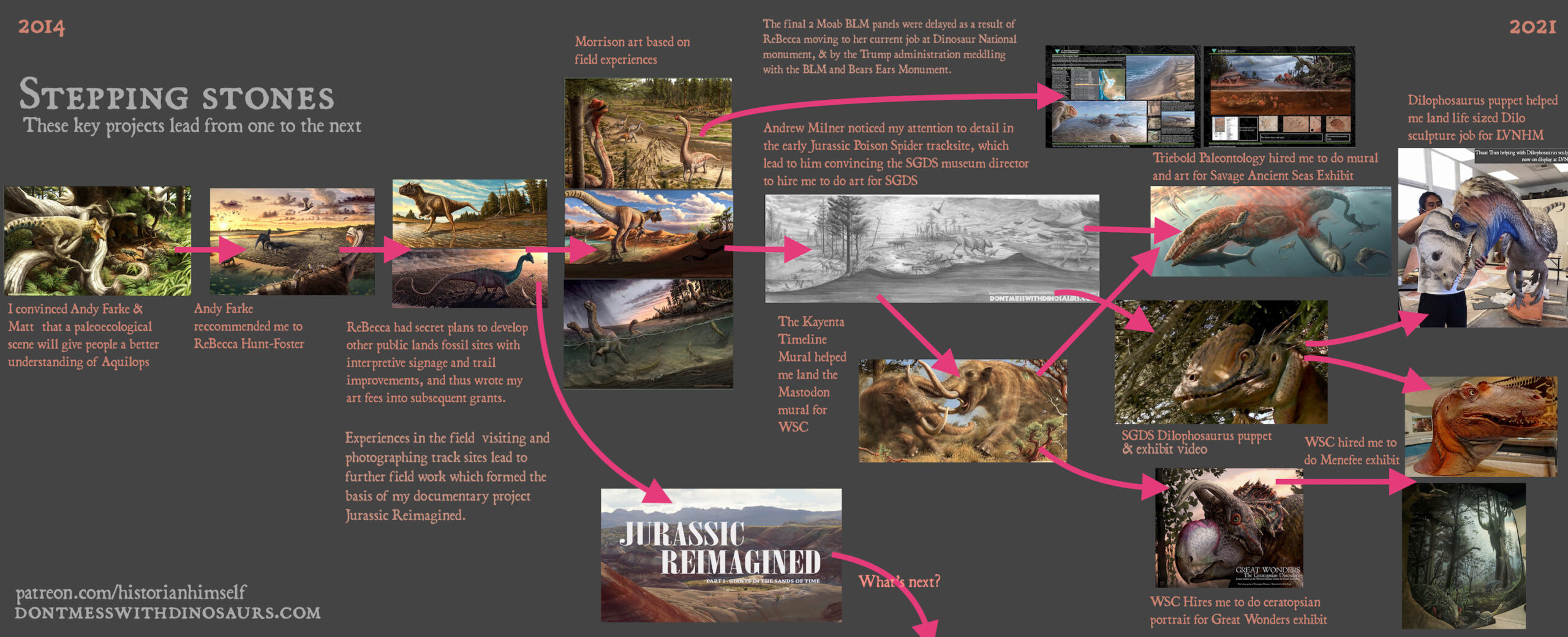
Stepping stones. These projects lead from one to the next.
Career stepping stones are also important. Sometimes it’s better to take a job that pays slightly less or the same amount as another opportunity if it steers your career or collaborations in the direction you want it to be going. In this way, the project you’re working on right now can be a stepping stone to future projects. For example, I thought it would be cool to do murals, so I needed to show future clients that I could do a whole paleoecological scene to a high degree of scientific detail. So, I negotiated with Andy Farke and Matt Wedel to do a full ecological reconstruction of Aquilops in its environment rather than just doing a lateral-view head restoration. That lead to doing larger paleoeco scenes for ReBecca, which lead to murals at the Western Science Center. I also want to do practicalfx in my documentaries and films, so I have retained the molds to all my sculptures so that I can cast skins out and make puppets of the animals I’ve sculpted. Aiming for stepping stones is important. That said, you have to ensure your bases are covered financially. I have cut it really close a few times, and even taken some hits financially because I miscalculated how long stuff would take. Fortunately, that’s where having diverse revinue streams comes in to buffer your budget so that if some of your stepping stones turn out to be a bit wobbly (financially) you don’t end up underwater.
Don’t spread yourself too thin
This one is my greatest weakness. People who are passionate about what they do can easily get way too excited about cool ideas and new projects and take on too much at once. I do this. Coupled with the reality that you don’t always know exactly how long a project is going to take, and you can find yourself with smashed schedules and excessive stress, and all of this leads to you not doing your best art work. I struggle hard with this one. It also sometimes signals that you need to raise your prices.
Traditional art is not dead
This harkens back to the first point about art fundamentals, but it actually bears saying specificially now that we live deep in the dystopian future where lots of aspiring paleoartists are producing everything entirely digitally (seriously, yall kids should go outside). I feel strongly that my art frequently receives preferential treatment because it is always based at least partially in traditional media (even when the final illustration is digitally colored). I think this is because lot of people are just tired of looking at screens, photoshopped advertisements, CGI, printed billboards and all manner of imagery that all feels just slightly less human that a bunch of paint or graphite or paint or ink smeared on some dead tree fiber or a hunk of clay cooked until it turns hard. People like knowing and feeling that human hands directly interracted with a physical thing, and when you see these pieces of art in person, you can usually see the difference in the art. Digital painting and 3D modeling are powerful tools, but for me they’ve largely become ways to pre-visualize before actually creating the final work partially or completely in a traditional space. Because my digitally finished illustrations are based on scanned graphite drawings. I still own all those originals. I intend on doing gallery shows and selling them when the time is right. (Playing the long game yo)
As I’ve moved into doing large scale exhibit art, I’ve learned that aesthetically at least, traditional art scales up better than digital, especially in 2d. Painting a mural in the real physical space where it will be seen by guests makes a huge difference to how the lighting, perspective and composition in the painting relate to the surrounding exhibit space. Oh cool, you toiled on your computer in front of a relatively tiny screen for a zillion hourse to create a high res digital illustration? Well it turns out that when we print it up extra big the resolution will be stretched (really good computers still struggle to handle big mural-sized files at 300dpi). Also, now that you’re here seeing the exhibit opening, one of the things you spent mad hours detailing is obscured by a skeletal mount, and theres a weird shadow on what was supposed to be the highlight in your painting. Oh, also the client had to pay $5000 just to print the mural… How long of a hotel stay + how much paint could that have paid for if you stayed near the museum for a few weeks and actually painted on the wall? Again, it pays to show up in person (even if you do end up executing the mural digitally, as I did with my first one).
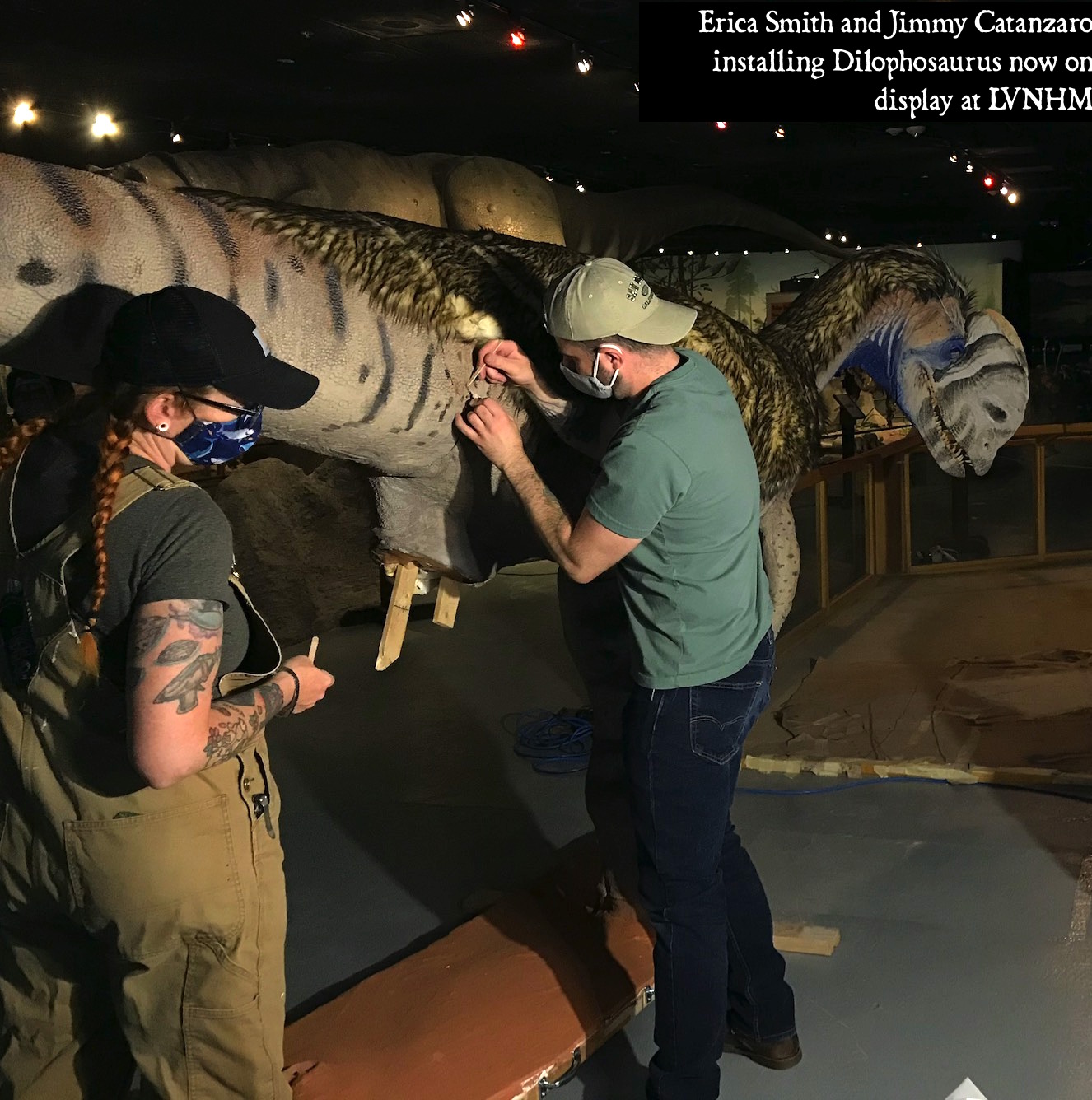
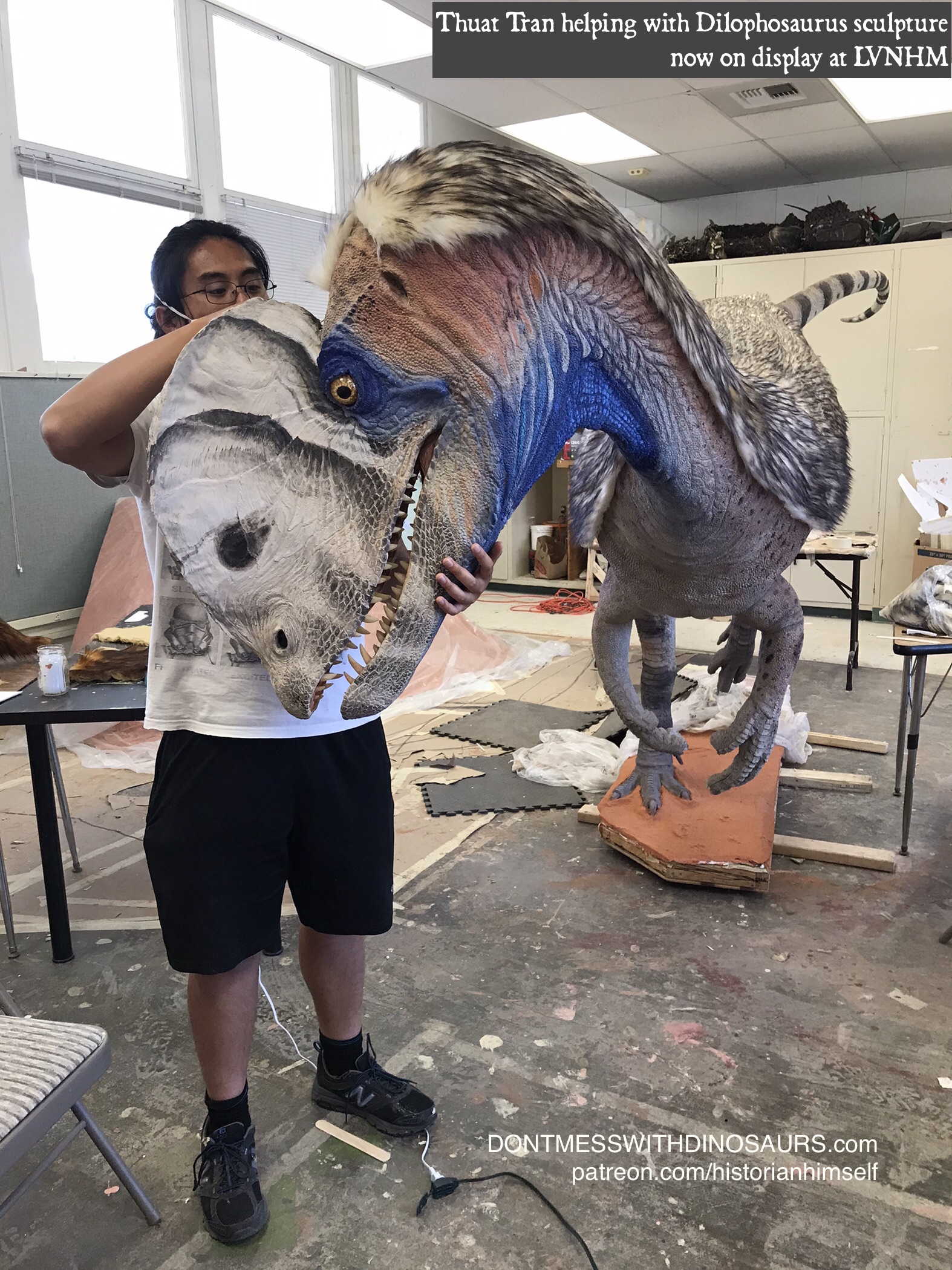
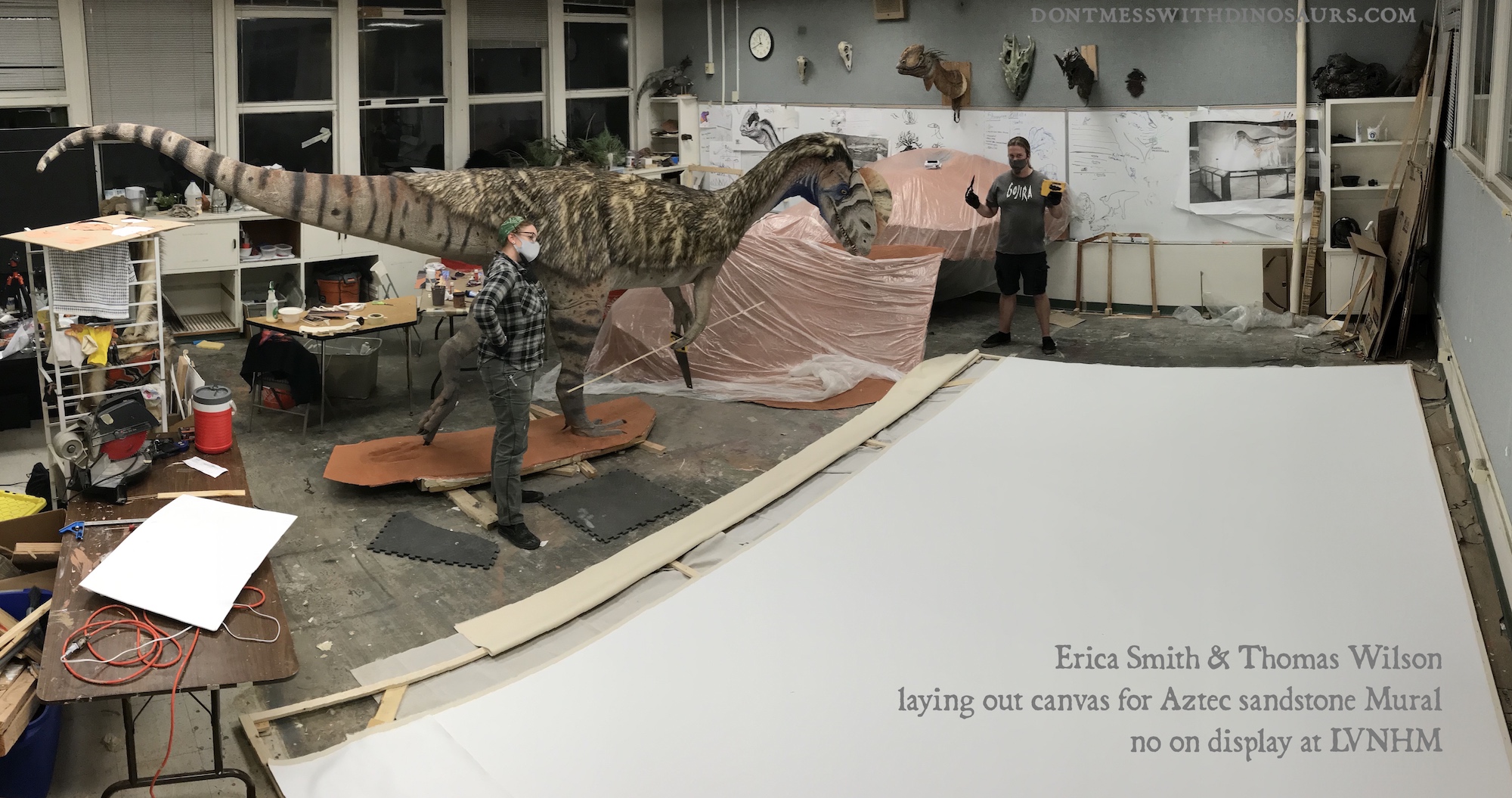
In the case of large scale sculpture CNC milling of styrene has been used on some pretty impressive dinosaur sculptures, but the finer details of the surface textures still have to be hand sculpted. Also fwiw CNC milling of styrene comes with a lot of waste and potentially other environmental concerns. Also, now that I’ve sculpted at both full scale and small scale I’m not convinced I’d be able to predict exactly what the best pose will be in a space based on a small scale model. The Dilophosaurus I did for LVNHM changed it’s pose significantly once I got it mocked up at full scale. Not that my plans at small scale wouldn’t have worked, but being able to adjust it as a full scale poseable framework before locking it in place and sculpting the rest made it work in the space better.
So that’s a bunch of stuff that I thought other artists might find some useful advice in. I hope this makes sense and doesn’t come accross as too preachy or self righteous or whatever. I took the time to do this because I want to see other artists develop and successfully execute professional level commissions in paleoart.
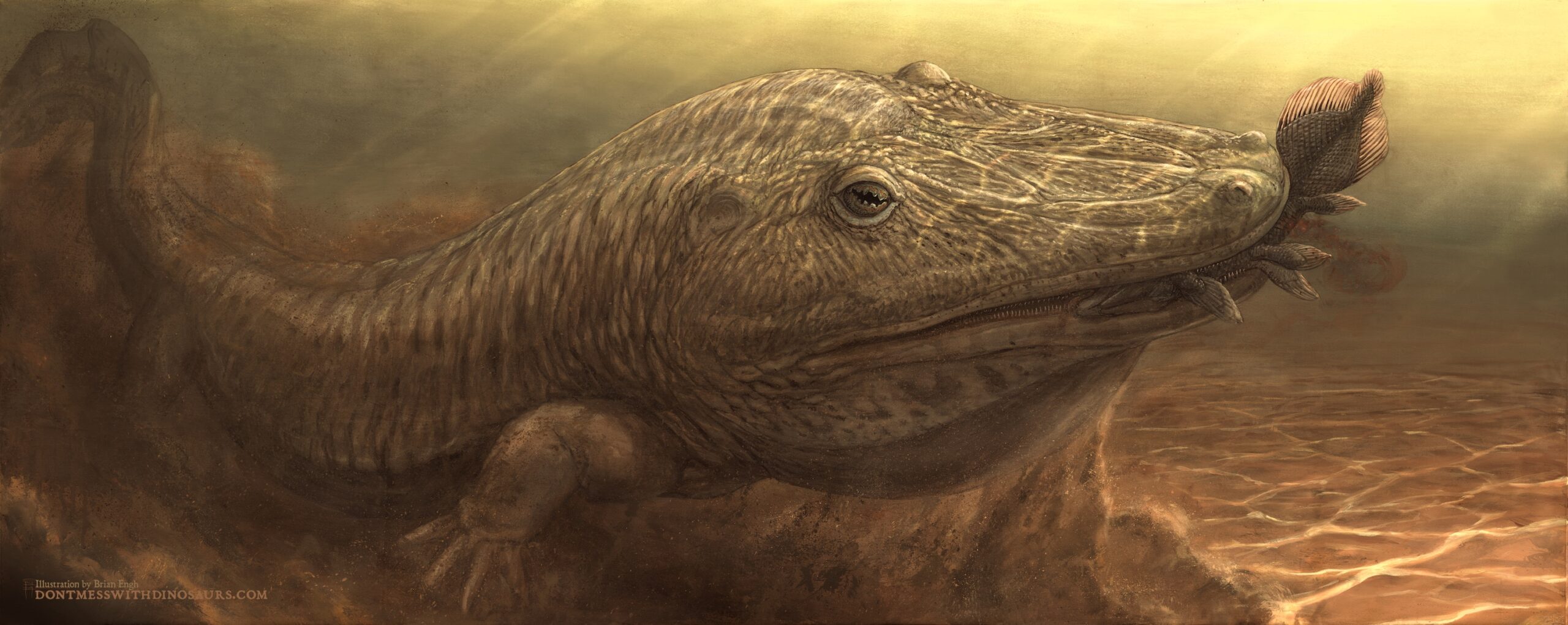
Here’s a video showing the traditional painting process of my latest approximately life-sized paleoart portrait: the giant Antarctic Capitosaur Antarctosuchus! Antarctosuchus was a member of a group of ancient amphibians called Temnospondyls, some of which grew to huge sizes and occupied the niches now occupied by alligators and crocodiles long before modern crocodilians had even evolved! Back in the Mesozoic Antarctica was much warmer than it is now – it was covered in temperate forests replete with ferns, mosses, horsetails and ginkophyte trees, and in that cool temperate environment where crocodilians couldn’t thrive Temnospondyls managed to remain dominant in that ecospace well into the Cretaceous!
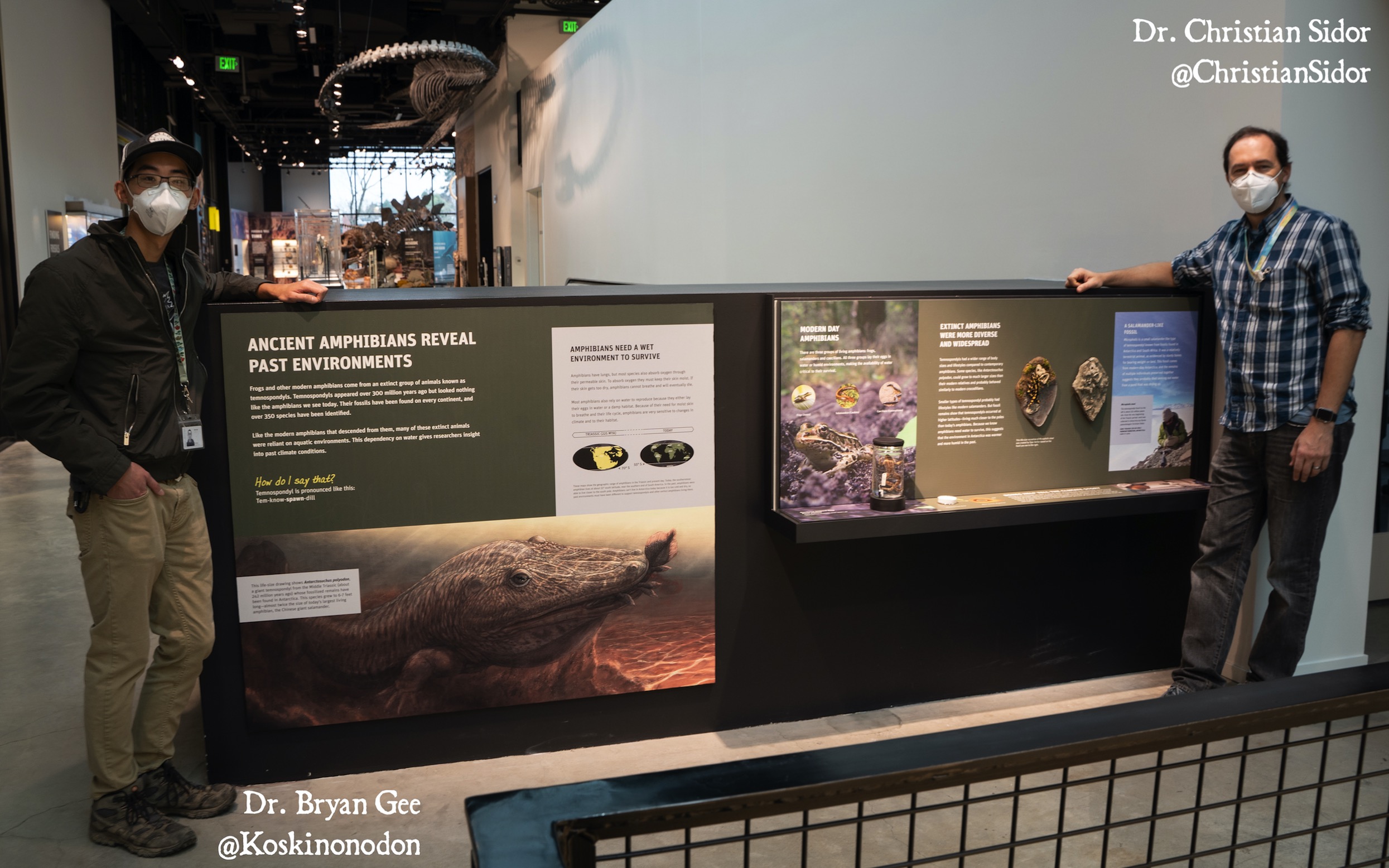
This traditional painting was done as a part of a new exhibit at the Burke Museum in Seattle Washington, under the scientific guidance of Dr. Bryan Gee and Dr. Christian Sidor, who can be seen here proudly presenting their newly completed exhibit.
The exhibit focuses on the broad scale evolution of amphibians, with paleoart depictions of ancient forms to illustrate how long they’ve been around, and how massive they once were. In addition to my painting, the exhibit also features a sculpture of a much smaller ancient amphibian called Micropholis, expertly executed by Tyler Kiellor. A twitter thread detailing his paleoart sculpture process can be seen here! Micropholis paleoart process!
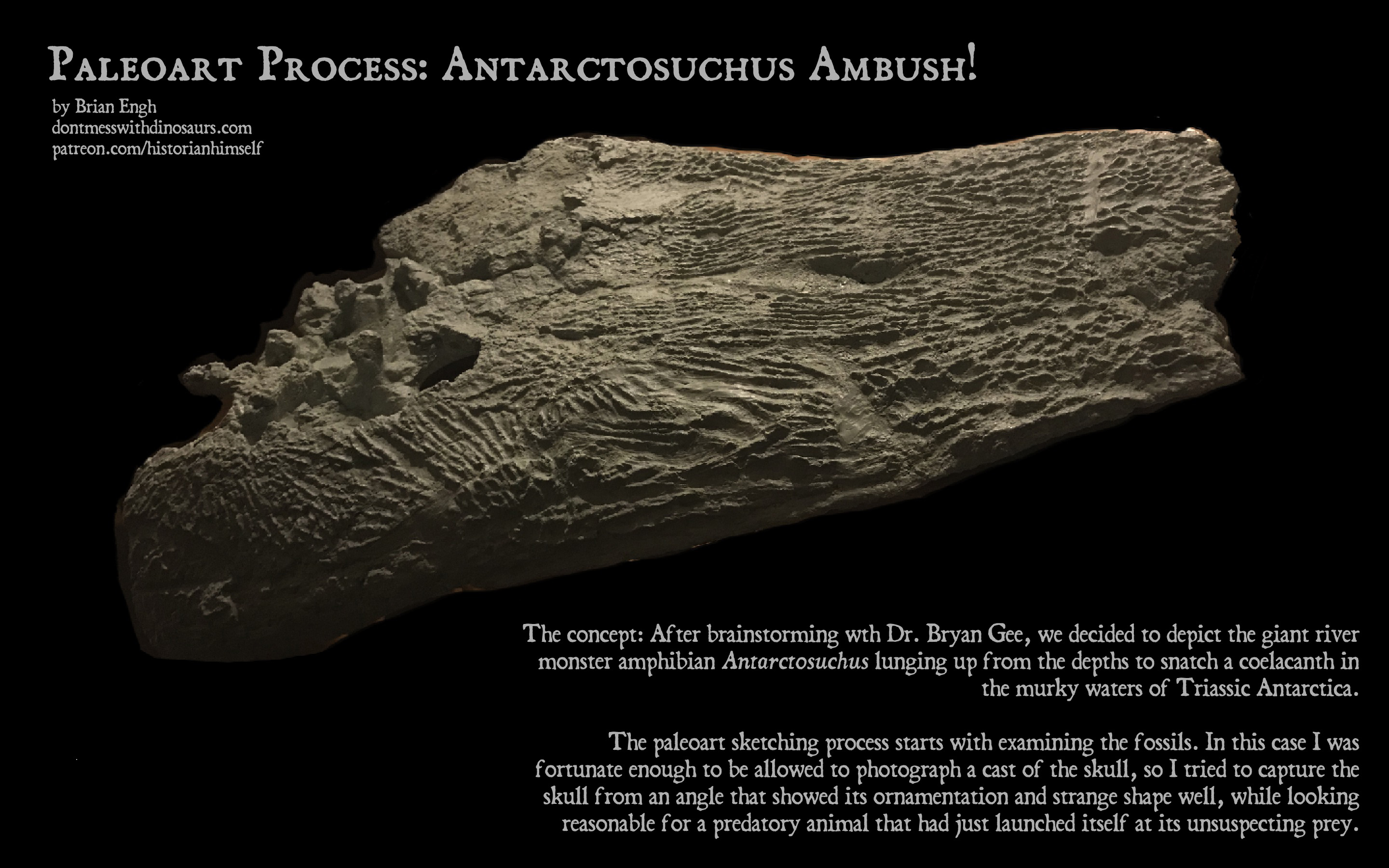
My paleoart process is covered to some degree in my video above, but I grabbed some explanatory screenshots of the set up process, with a bit of explanation.
My thanks go out to Dr. Gee and Dr. Sidor and the Burke Museum Exhibits staff for involving me in this exhibit project. I really like amphibians, and this was my first opportunity to illustrate a large Temnospondyl and I had a lot of fun practicing traditional painting. This behind the scenes paleoart process stuff was brought to you by my supporters on patreon. Thanks for the support yall.
This project was such a beast I lowkey had stress flashbacks while editing this video.
Huge thanks to my patreon supporters for making this behind the scenes content possible. If you want to support my art and get access to the full behind the scenes process of making this massive sculpture, you can support my work on patreon.com/historianhimself
For the past few years I’ve been working in close collaboration with the Saint George Dinosaur Discovery Site’s lead paleontologist Andrew Milner on an exhibit called the Dawn of the Dinosaurs, which will feature a highly detailed 16 foot long timeline mural that I illustrated based on newly discovered fossils found throughout the the Kayenta Formation near St. George Utah. Unfortunately the covid 19 pandemic and shutdown has been really hard on a lot of museums which rely on having visitors paying for tickets and making gift shop purchases to keep them running. The Saint George Dinosaur Discovery Site was hit hard by the shutdown, and that financial challenge has threatened to delay the completion of the Dawn of the Dinosaurs exhibit, which we are aiming to complete this coming winter. So, we need your help to complete this ambitious exhibit project at this awesome little regional museum.
Share this video and my other videos about the early Jurassic period/Dilophosaurus with friends and family so that more people learn about this important time period toward the beginning of the age of dinosaurs, and, if you are financially able, please consider making a small donation to the Saint George Dinosaur Discovery Site’s GoFundMe campaign. Every little bit helps! Even just a fraction of you contributing $1-$5 could get this project fully funded. You can make a tax deductible donation here: https://www.gofundme.com/f/dawn-of-the-dinosaurs-exhibit-fundraiser
The Saint George Dinosaur Discovery site/Dinosaur Ah Torium is a 501c3 non-profit organization. Only a portion of funds raised will go to me (Brian Engh) to help pay for my time to finish the timeline mural, the rest of the funds will go toward funding casework, lighting and necessary infrastructure to complete the exhibit.
I also owe a huge thanks to my patreon supporters for helping to keep this project going. Because of the high level of detail and the huge number of fossils it incorporates, just drawing the Kayenta timeline took way longer than expected, and my patreon supporters kept me afloat financially during that time. Anyone interested in supporting my work on patreon, and gaining access to a bunch of top secret behind the scenes posts (including several showing the #paleoartprocess of illustrating this timeline) can support my work here: http://www.patreon.com/historianhimself
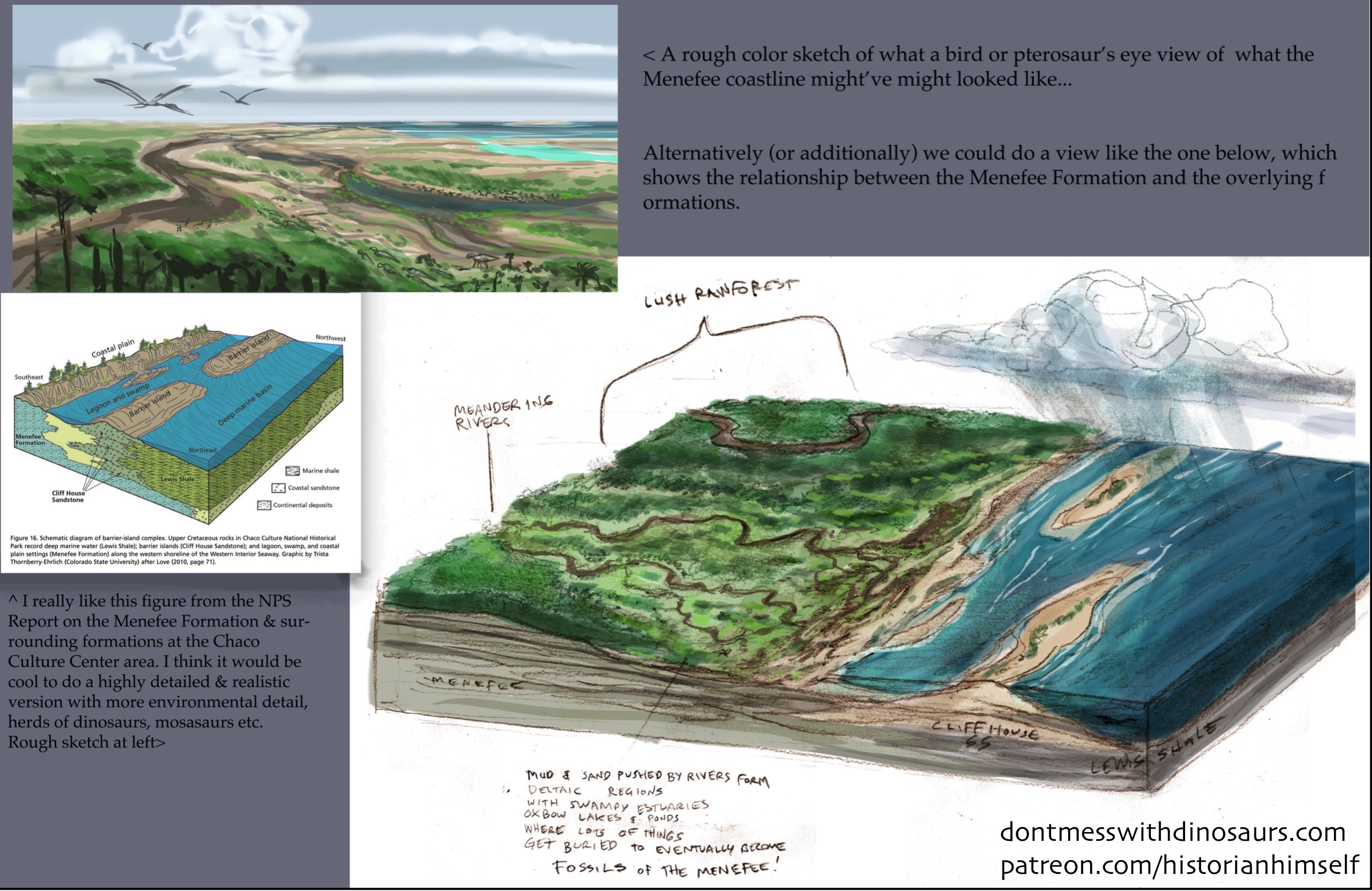
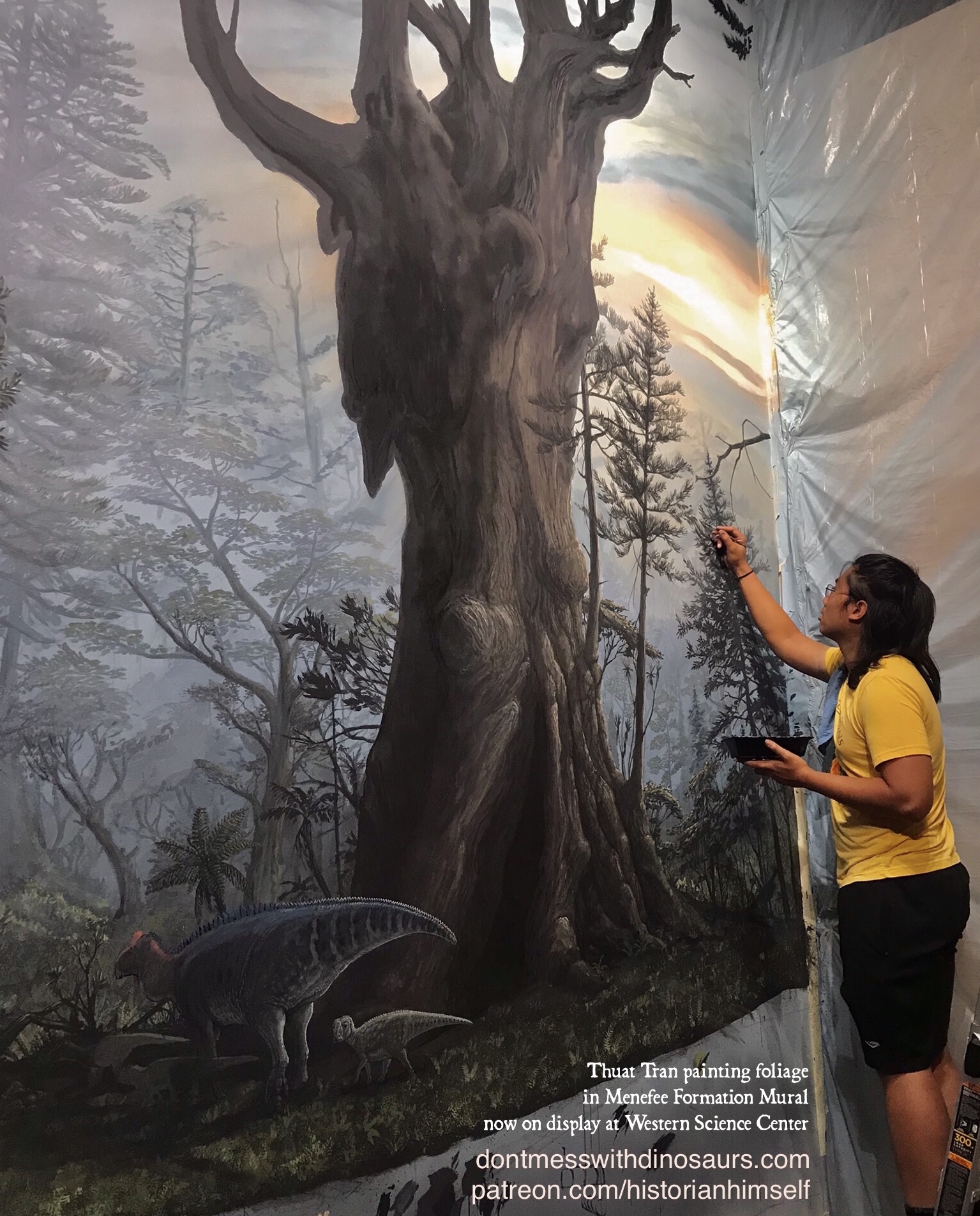
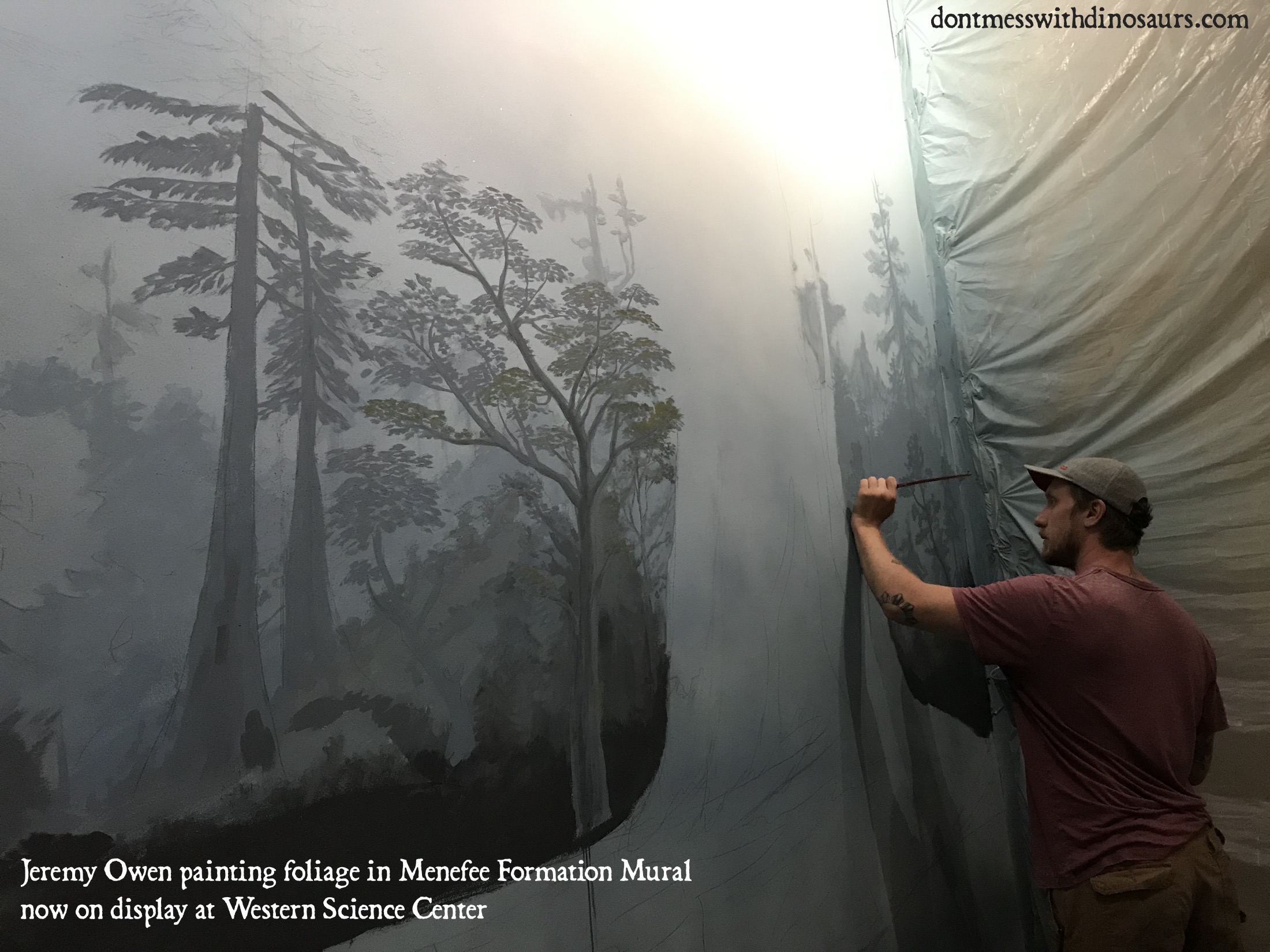
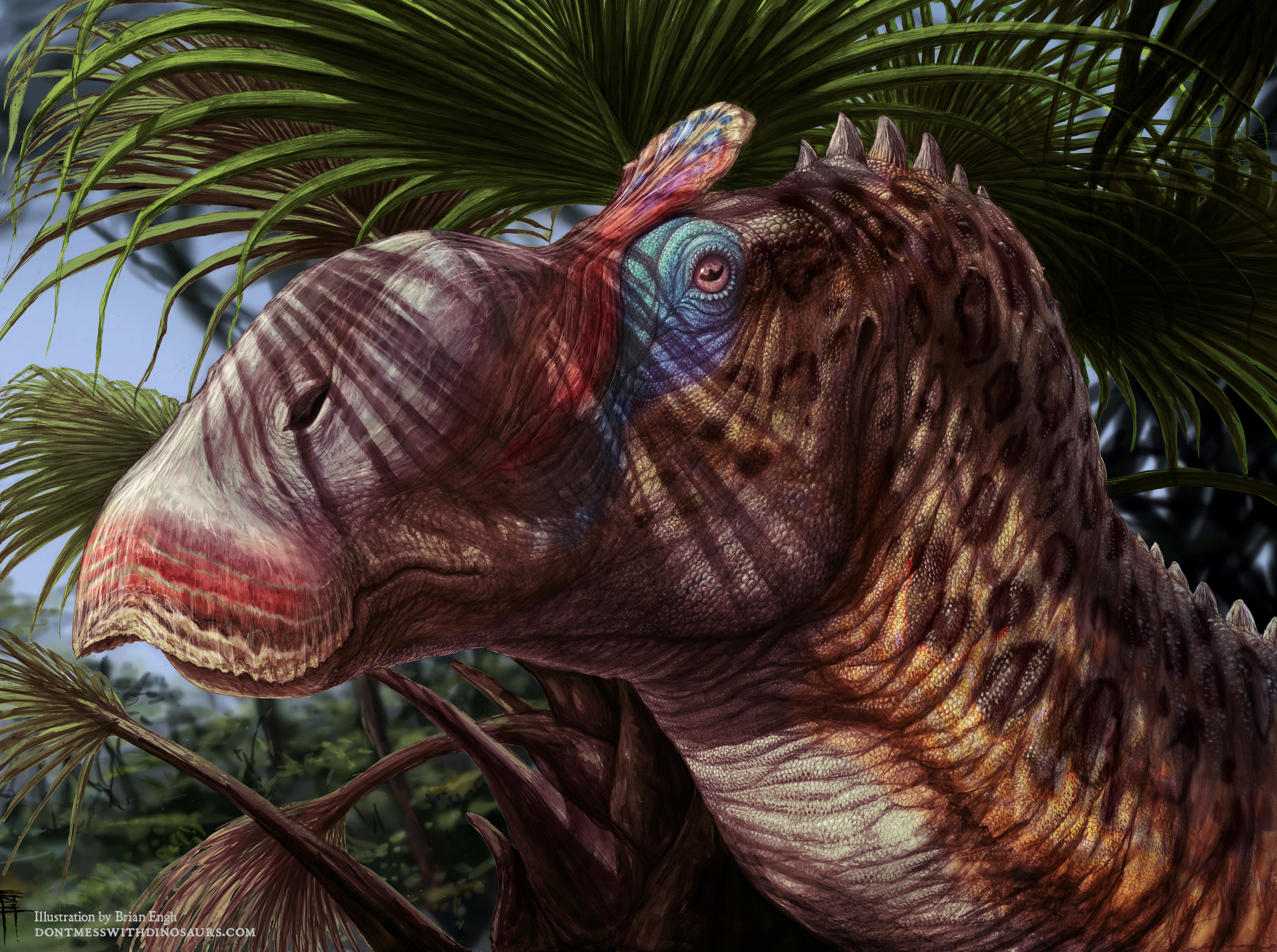
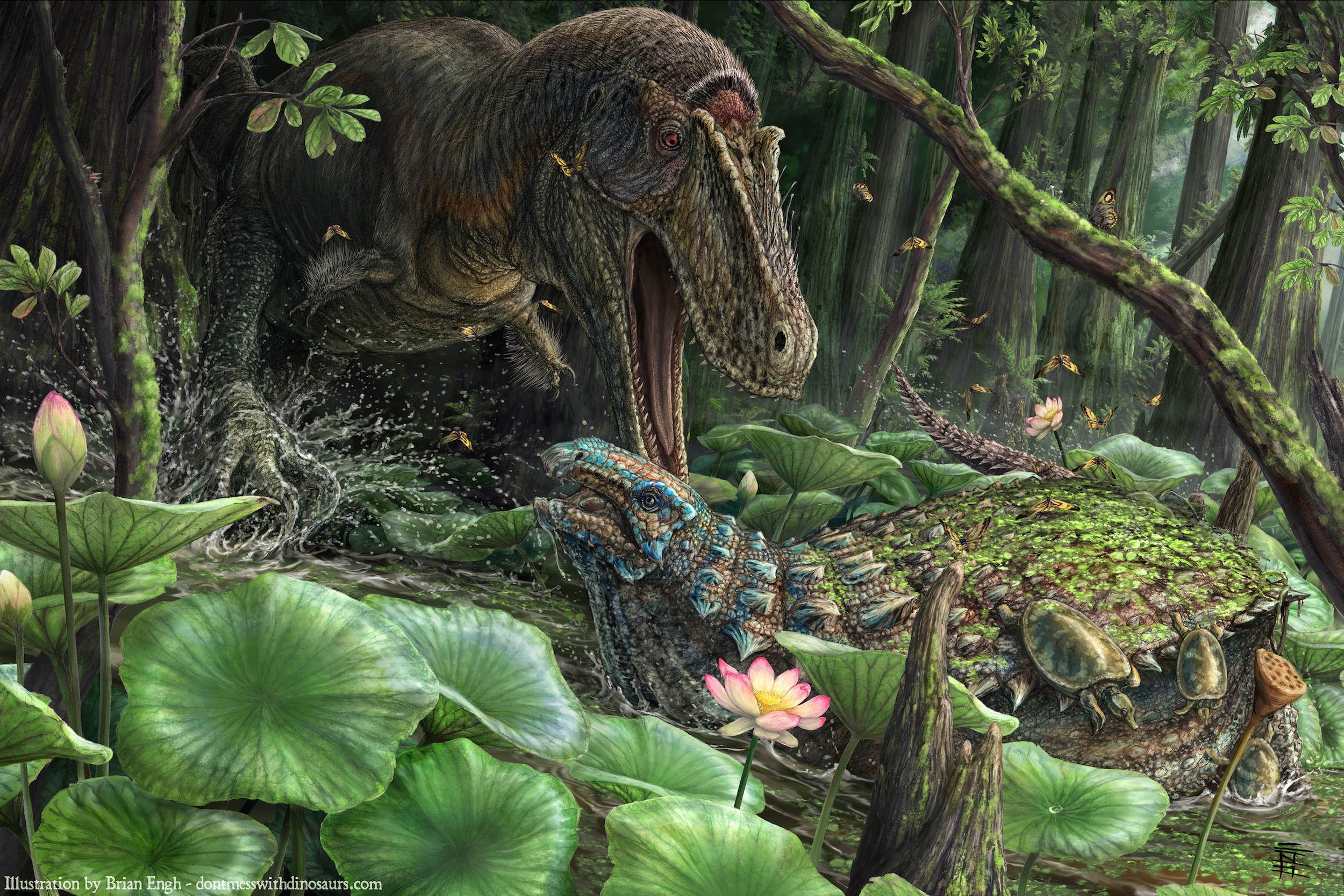
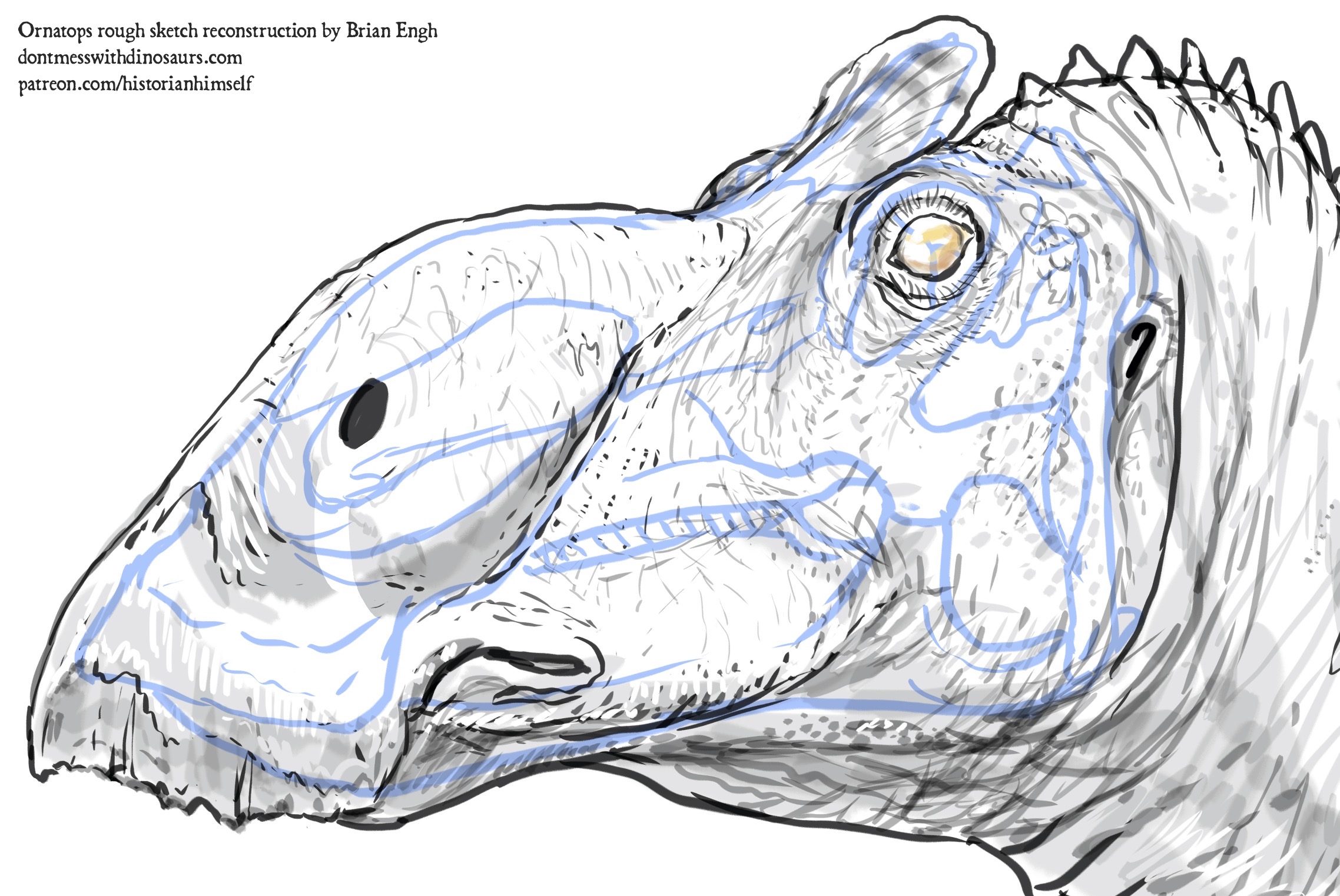
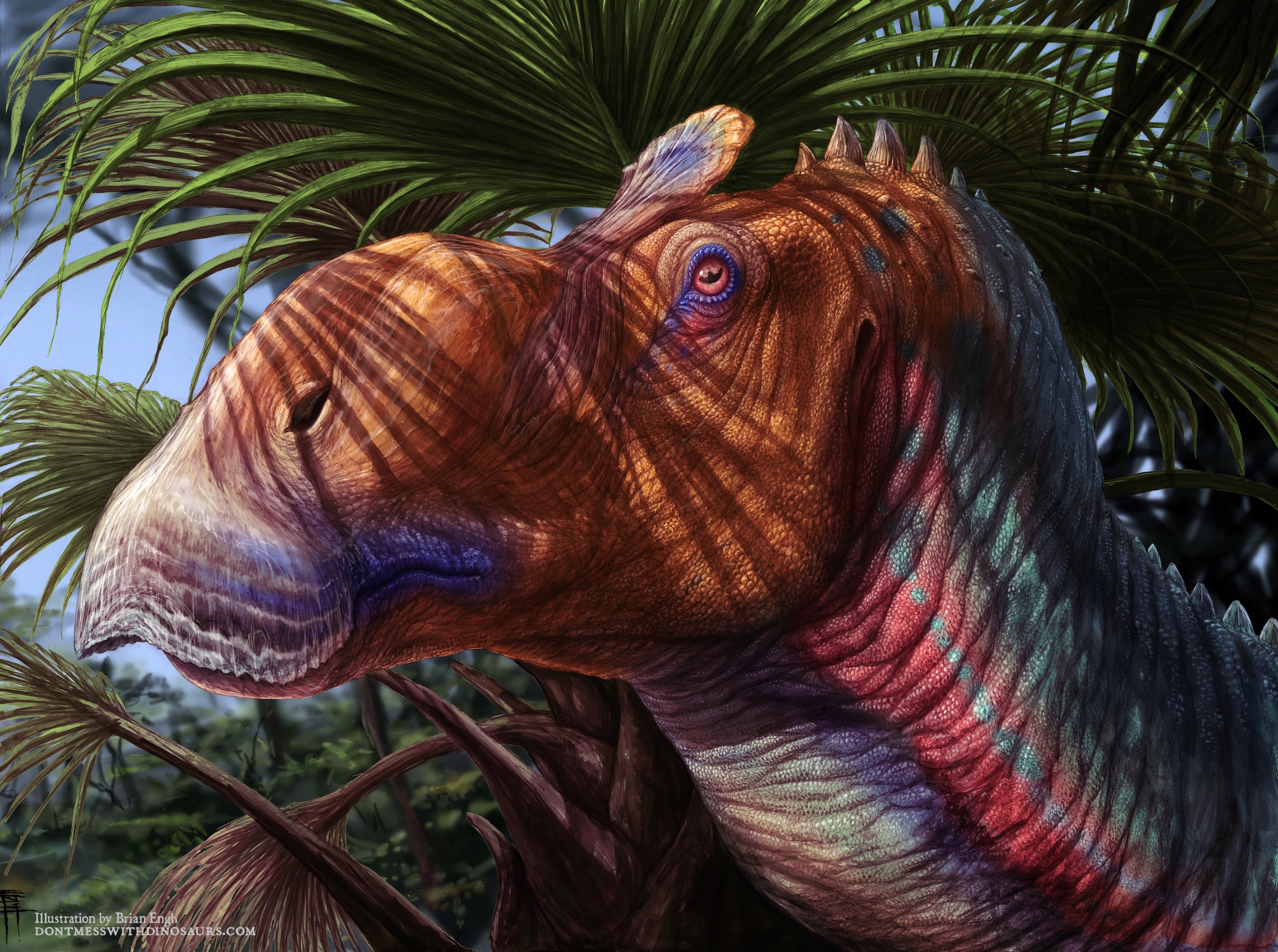
My latest exhibit project in collaboration with the Western Science Center in Hemet California will be an exploration of the Upper Cretaceous Menefee Formation, slated to open later in 2021. This illustration of Ornatops is the first in a series of paleoart pieces that will populate the exhibit space.
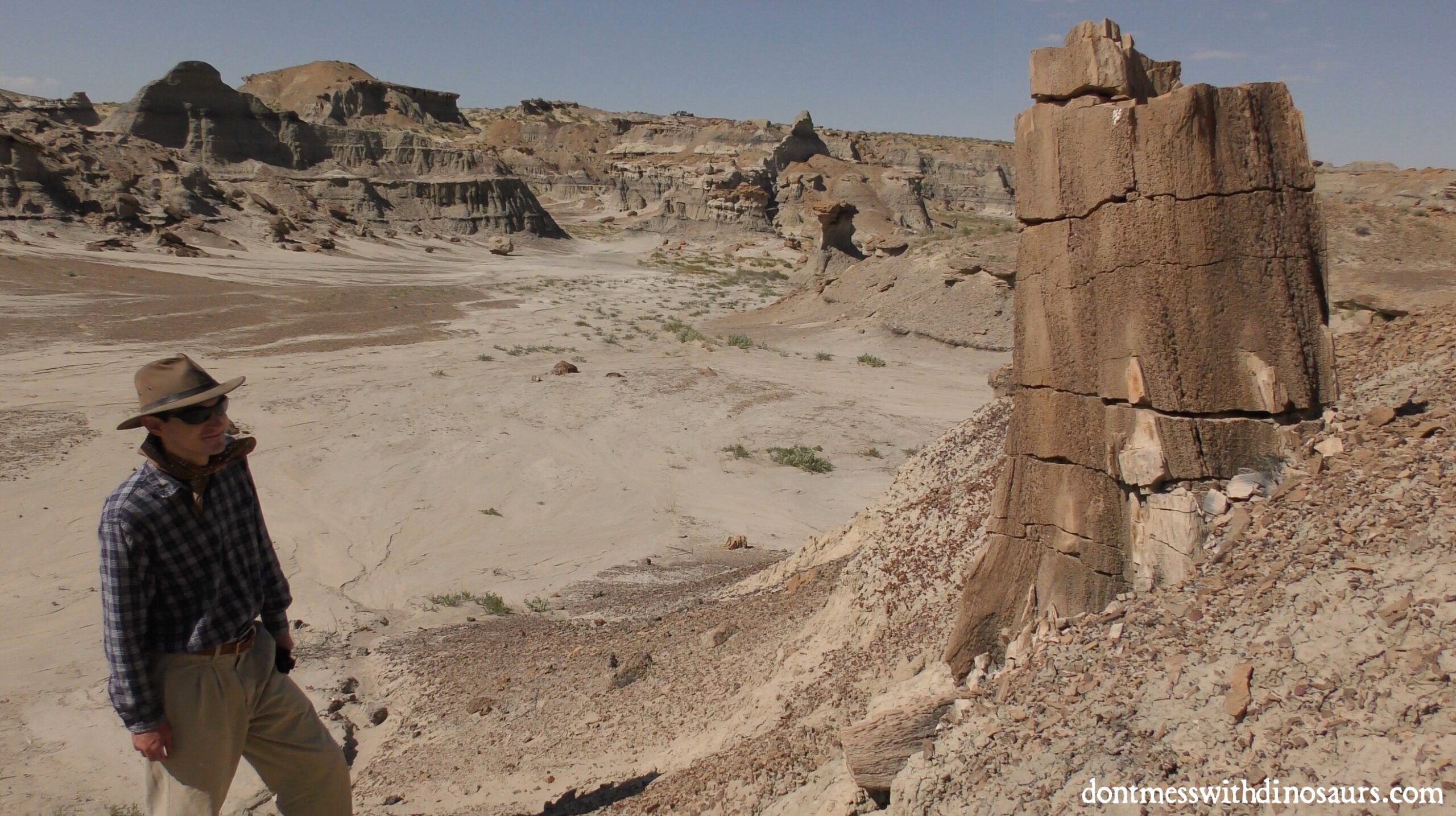
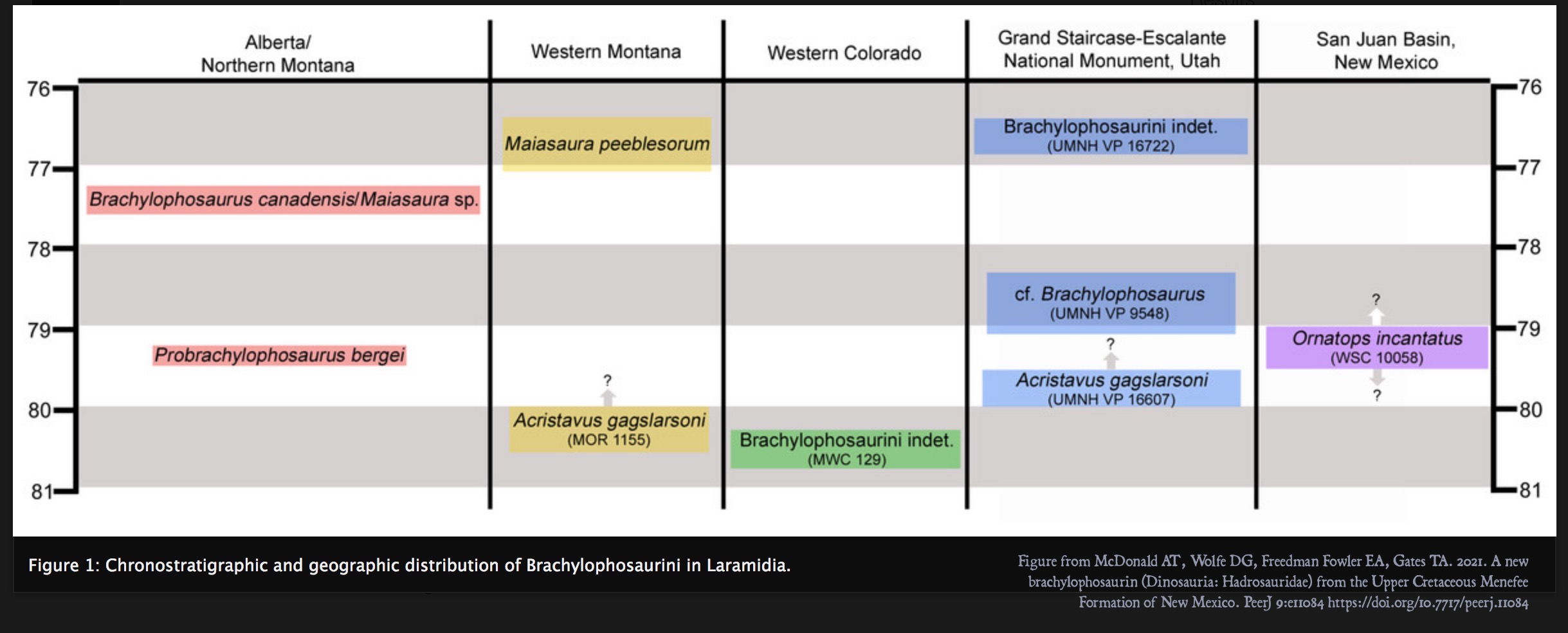
Western Science Center’s Curator Dr. Andrew McDonald has been working hard for the last decade in collaboration with Zuni Dinosaur Institute for Geosciences and Southwest Paleontological Society to explore exposures of the Menefee Formation in New Mexico under permits from the U.S. Buraeu of Land Management. Turns out there are tons of fossils, and those fossils are helping to fill in a gap in the evolution of Late Cretaceous dinosaurs and the ecologies they lived in, because the Menefee Formation lies in time and space between several other important Upper Cretaceous fossil-bearing formations in Western North America
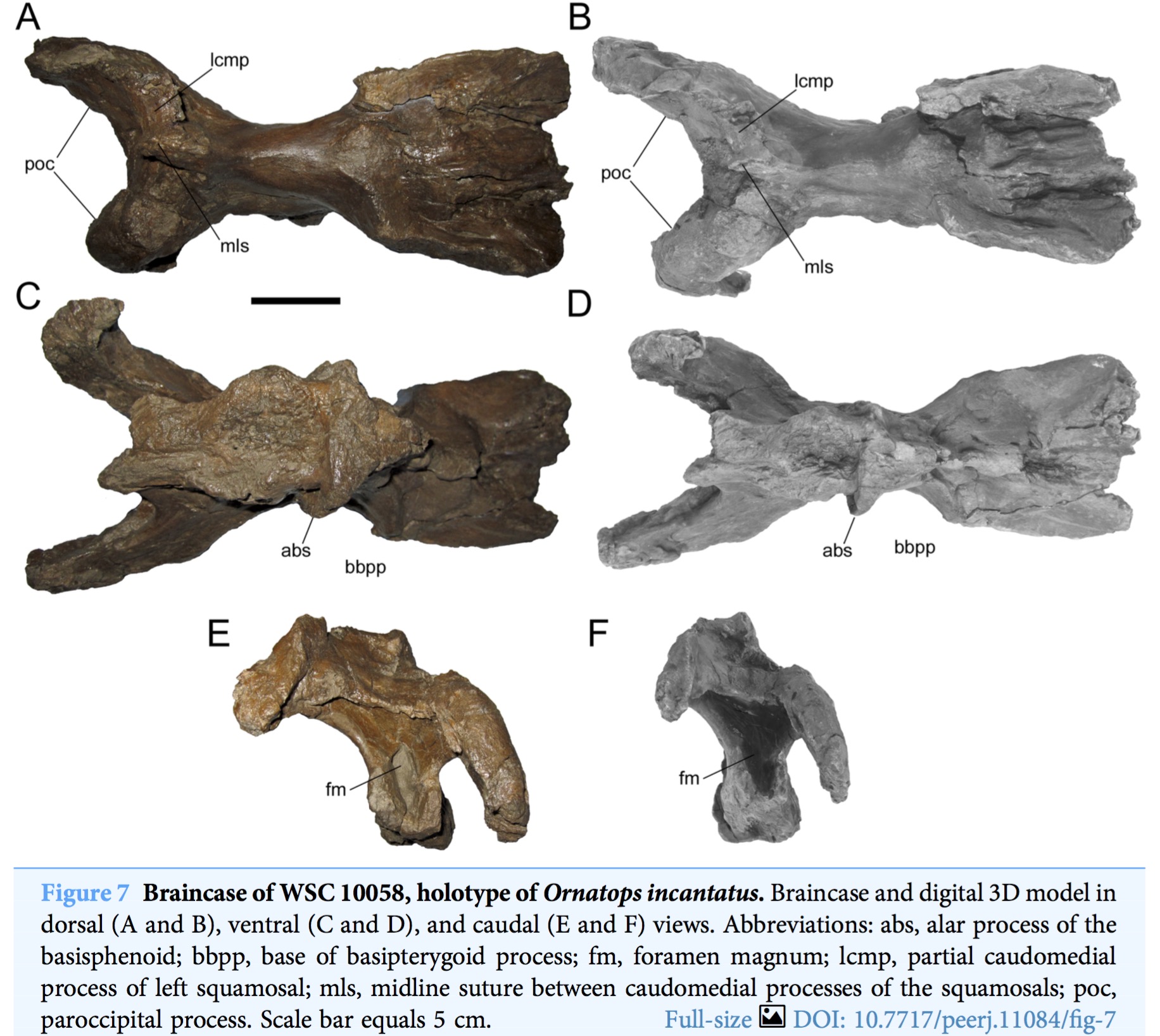
While Ornatops may look on the outside a lot like Brachylophosaurus the major differences are on the inside. Dr. McDonald and his team recovered the brain case of Ornatops, which is where the animal is truly ornate – with a number of distinct features – such as well-preserved nerve openings – that separate it from Brachylophosaurus and other closely related saurolophine hadrosaurs.
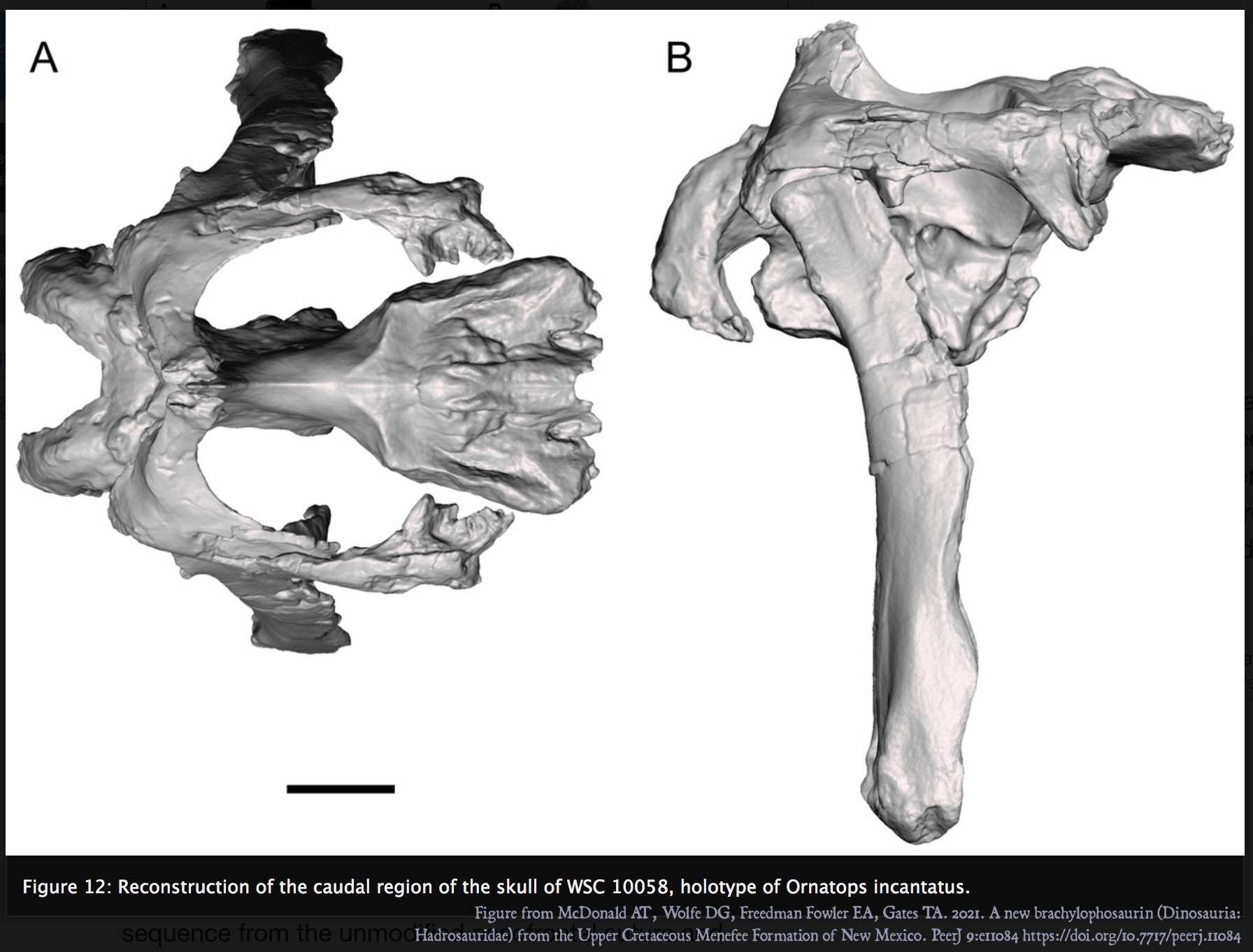
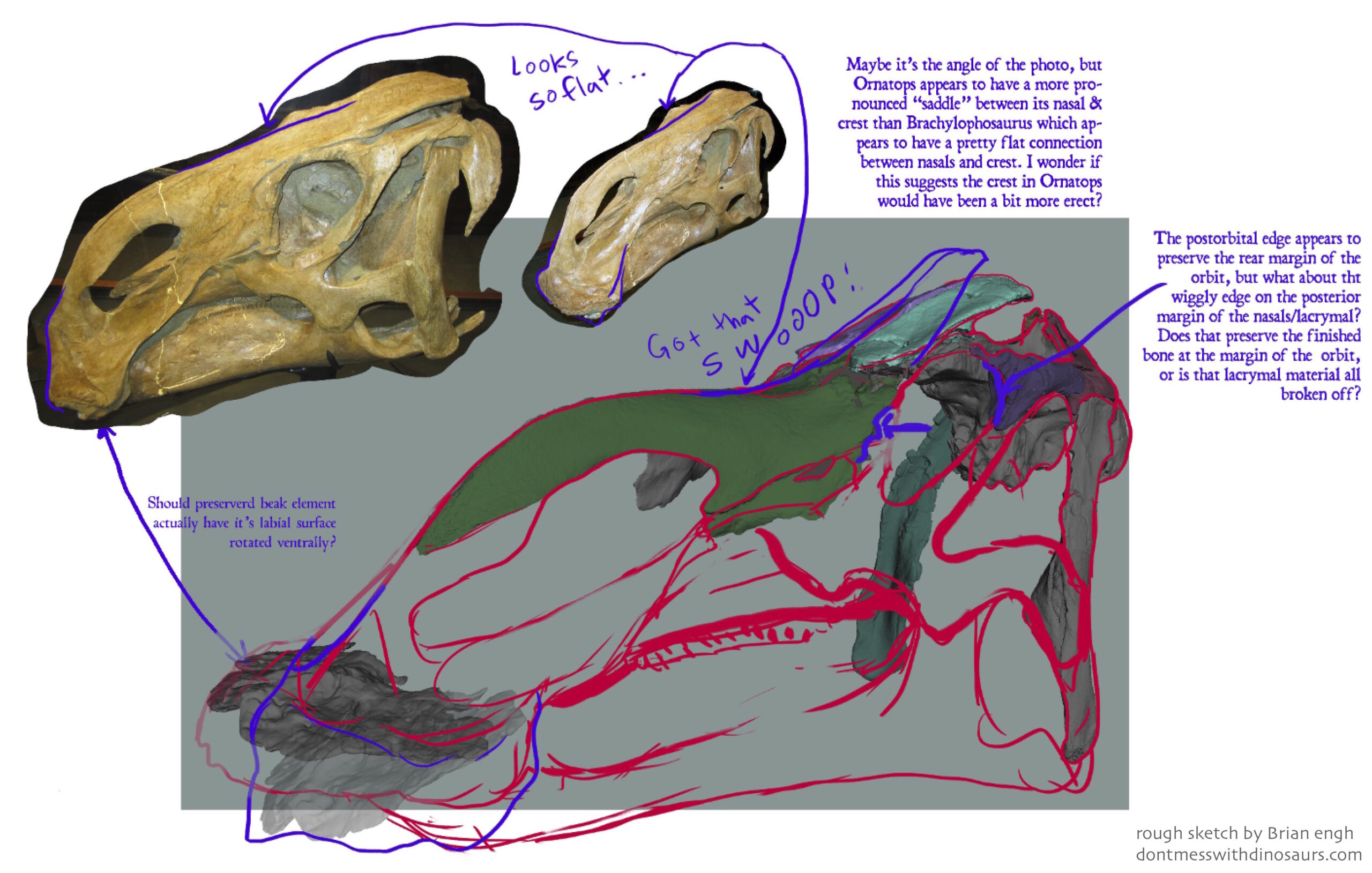
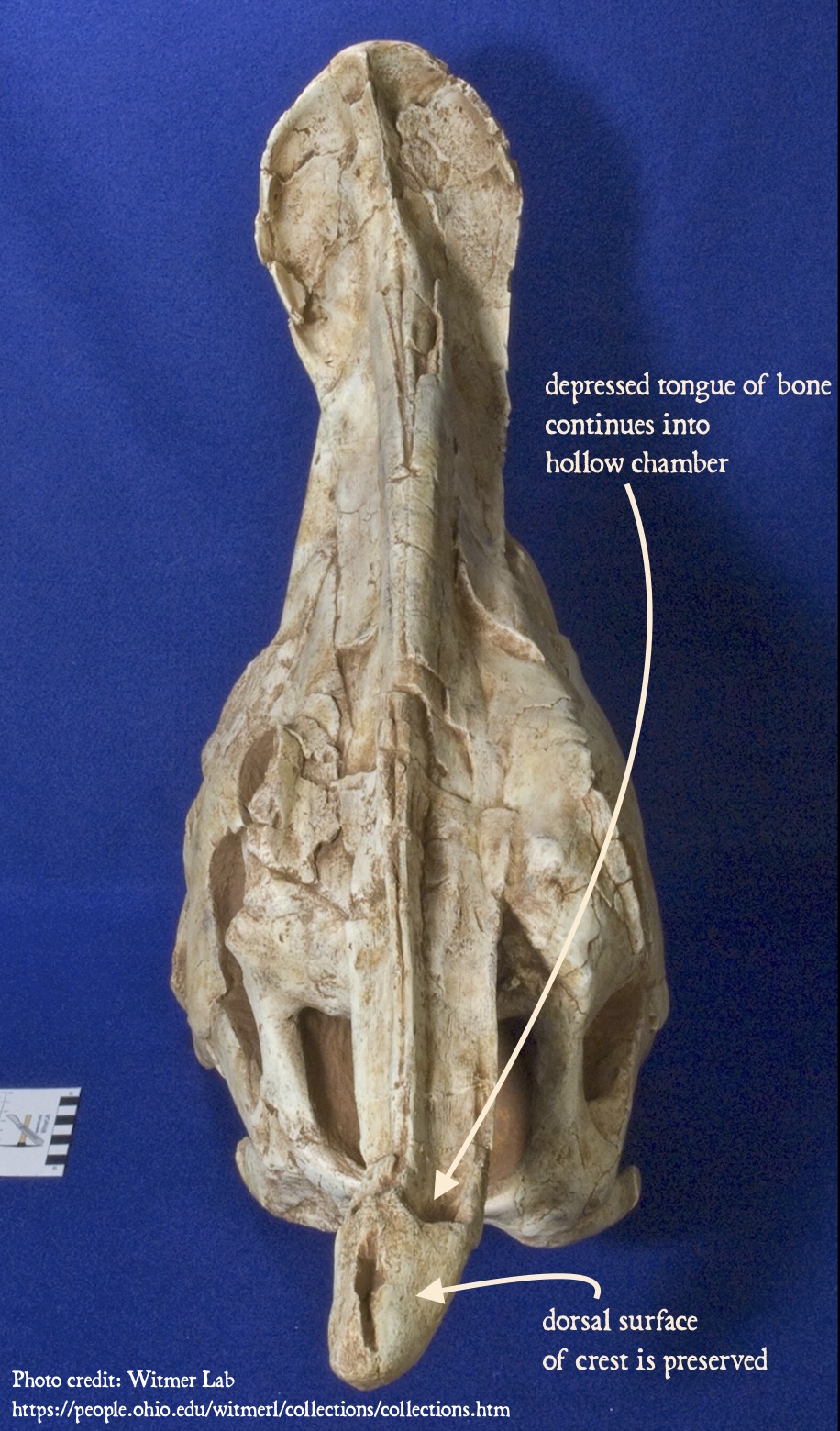
Fortunately for me, as a paleoartist, the major features missing from Ornatops’ skull can be filled in with a high degree of confidence from its close relative Brachylophosaurus, so the first step in reconstructing it was to become more familiar with the skulls of Brachylophosaurus and create a skull reconstruction based on those skulls in combination with this 3D model of Ornatops’ known skull elements, which was put together by WSC Museum Director Dr. Alton Dooley in collaboration with Dr. McDonald.
One of the features that stood out to me in this process of looking at the fossils and sketching was that the attachment for Ornatops’ crest ramped upward more steeply than the base of Brachylophosaurus’ crest, and on further discussion we concluded that this likely meant that Ornatops’ crest should be depicted as standing a little more erect than Brachylophosaurus, which is a cool little feature that differentiates the two even on the outside.
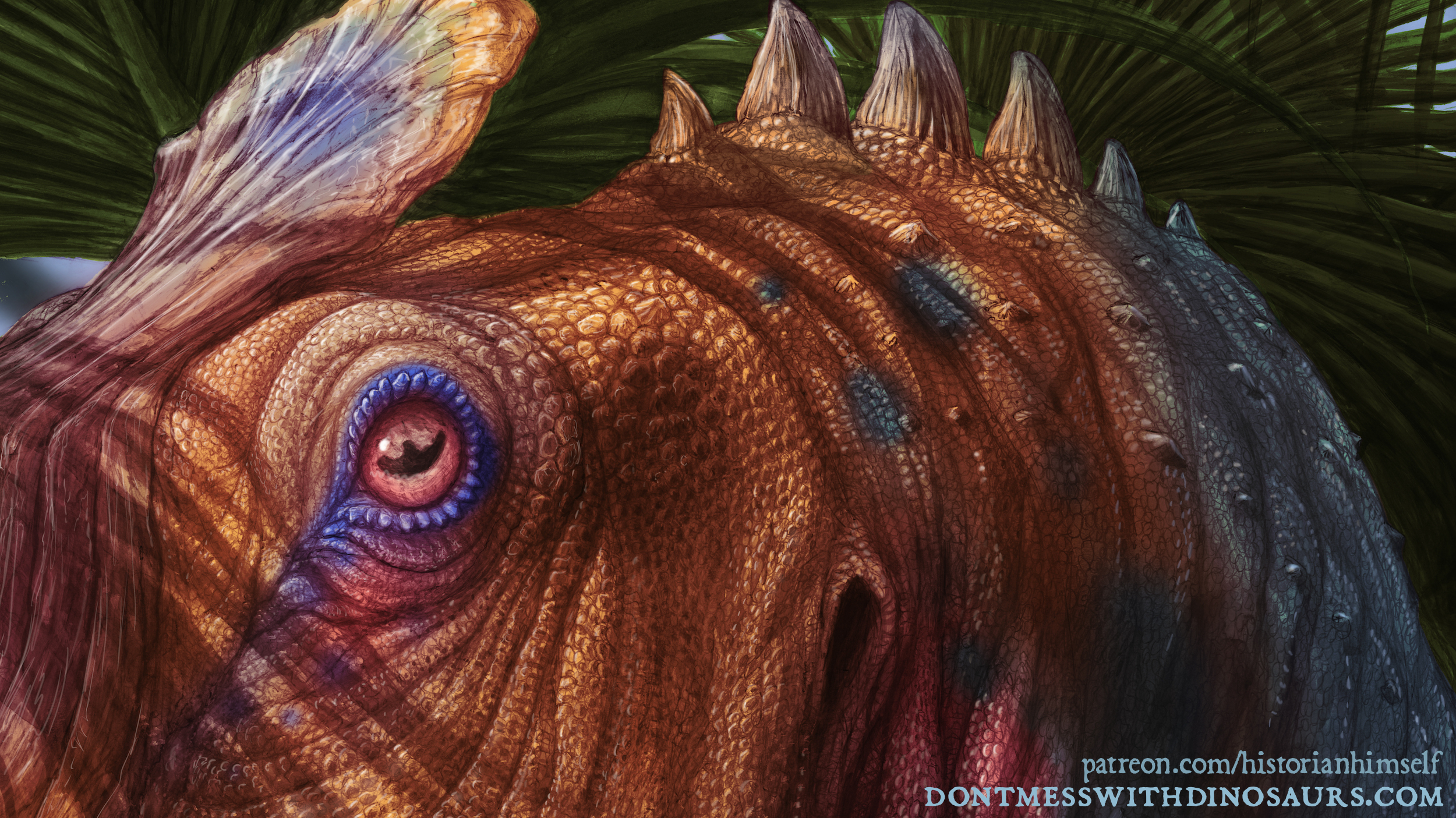
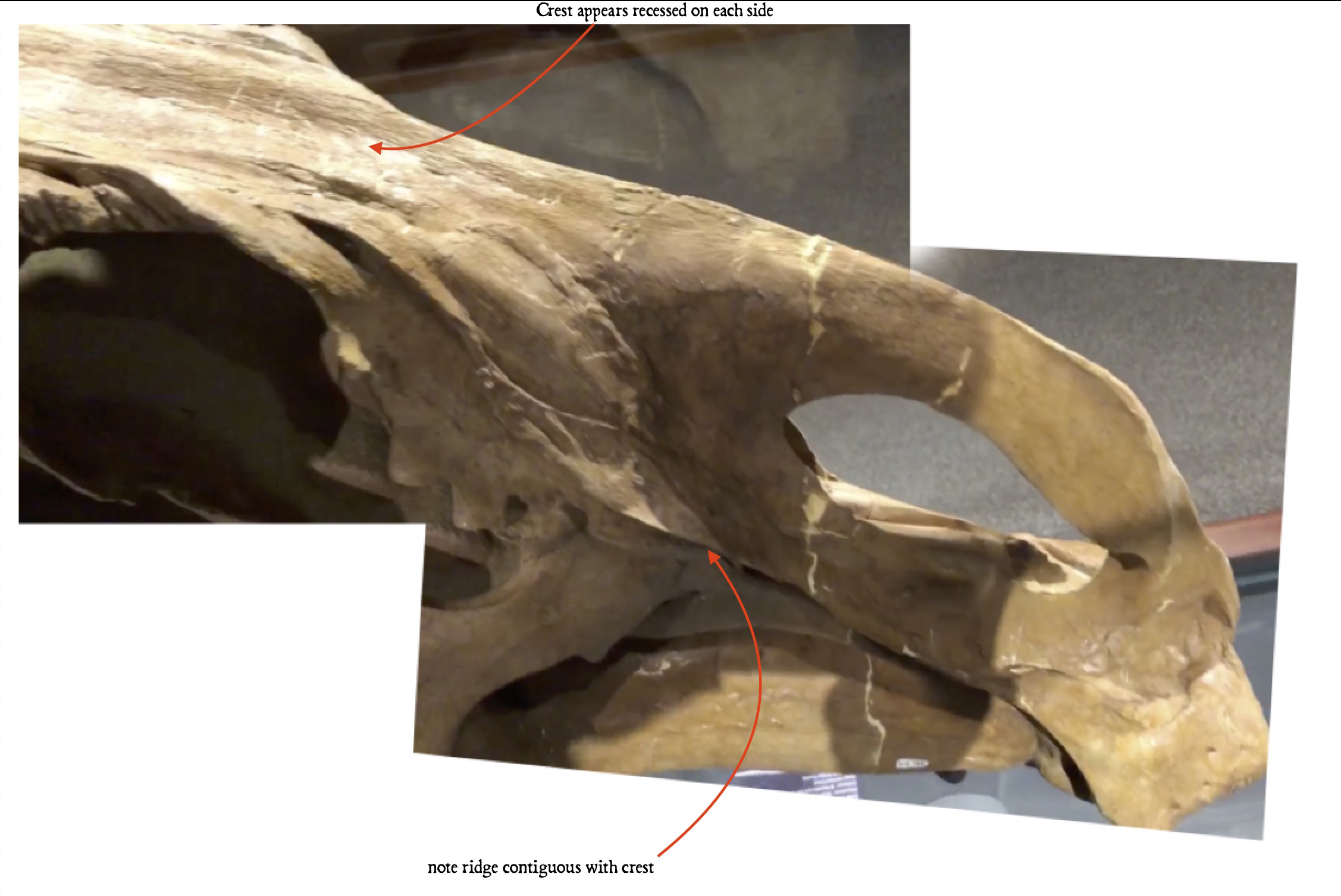
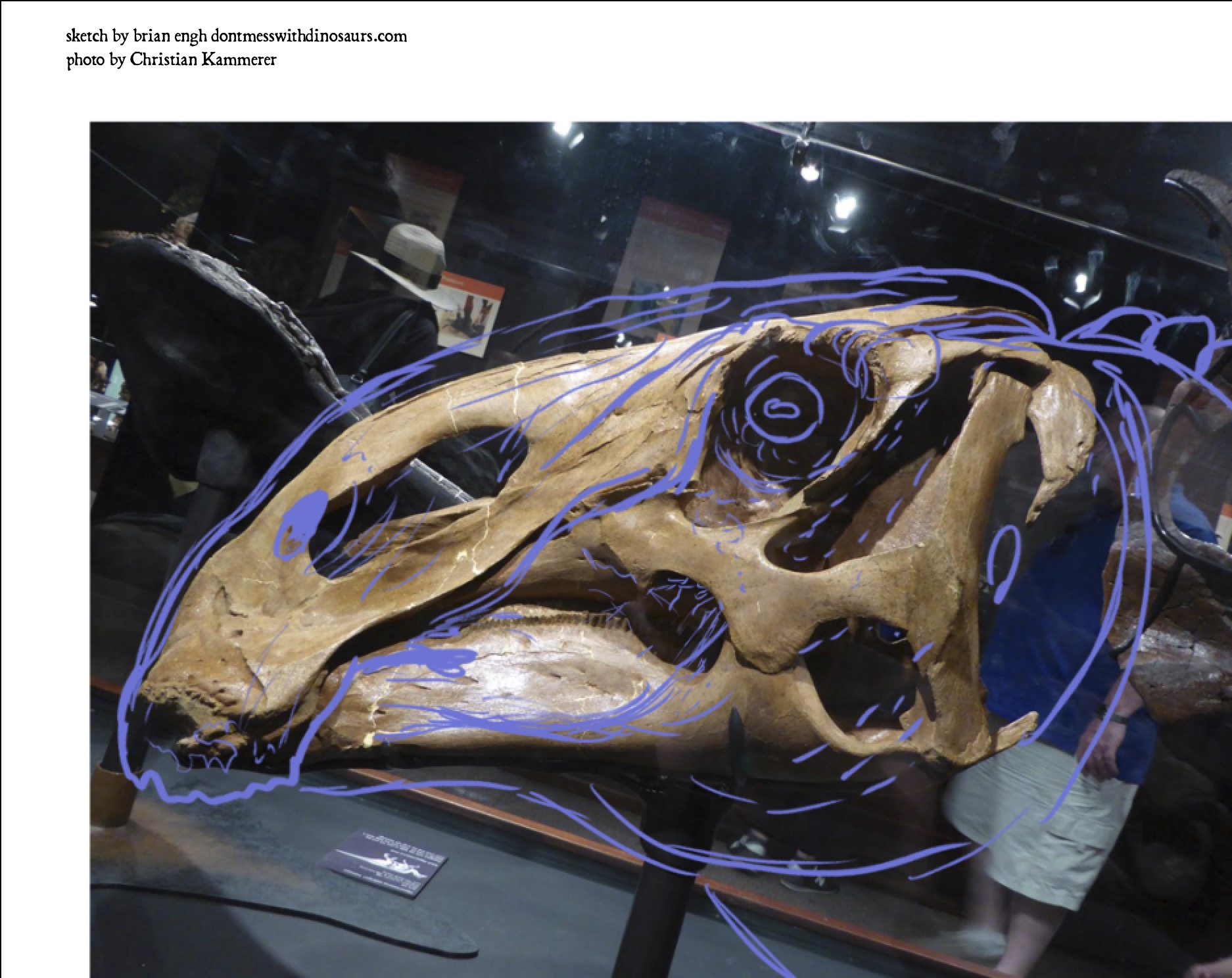
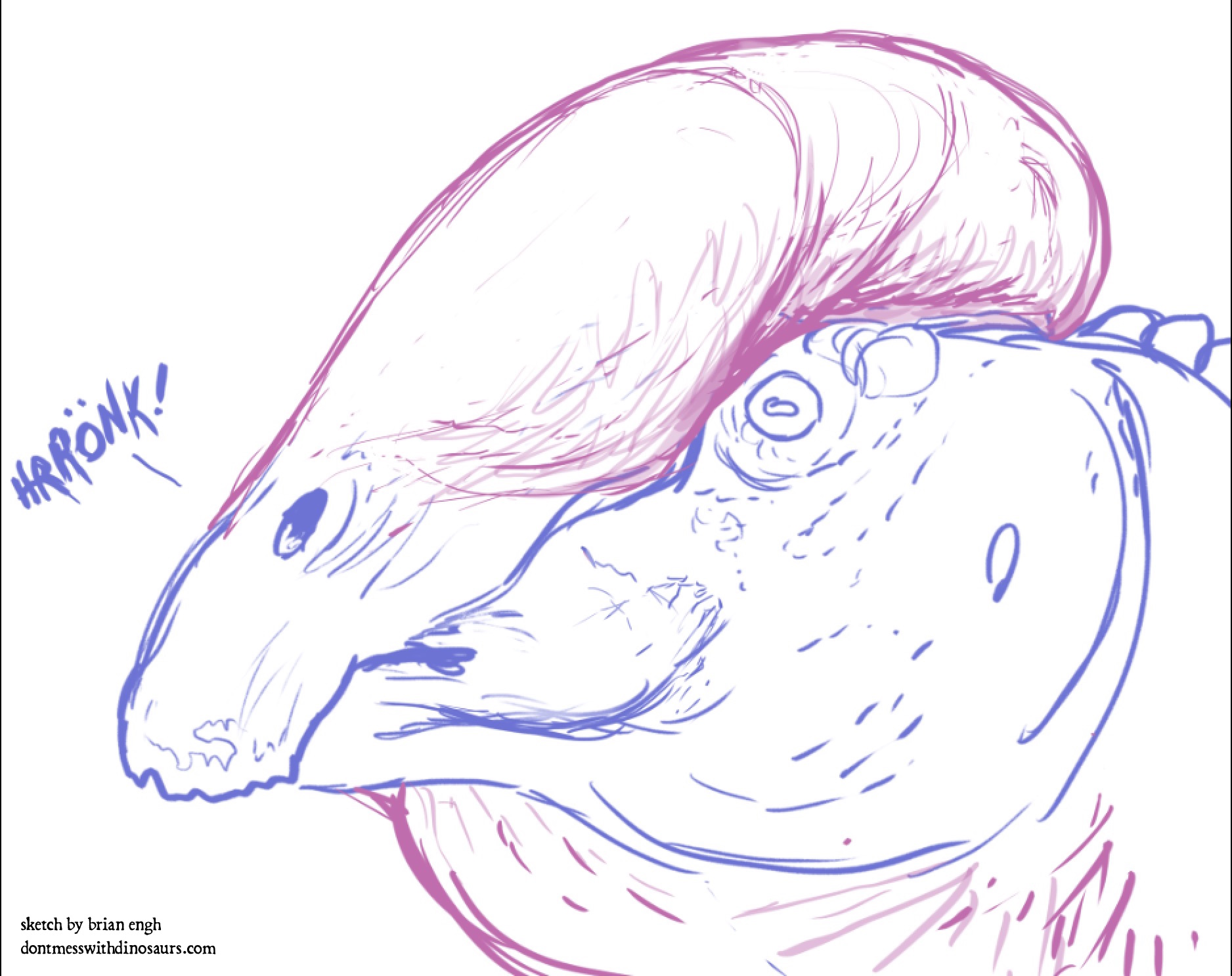
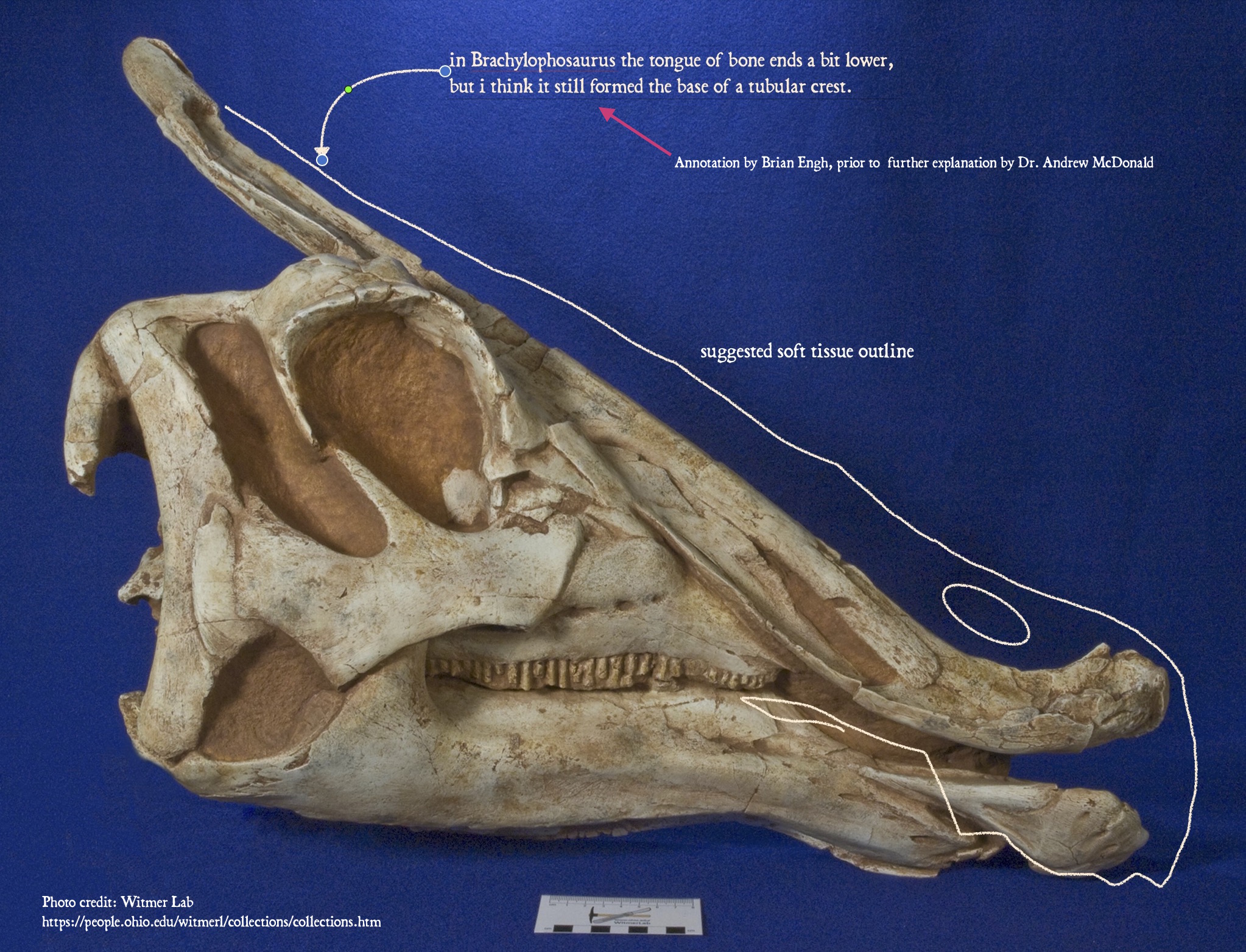
But what should Ornatops’ or Brachylophosaurus’ crest look like from the outside? While the exact shape of Ornatops’ crest is unknown, it likely supported a crest similar to that of its close relative Brachylophosaurus, which sports a low flattened crest that looks to me a bit like an inverted version of a dog’s tongue, with a ridge in the middle and two depressions on either side of that ridge. This got me wondering if the preserved bony crest of Brachylophosaurus might just be the bony base of a larger soft-tissue crest formed by the cartilage or other soft tissues of an expanded nasal capsule – meaning the cartilage and other soft tissues that surround the nose of many animals, including modern birds, crocodiles and non-bird dinosaurs.
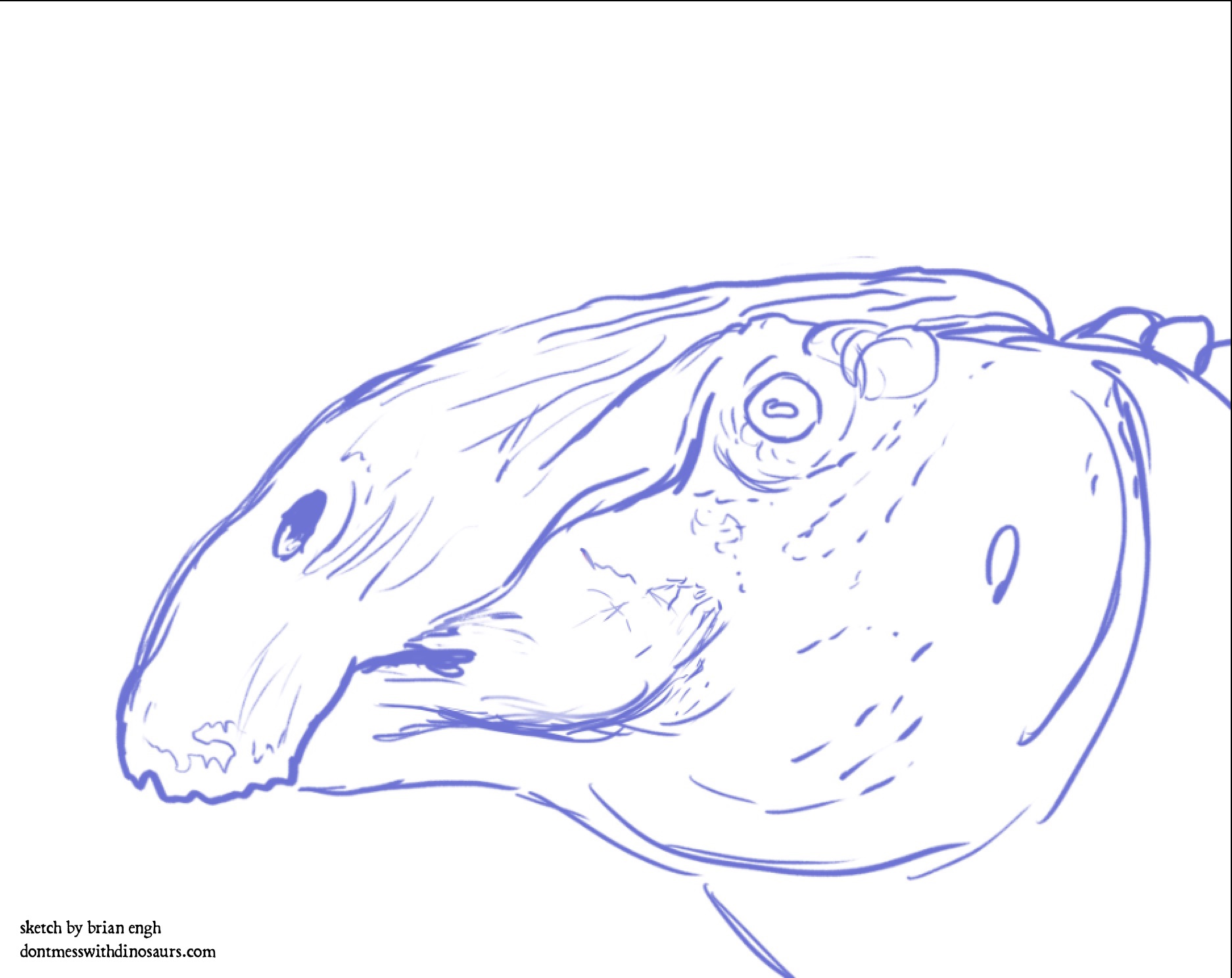
Such an interpretation has has been inferred for more derived saurolophine hadrosaurs such as Saurolophus and Augustynolophus, so I made this quick scribble to suggest the idea for our reconstruction.
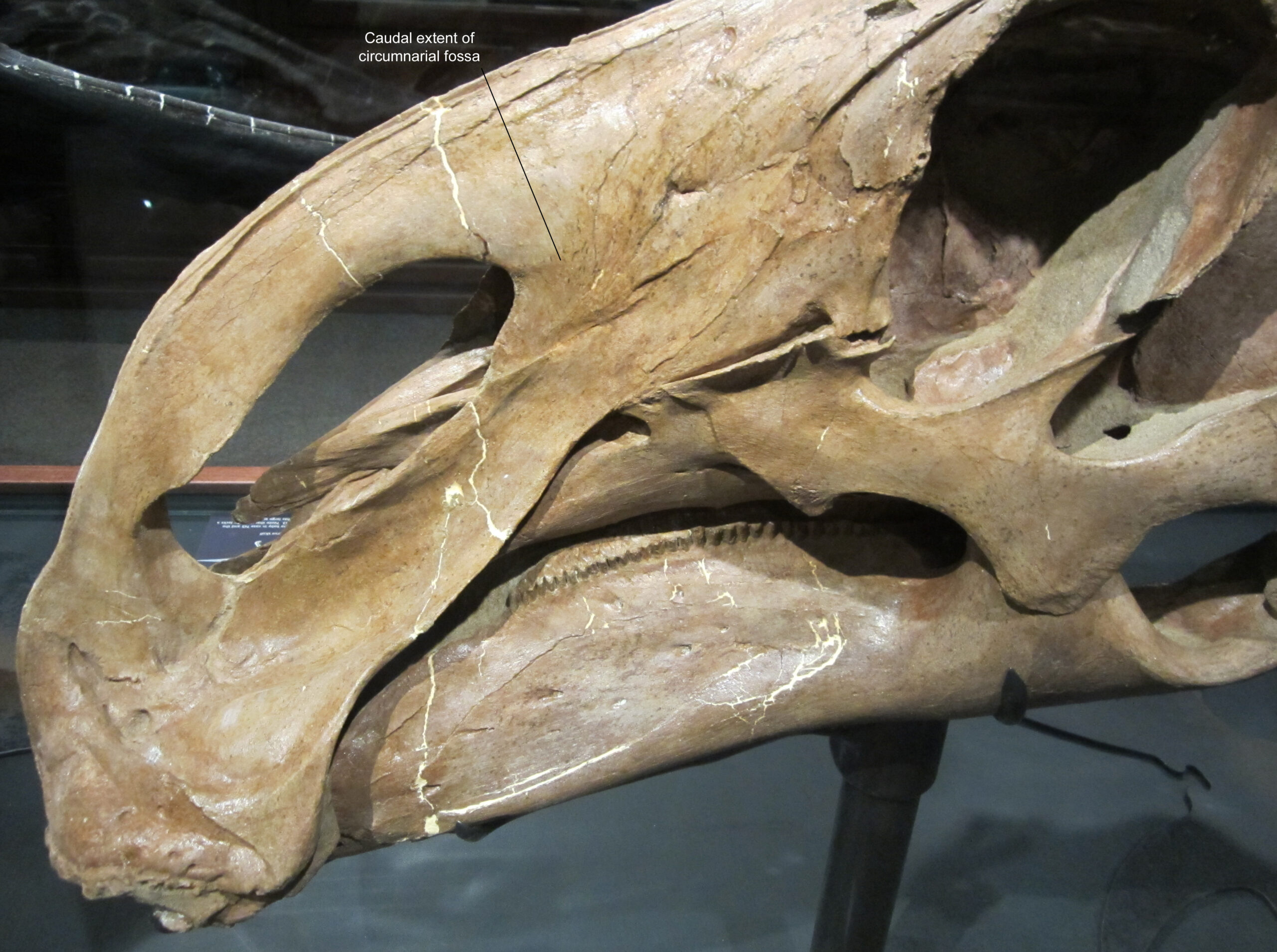
While it’s a fun soft tissue interpretation, it’s not well supported at this time by the available fossil evidence, and Dr. McDonald explained to me that in Brachylophosaurus there isn’t a clear depression behind the bony opening of the nose which would indicate a significant expansion of that nasal capsule cartilage. That depression is referred to as the “circumnarial fossa” and in saurolophines with much more developed crests, such as Saurolophus, that depression is well defined and can be easily seen running up nearly the full length of their crests.
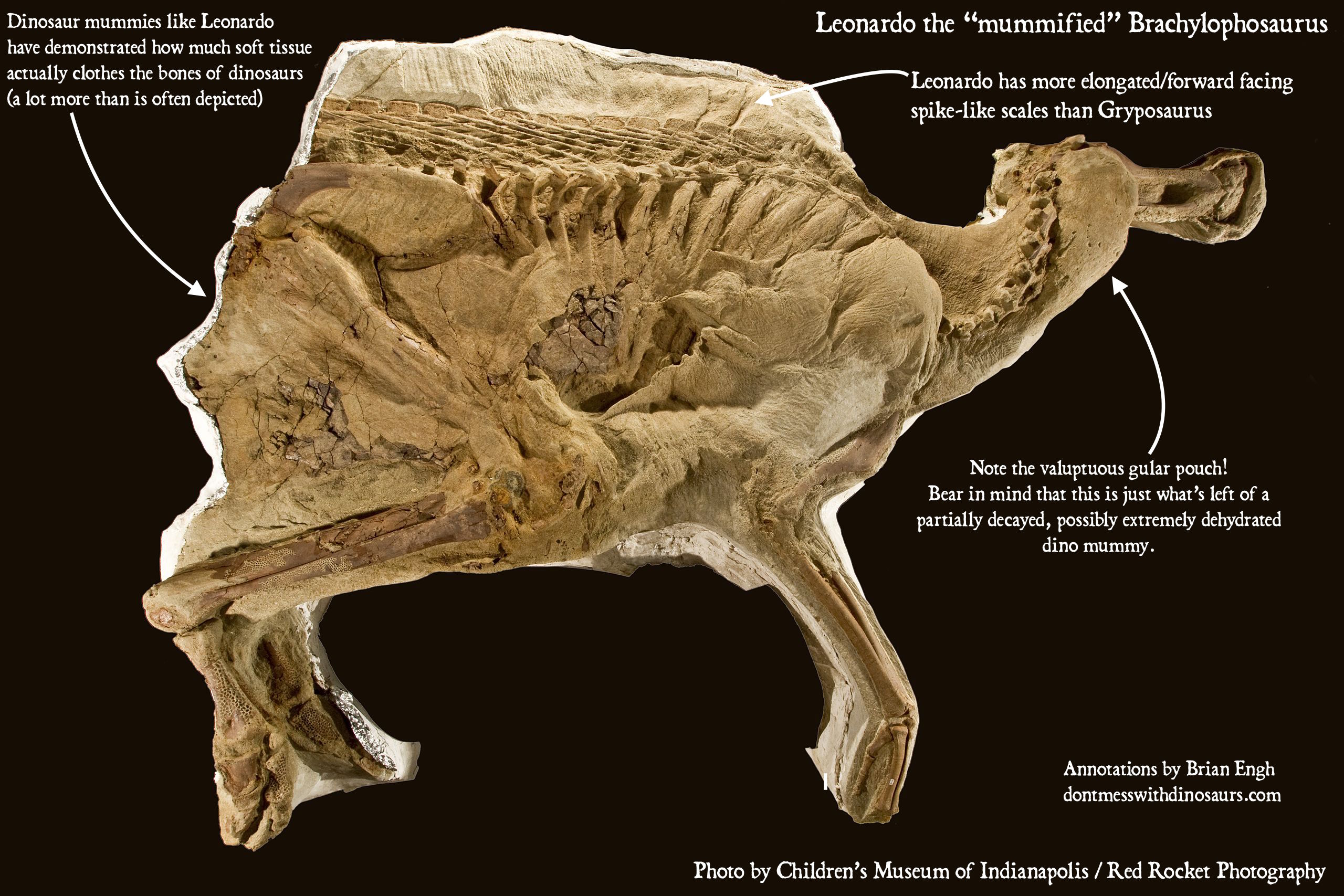
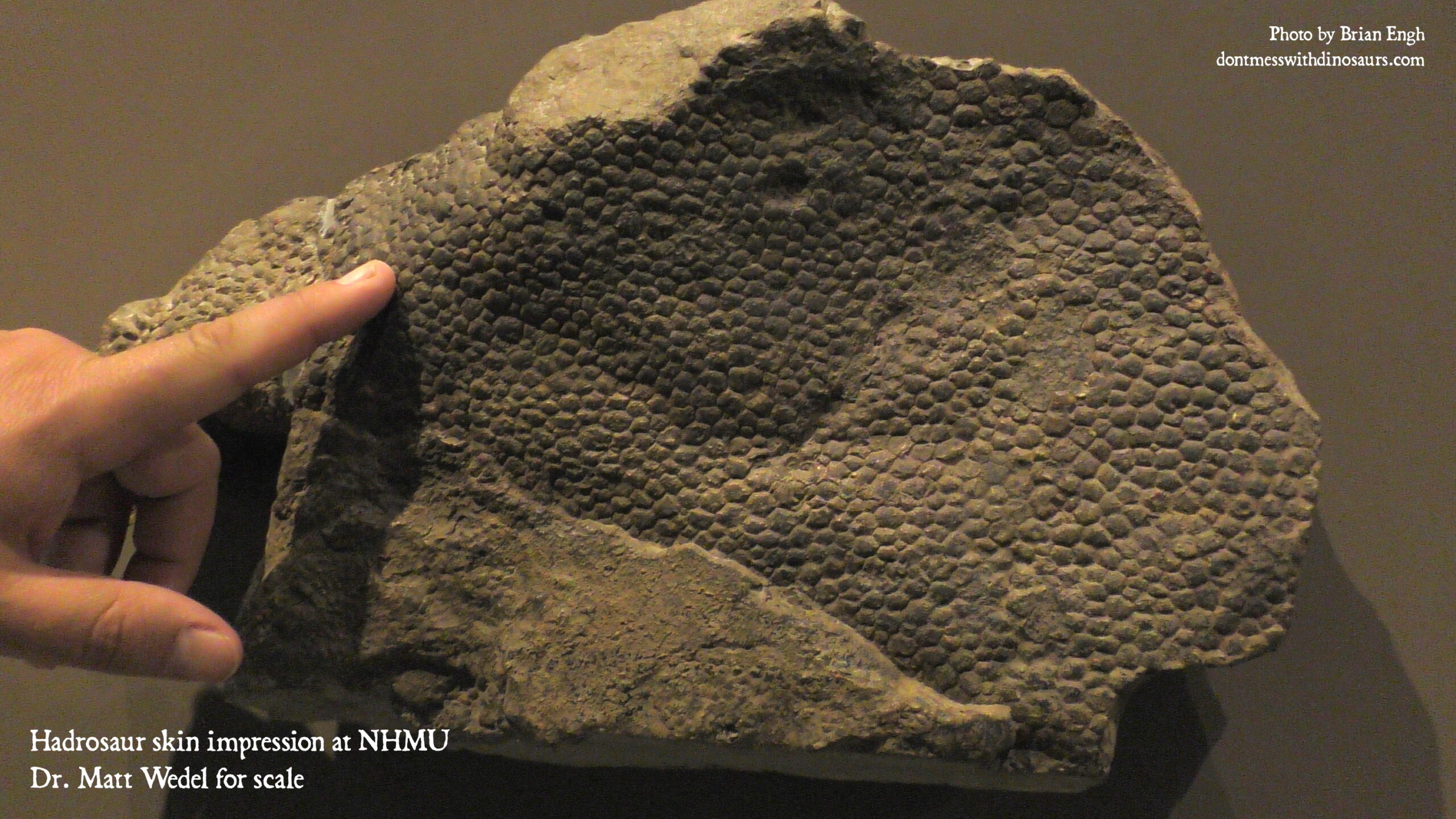
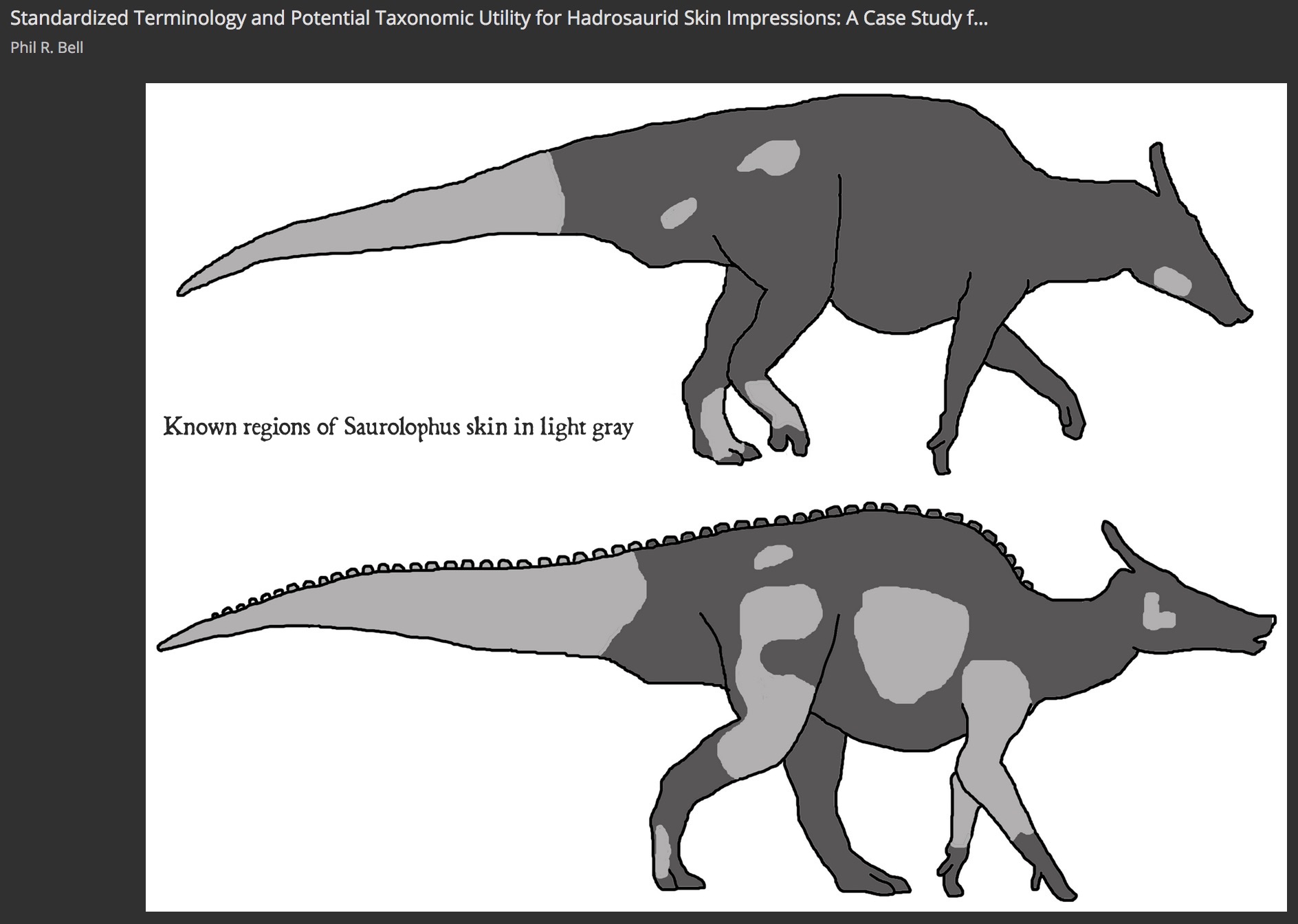
One of the features of saurolophin soft tissue we can be pretty confident about is the skin texture, as a huge array of skin impressions and even “mummies” (skeletons with associated mineralized soft tissues) are known from a bunch of hadrosaurs, including Ornatops’ close relatives Saurolophus, Gryposaurus and Brachylophosaurus.
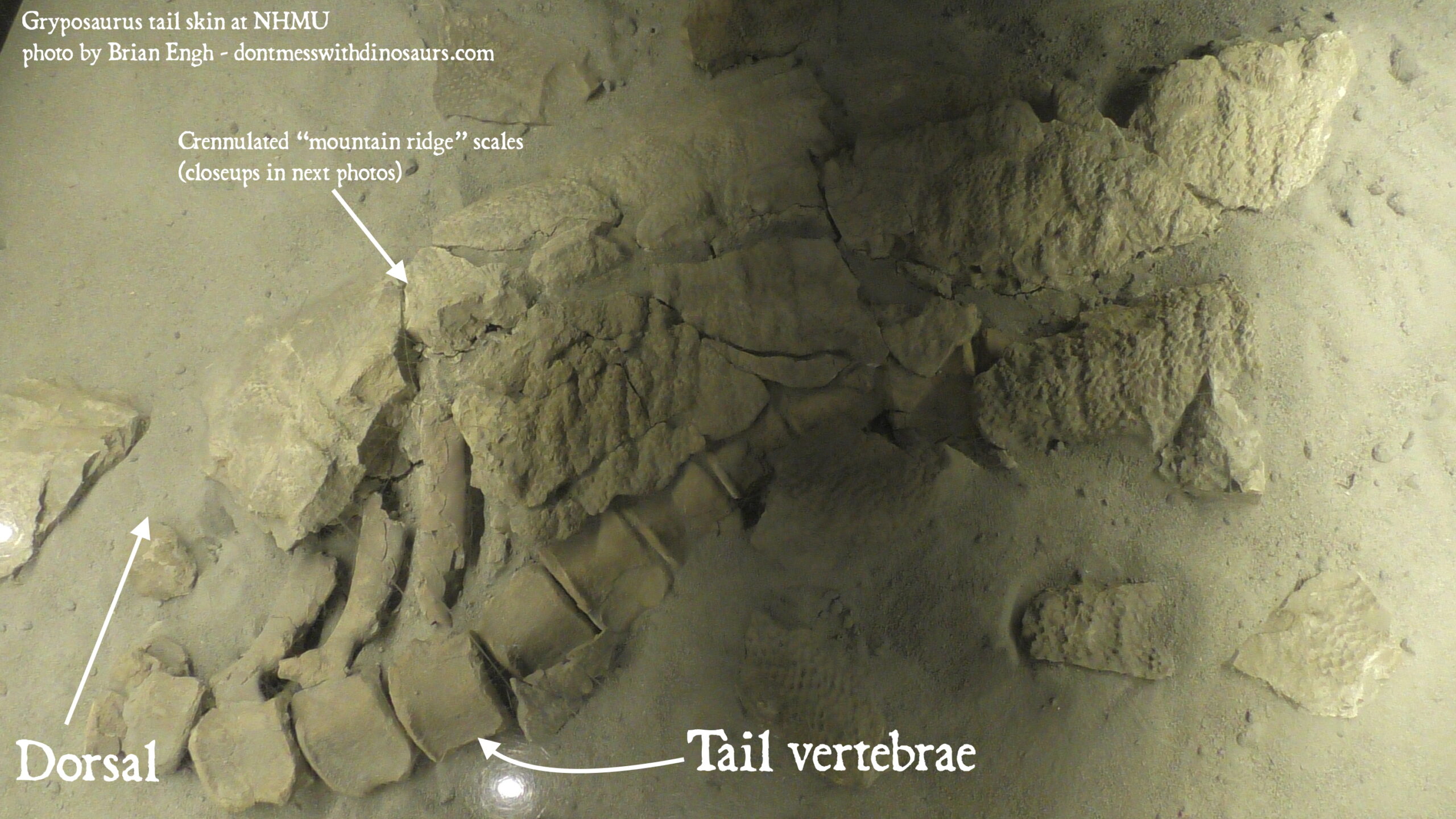
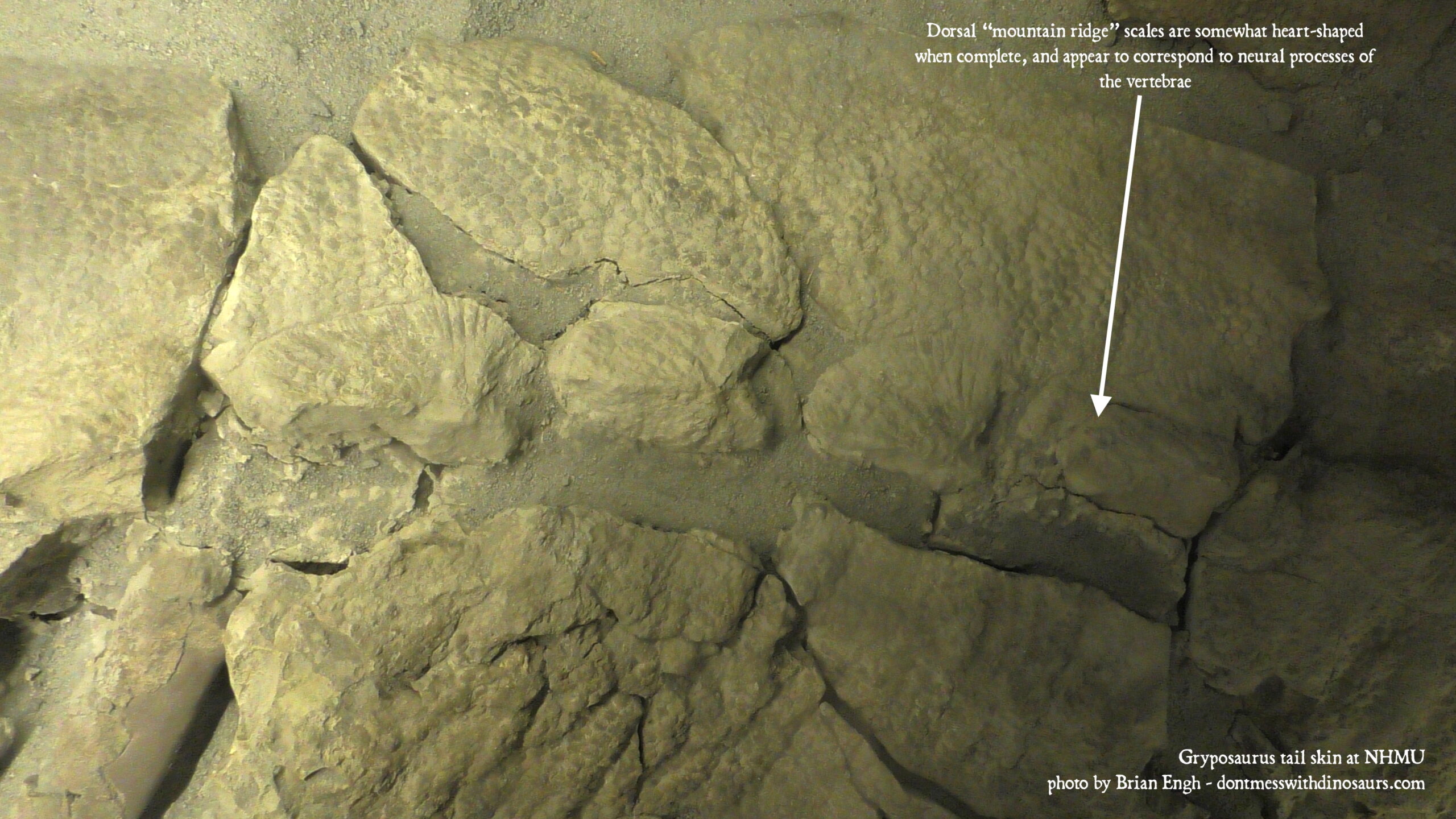
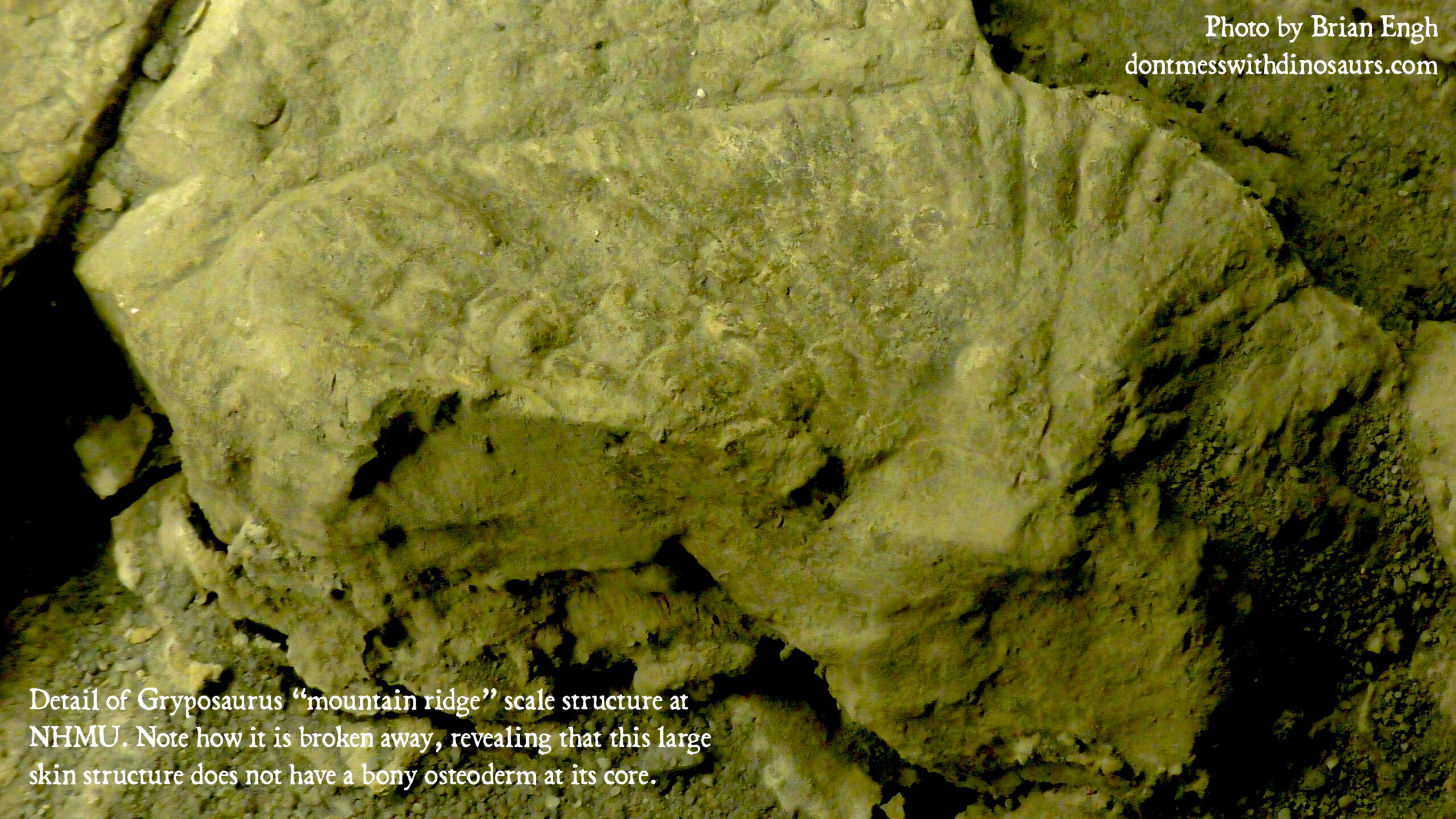
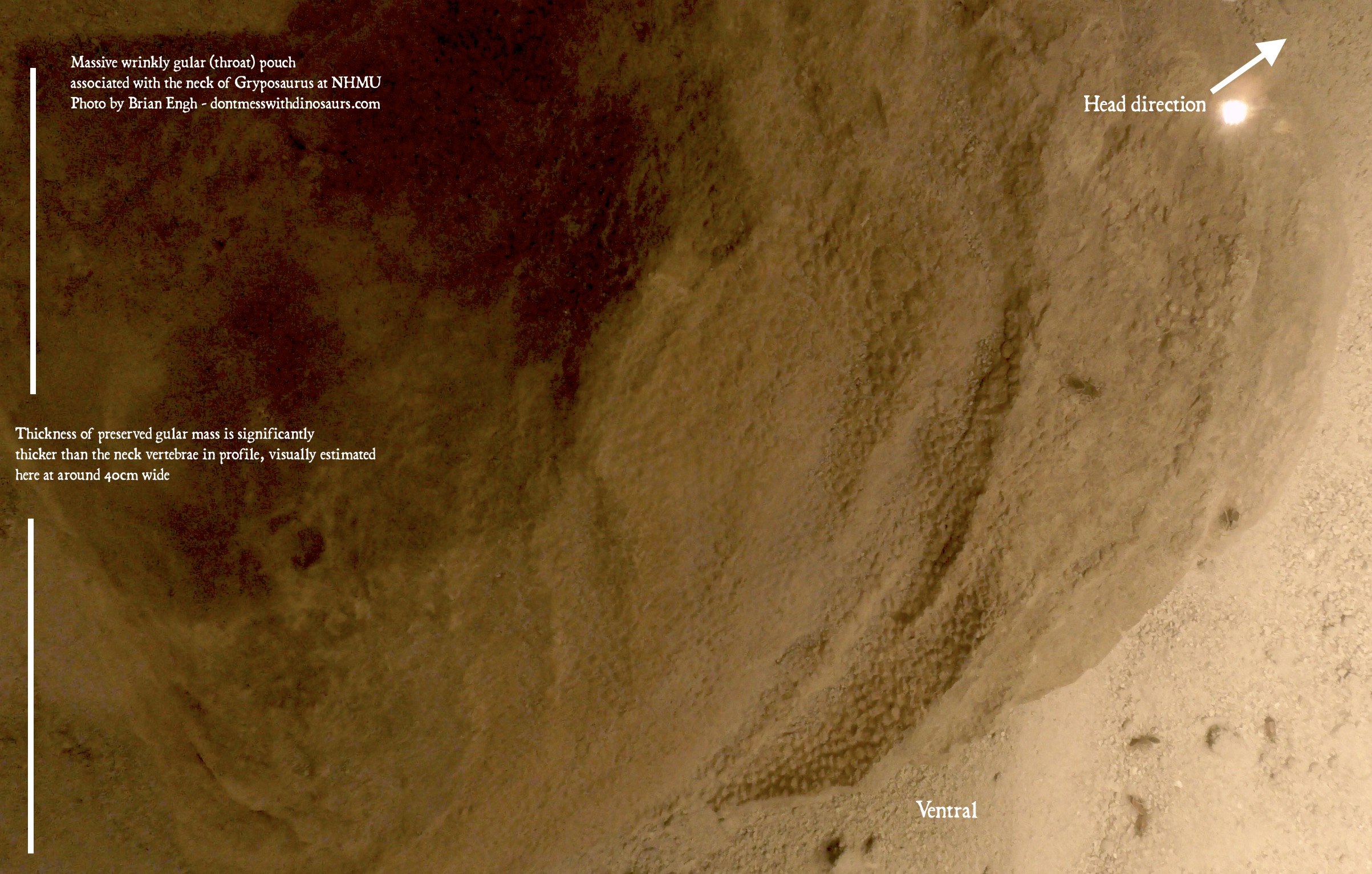
All of these hadrosaurs are covered with a basement of small hexagonal scales, but each species seems to be somewhat uniquely decorated with enlarged tubercle scales and big scales of various shapes running down the midline along their spine. This incredible Gryposaurus fossil on display at the Natural History Museum of Utah the enlarged scale structures along the midline look really cool, with a heart-shaped footprint, and ridges that remind me of the erosional channels running down the sides of mountains or fossil-bearing desert badlands!
This Gryposaurus, like Leonardo the Brachylophosaurus also preserves a wonderfully big, rumply section of neck skin.
Once I had the base skeletal anatomy and scale textures down, it was time to render the fleshed out illustration, which was executed in pencil and black water color washes. If you’re interested in more detail on the art techniques I used to execute this piece I’m preparing a post that will go up on my patreon.
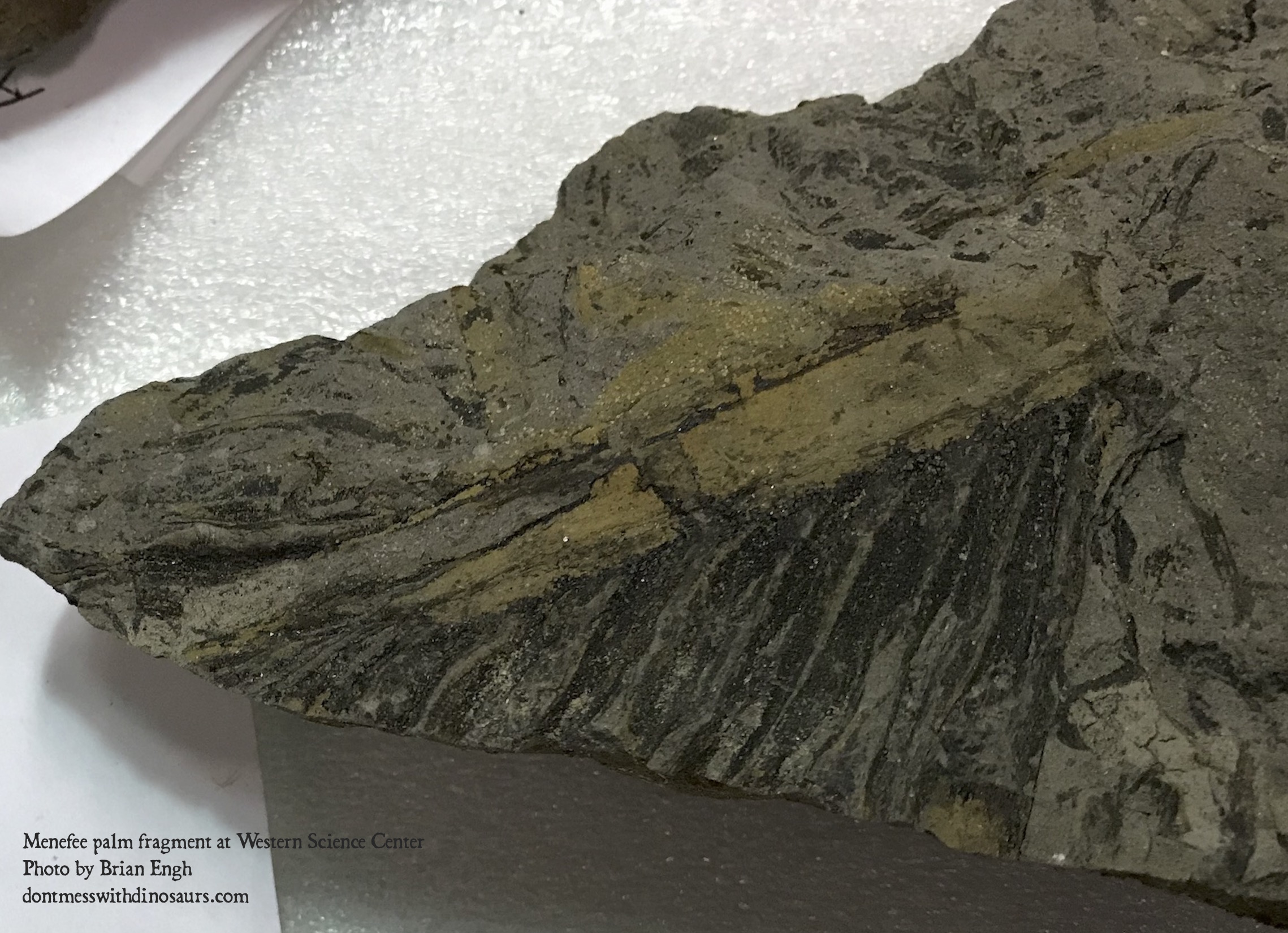
We chose to depict Ornatops in the shadow of a Sabalites palm because fragments of palm fronds were recovered by the team in the Menefee, and similar palm fossils have been discovered in close association with hadrosaur remains elsewhere, such as the similarly aged Aguja Formation.
To me, one of the most fascinating aspects of this time period is the dramatically shifting plant ecology, as flowering plants like palms and numerous species of dicot trees took over the subtropical and tropical forests of the Cretaceous. I helped recover a few plant fossils from the Menefee with the Western Science Center’s team, and I was struck by their beauty and exceptional preservation. I’m fascinated by the possibility that future research may help reveal the relationship between these rapidly evolving plant groups to plant eating dinosaurs and whole ecologies in greater detail.
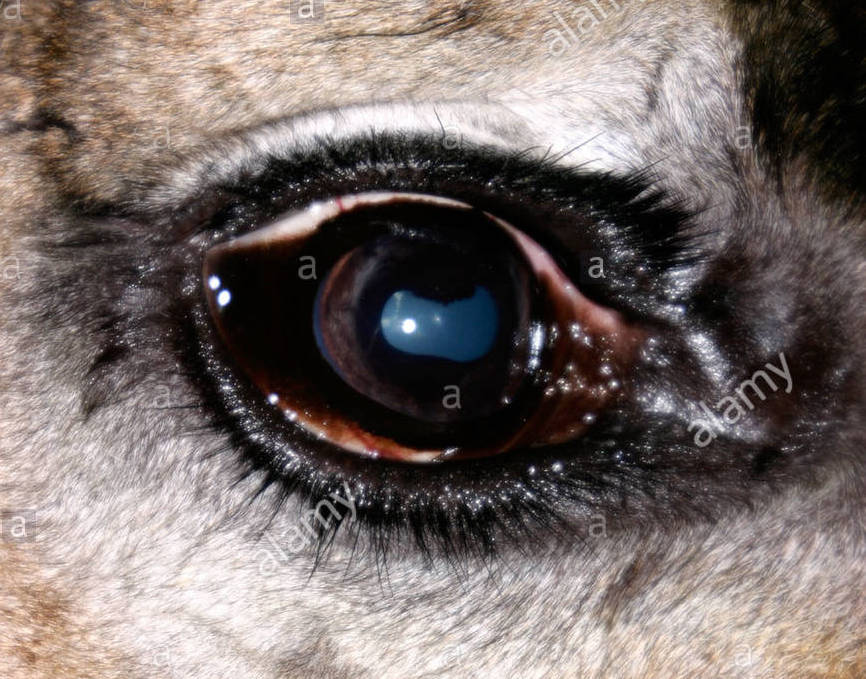
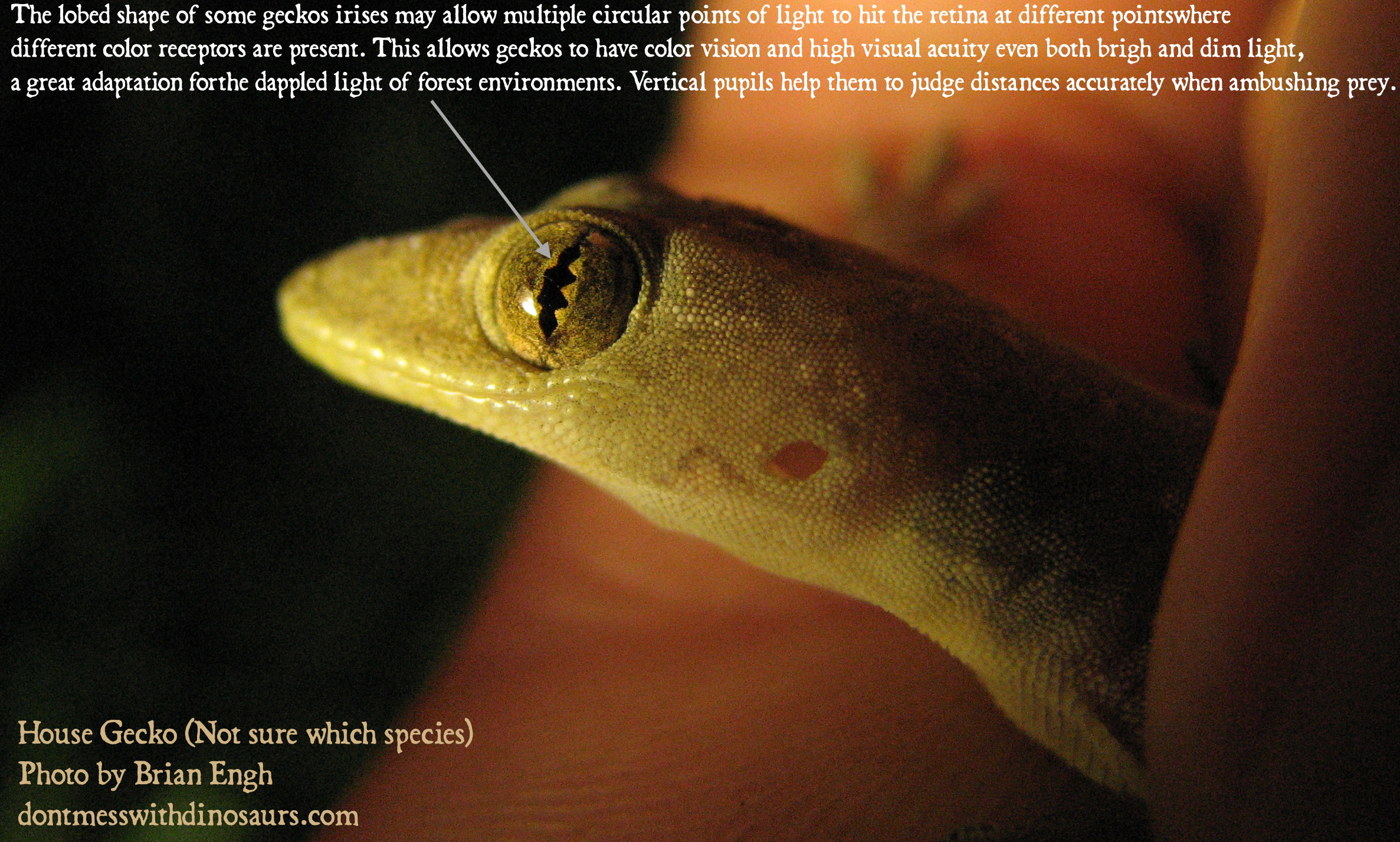
One of the most speculative details of this reconstruction is the shape of the pupil, which is horizontal, but also lobed, somewhat like a gecko. This was inspired by a recent study that demonstrated a strong connection between ecological niche and pupil shape. Many large and medium sized grazing ungulates (hoofed mammals) have horizontal pupils, which likely helps them see the ground their grazing well, while also giving them panoramic vision to look out for predators. Believe it or not, many animals have the ability to rotate their eyes in their sockets to maintain a horizontal field of view no matter what position their head is in. This is a great adaptation to help them look out for predators whether their heads are raised or lowered for grazing.
Giraffe eye showing horizontal lobed pupil shape
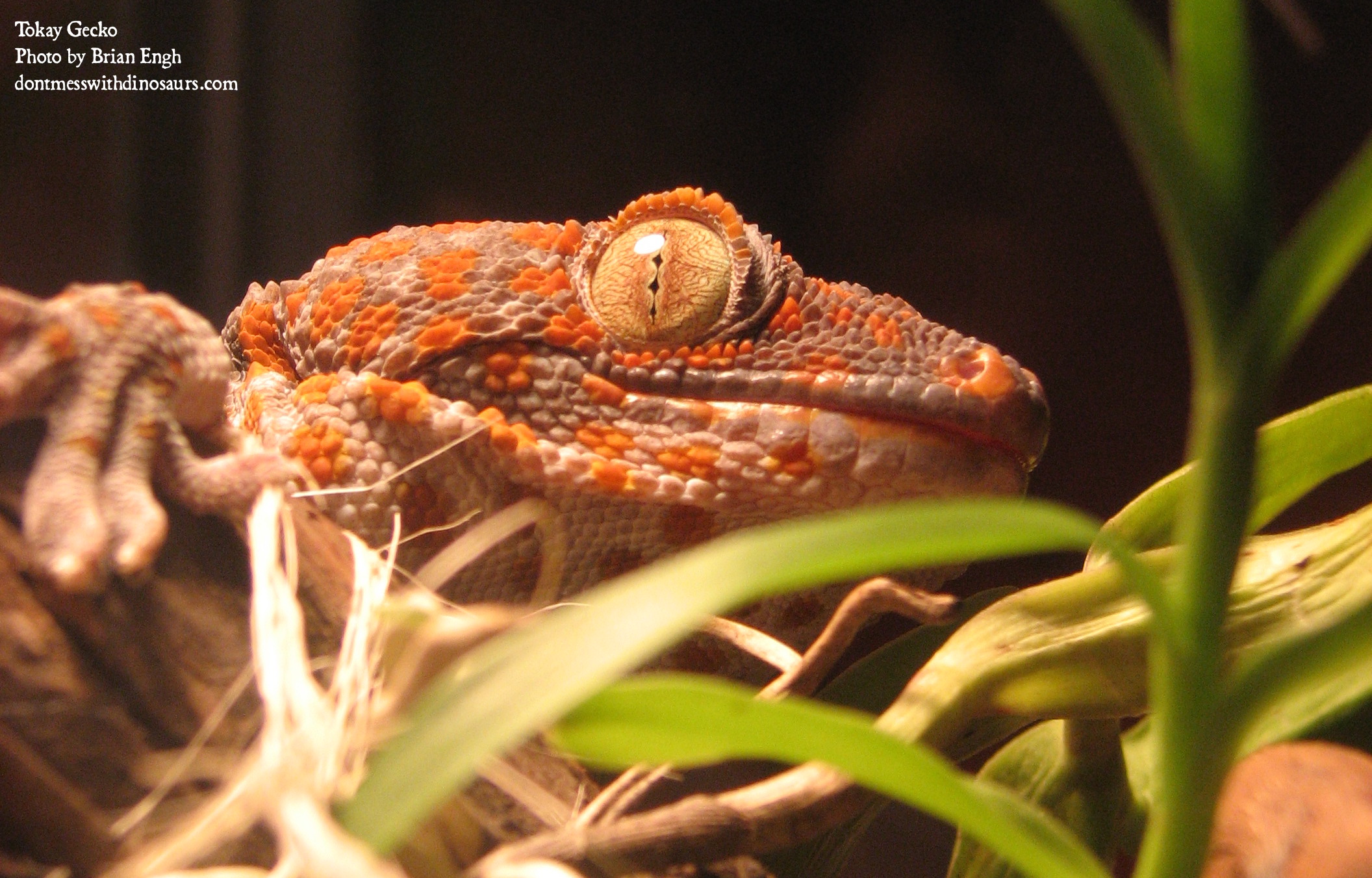
Some reptiles such as geckos, sometimes have lobed irises, which allow light to enter their eyes from multiple points at the same time, even when the iris is contracted down. This gives geckos exceptional color vision in both light and dark environments, which is related to both their pupil shape and their advanced retinas.
I thought it might be interesting to explore the idea of a multi-lobed iris, which would allow light to enter from multiple points, thus maintaining a wide field of view whether the head was raised or lowered, and also hinting at the possibility that advanced dinosaurs might have had amazing color vision even in the low light conditions of dense Cretaceous rain forests.
This is of course totally speculative, but it seems like it might be a good adaptation for a browser grazing both low and high in the dense megathermal forests of the Upper Cretaceous of North America.
I had a lot of fun coloring this piece and considering all kinds of color schemes and what they might suggest about Ornatops’ biology and ecology, and I originally prepared several color variants based off of the same black and white illustration. Considering which Ornatops color scheme to debut as a press image also lead to an interesting discussion about coloration. While the Western Science Center staff preferred the reconstruction you see above, my favourite was the gaudily colored one below.
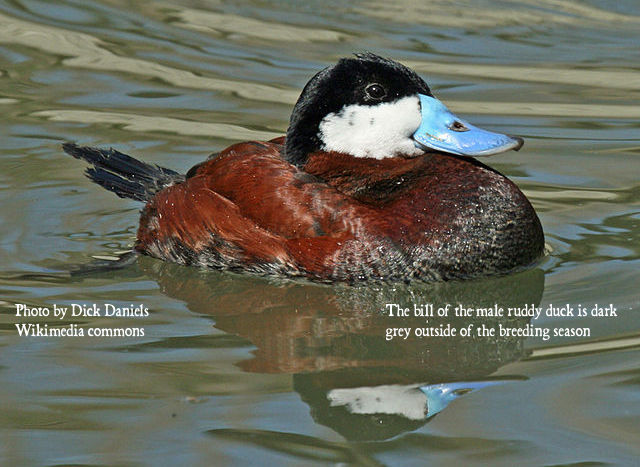
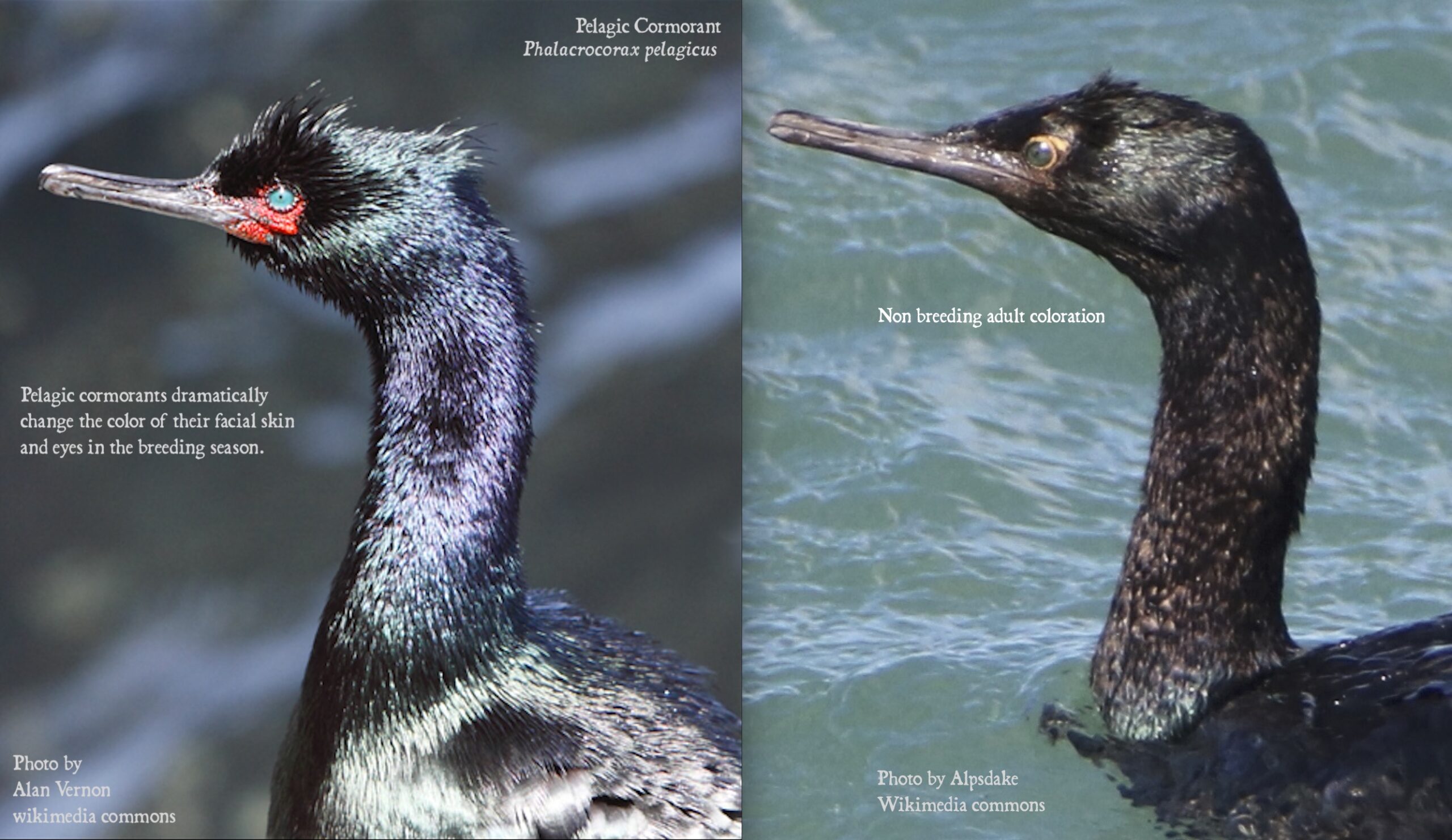
While I am happy with either one being the public face of Ornatops, it occurred to me that these two color schemes could plausibly even be the same individual animal due to color change. Recent study of crocodilians has revealed that they can shift their skin color from light to dark, just like most lizards and frogs. This would suggest that some, if not many scaly dinosaurs might have been able to move pigments around in their skin as well, and the ability to really dramatically shift color has actually evolved numerous times in various animal groups, not limited to reptiles alone. Birds also can change color, but they tend to do it more gradually, usually by seasonally molting their feathers to take on more colorful breeding plumage, but not always. Several species of birds, such as Ruddy Ducks can even shift the color of their bills.
I hope you like this new art, and I hope you all will stay tuned in the weeks and months to come as we continue to work on art and displays for the upcoming Menefee exhibit at the Western Science Center. If you’re interested in more detail on the art techniques I used to execute this piece I’m preparing a private post that will go up on my patreon.
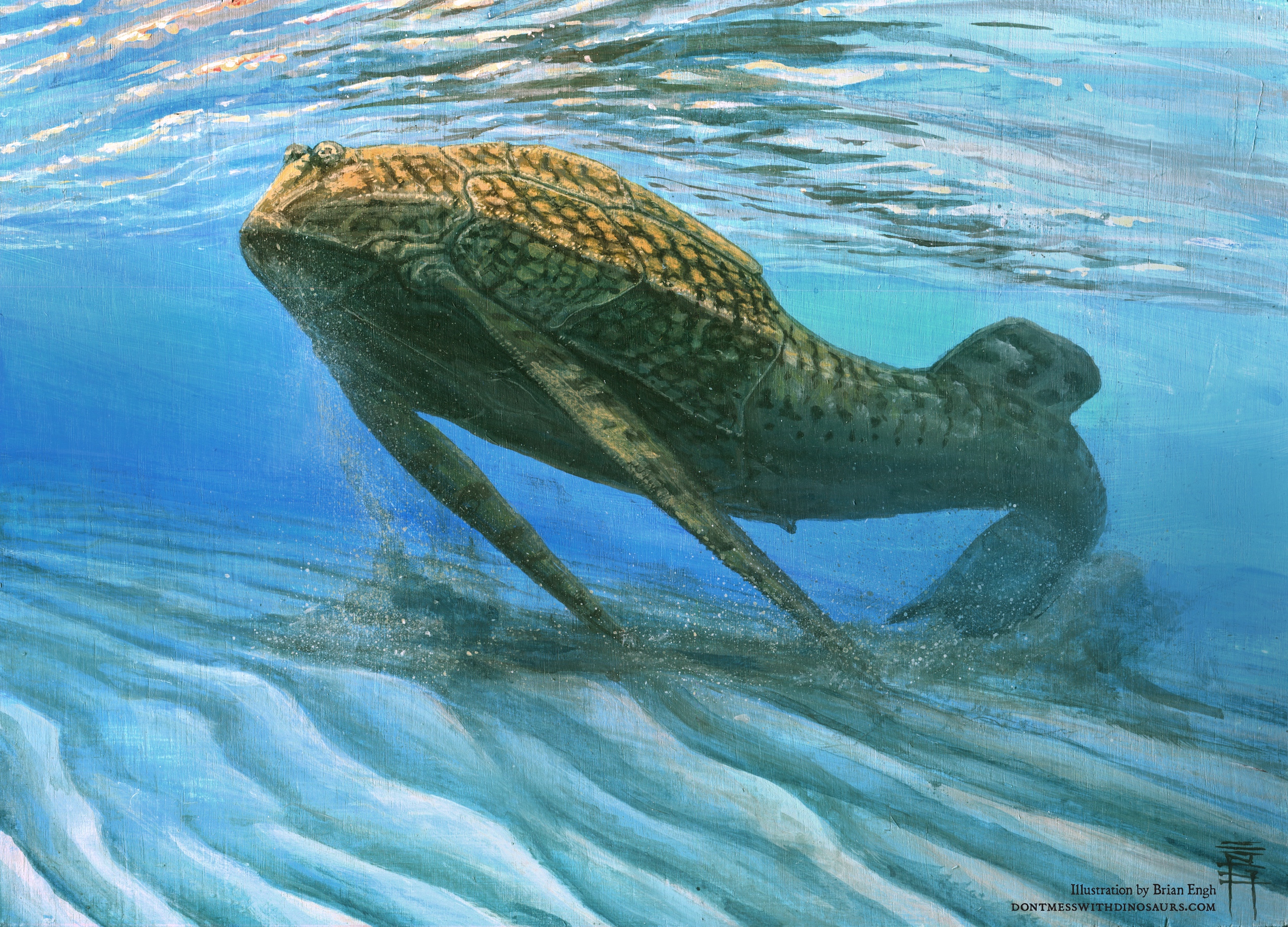
Just a quick post to link you to a really important study that I did a very quick painting for, of a truly weird ocean creature, that lived around 180 MILLION YEARS BEFORE the first dinosaurs!!
Bothriolepis aka the Beetle Mermaid.
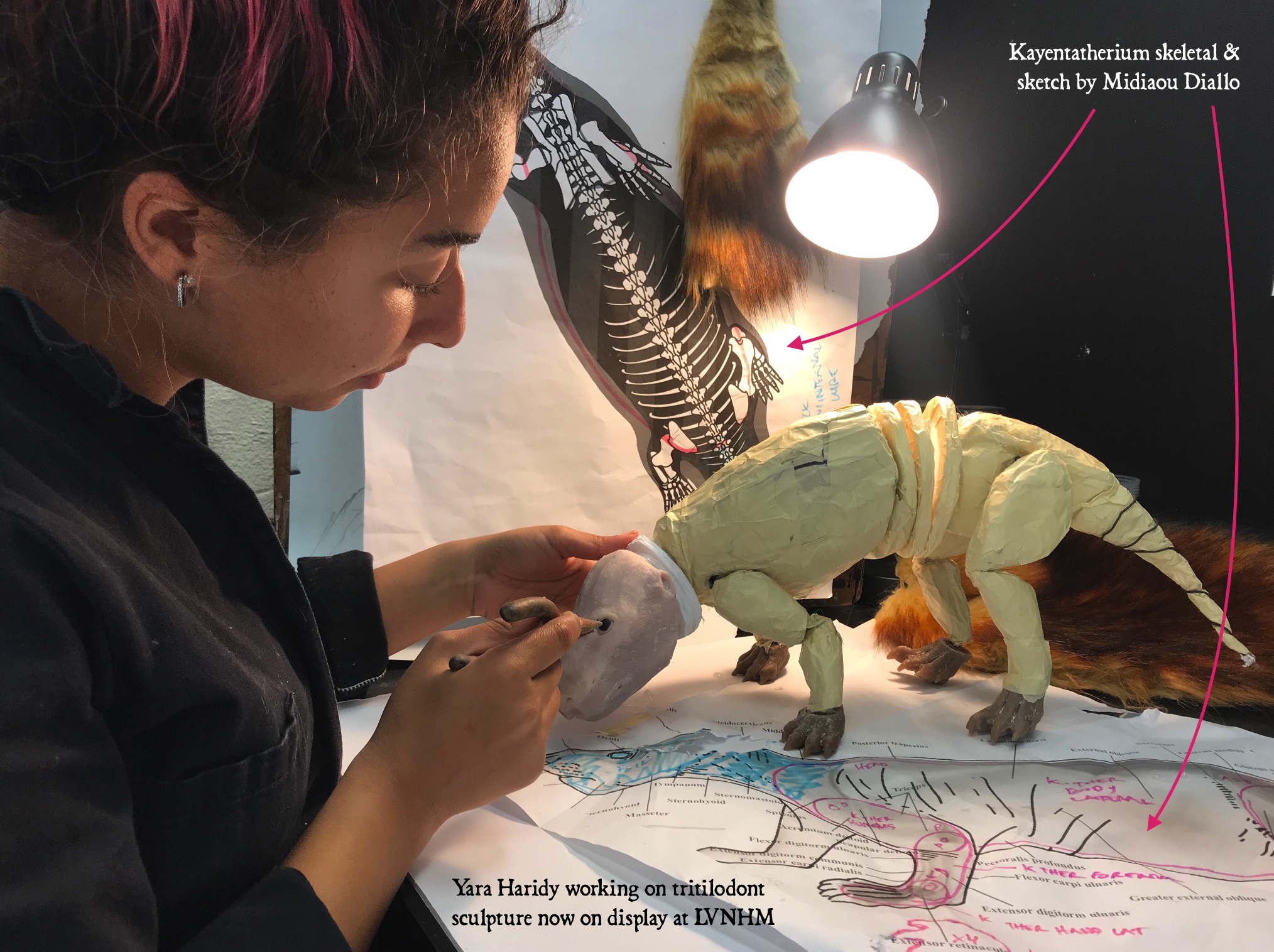
This is #bothriopsis an ancient armored bony fish that swam earth’s oceans around 420 million yrs ago. A new study by paleontologist Yara Haridy pries at a deep dark evolutionary question: Why and how did bone evolve??
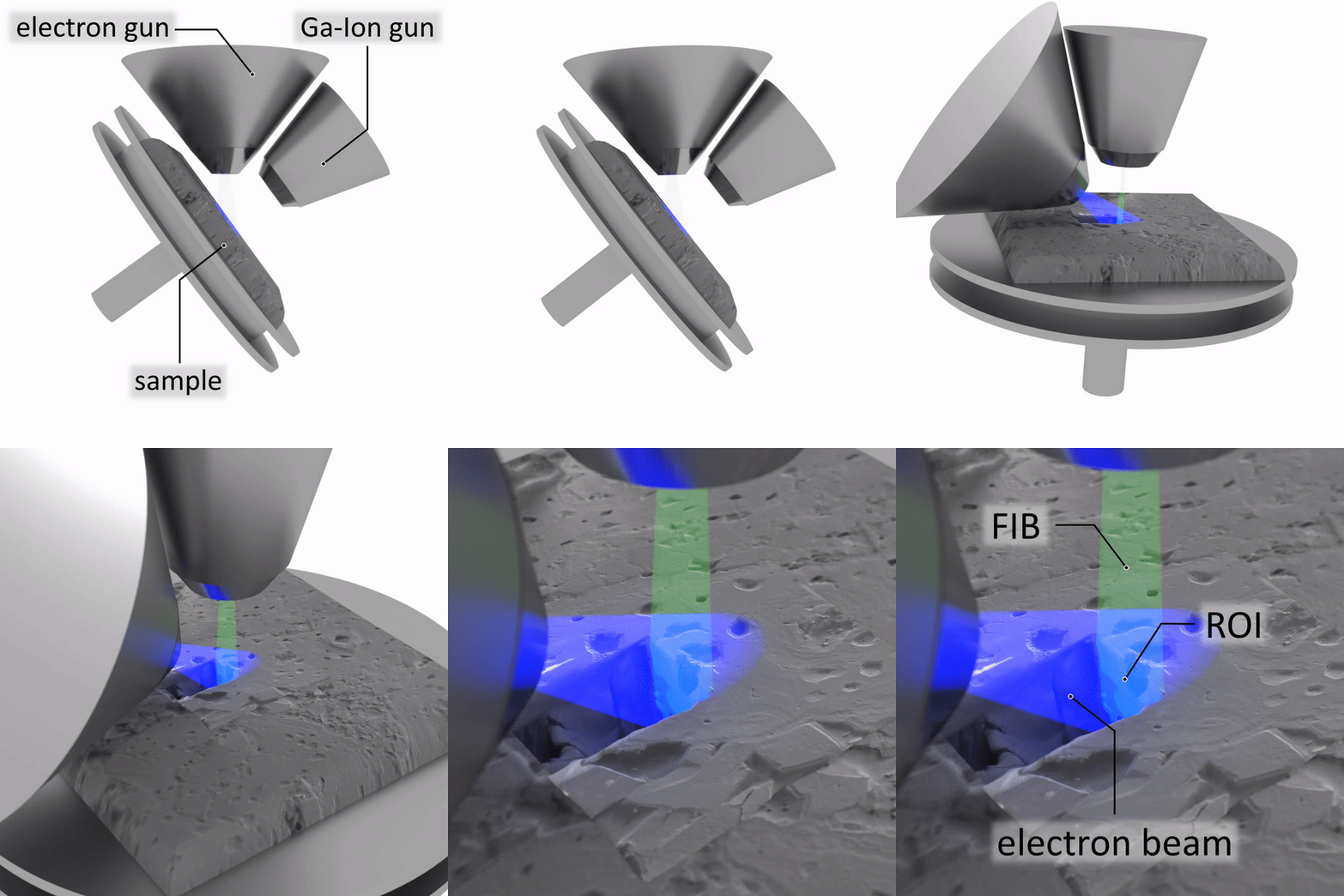
To investigate the origin of bones, she and her collaborators innovated a new way to look at the microstructure of fossils at a scale never before seen. By using a GALIUM ION BEAM (cue laser sound fx) in combination with a SCANNING ELECTRON MICROSCOPE (cue computer robot boopbeepbop sfx) Haridy and colleagues were able to slice through samples of bone micron at a time, and scan each tiny slice as they blasted through the (incredibly tiny) fragments of fossil bone.
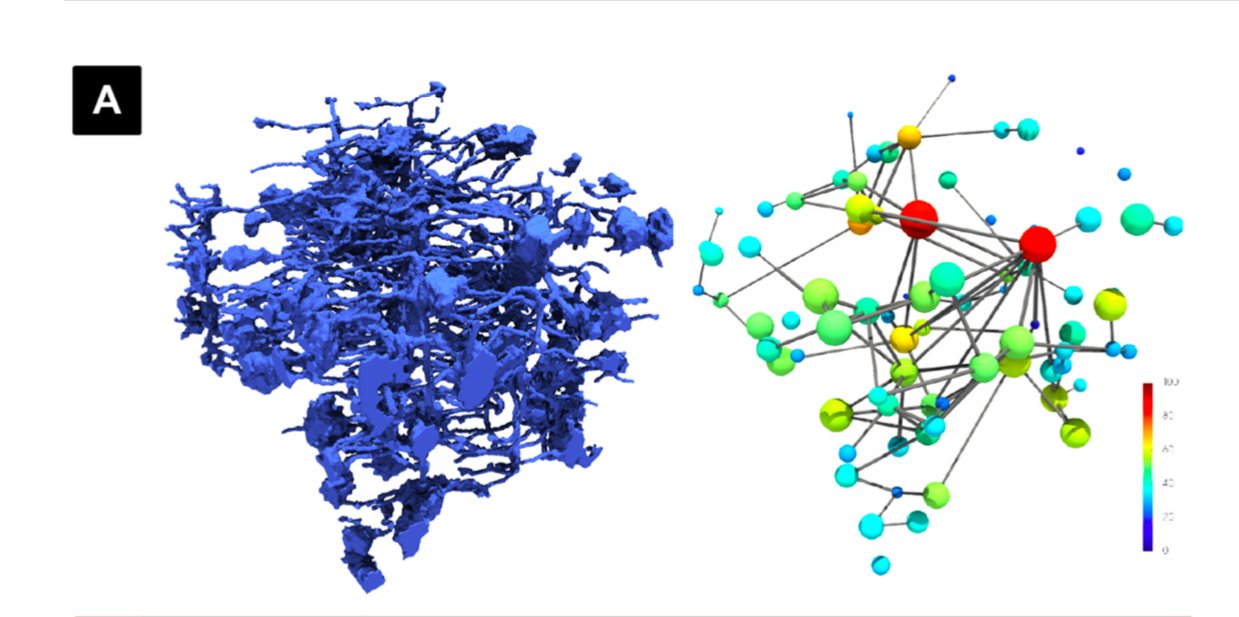
By digitally stacking up those tiny tiny tiny tiny slices Yara and her collaborators were able to build a 3d reconstruction of the spaces in bone where bone cells once lived at a level of detail never before seen!
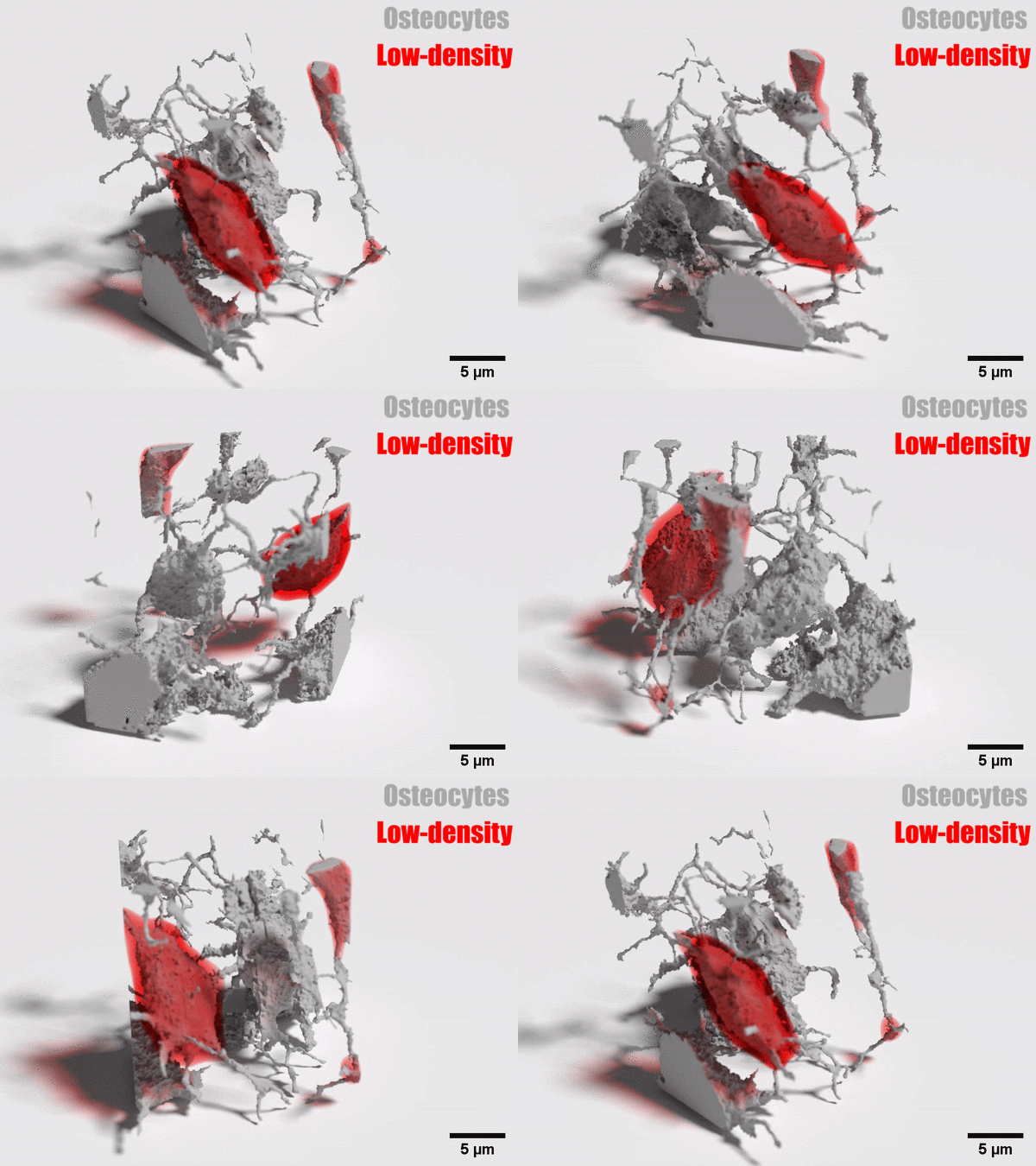
Bone cells have incredibly tiny little tubes connecting them – called bone cell canaliculi – which allow bone cells to share resources and communicate with eachother. Understanding how these bone cells are connected is crucial to understanding how they functioned and how bone evolved, & they found something fascinating- an area of low density bone right around the space occupied by the bone cells.
This area of low density is observed in modern bone and it is the result if a CRUCIAL biological function: adding and removing minerals from the bone. When we mammals need to make milk for our babies, we get a lot of the calcium from our bones. When birds or reptiles lay eggs they pull minerals stored in their bones. When we work out really hard and use a lot of calcium ions to move our muscles some of that calcium can be pulled from our bones (drink yo milk yall). That awesome superpower you have to store and access minerals stored in your bones evolved around 450 million years ago in weirdo armored Beetle-Mermaid-lookin fish like Bothriolepis & its kin.
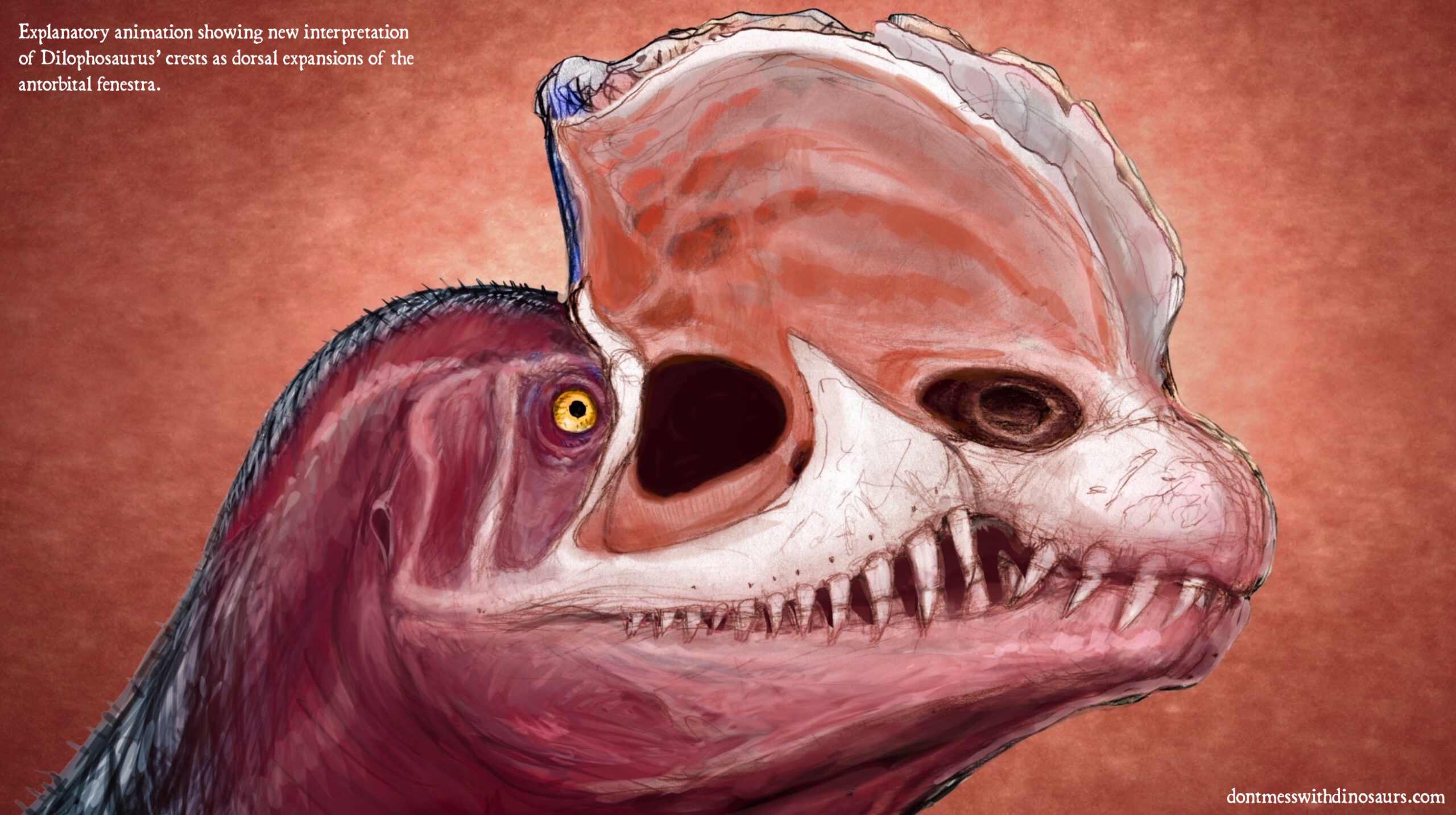
In this video we’ll travel back to the world of the early Jurassic and take a modern look at it’s most iconic dinosaur: Dilophosaurus. By studying the latest specimens, fascinating fossils from the world Dilophosaurus lived and evolved in, and modern biology, paleontologists are just now starting to get a clearer picture of this important period in dinosaur evolution and the history of our planet.
Over the last several years I have had the good fortune to be able to create numerous pieces of art centered around Dilophosaurus and the world it evolved in thanks to the St. George Dinosaur Discovery Site and The Las Vegas Natural History Museum which have commissioned me to create numerous pieces of art depicting life in the early Jurassic, and I have jumped at every opportunity to explore these fossil sites in person because there is still so much to be discovered in the early Jurassic.
At the St. George Dinosaur Discovery Site there are amazing trackways from a few million years before Dilophosaurus that show us that large theropods were in fact swimming in a lake. A vertebrae discovered at the site – which is now being described by Adam and Andrew – shows us that at least some of the animals at the site were close relatives of Dilophosaurus. You can see a clip from the St. George Dinosaur Discovery Site of Dr. Jerry Harris interpreting the find here, with special mention of the thinly laminated bone & air sacs:
Nearby, both in southwestern Utah and just over the Border in Nevada there are EXTENSIVE outcrops of late Triassic and early Jurassic rocks that have yet to be explored by paleontologists. When Andrew Milner (SGDS) was called upon to do a paleontological survey of an area where a road was to be constructed, he and his museum volunteers found HUNDREDS of fossils of tracks, various teeth, and plants at several levels in the Kayenta Formation. These awesome finds will be featured in upcoming scientific publications and displayed in an upcoming Kayenta Timeline exhibit alongside my Kayenta Timeline illustration featured above and in my video. Every one of these Kayanta intervals is filled with details drawn directly from the fossil evidence from Kayenta fossil sites, with a heavy focus on those uncovered by Andrew and his crew at these sites.
You can see a time lapse of 1 hour of work on the Kayenta Timeline here:
For more information and to support these museums as they embark on ambitious projects in the face of the COVID-19 shutdown, please visit their websites:
Las Vegas Natural History Museum https://www.lvnhm.org/support
I would not have had the opportunity to work for either museum if it weren’t for paleontologists Andrew Milner (SGDS) and Dr. Josh Bonde (formerly at LVNHM) vouching for me. Many thanks to Andrew and Josh for recognizing the detail I put into my work, and to museum directors Diana Azvedo (SGDS) and Marilyn Gillespie (LVNHM) for hiring me to do these exciting paleoart projects.
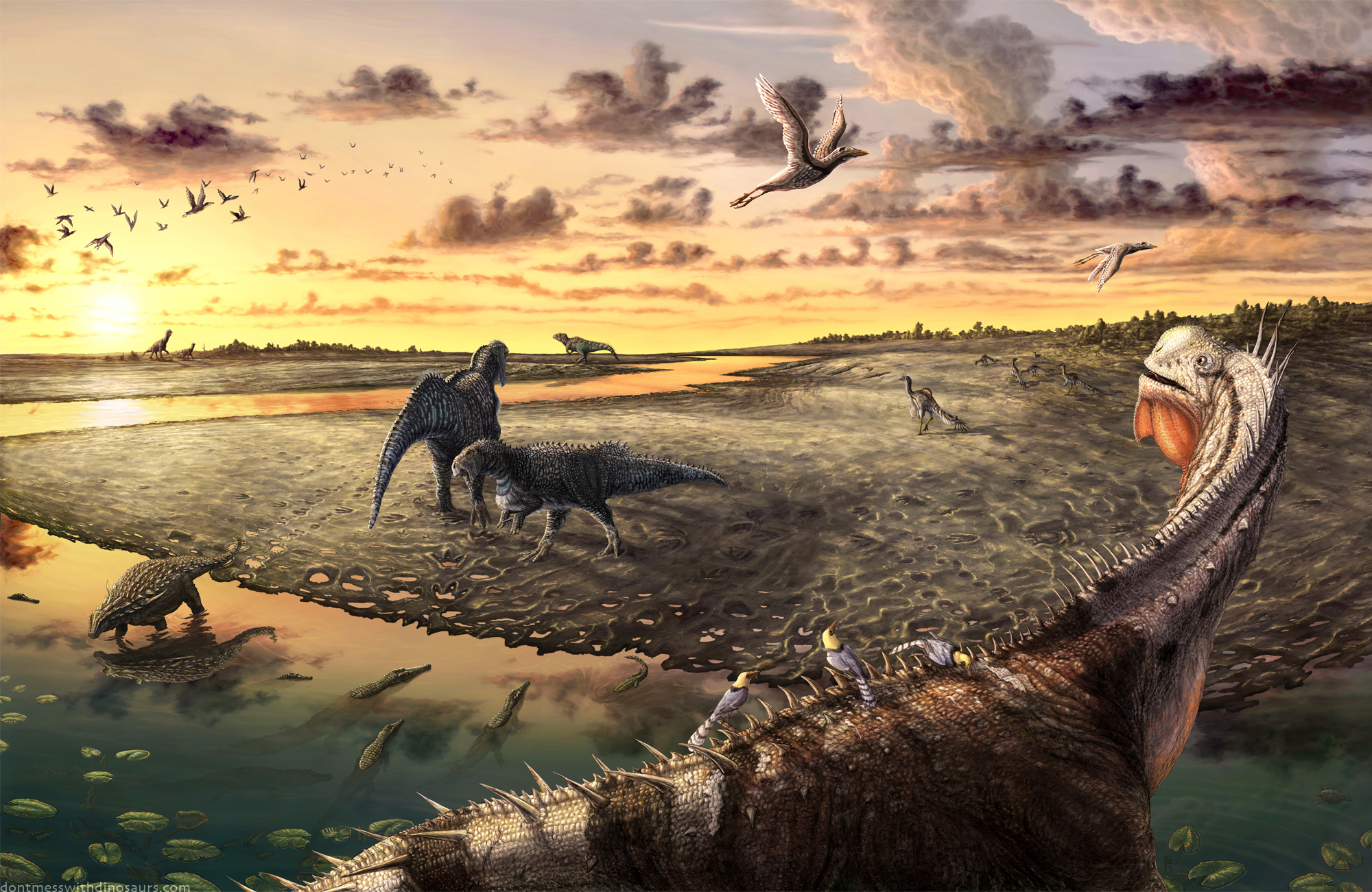
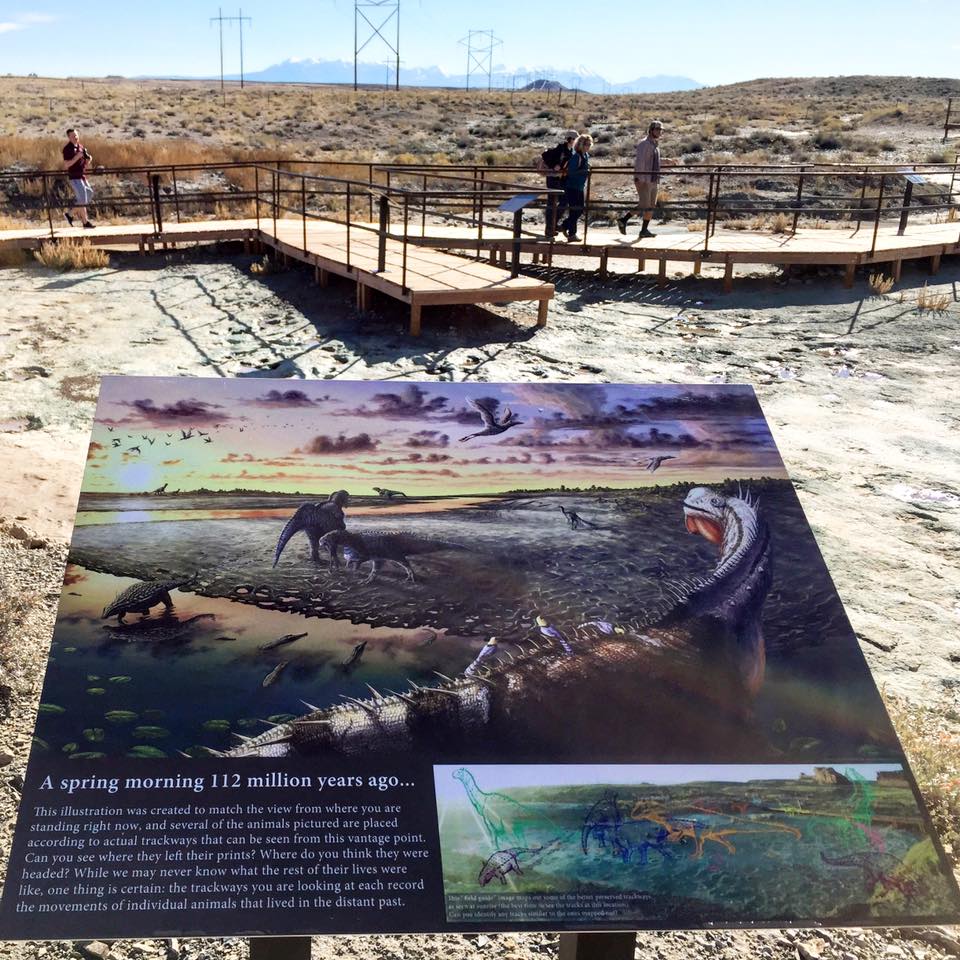
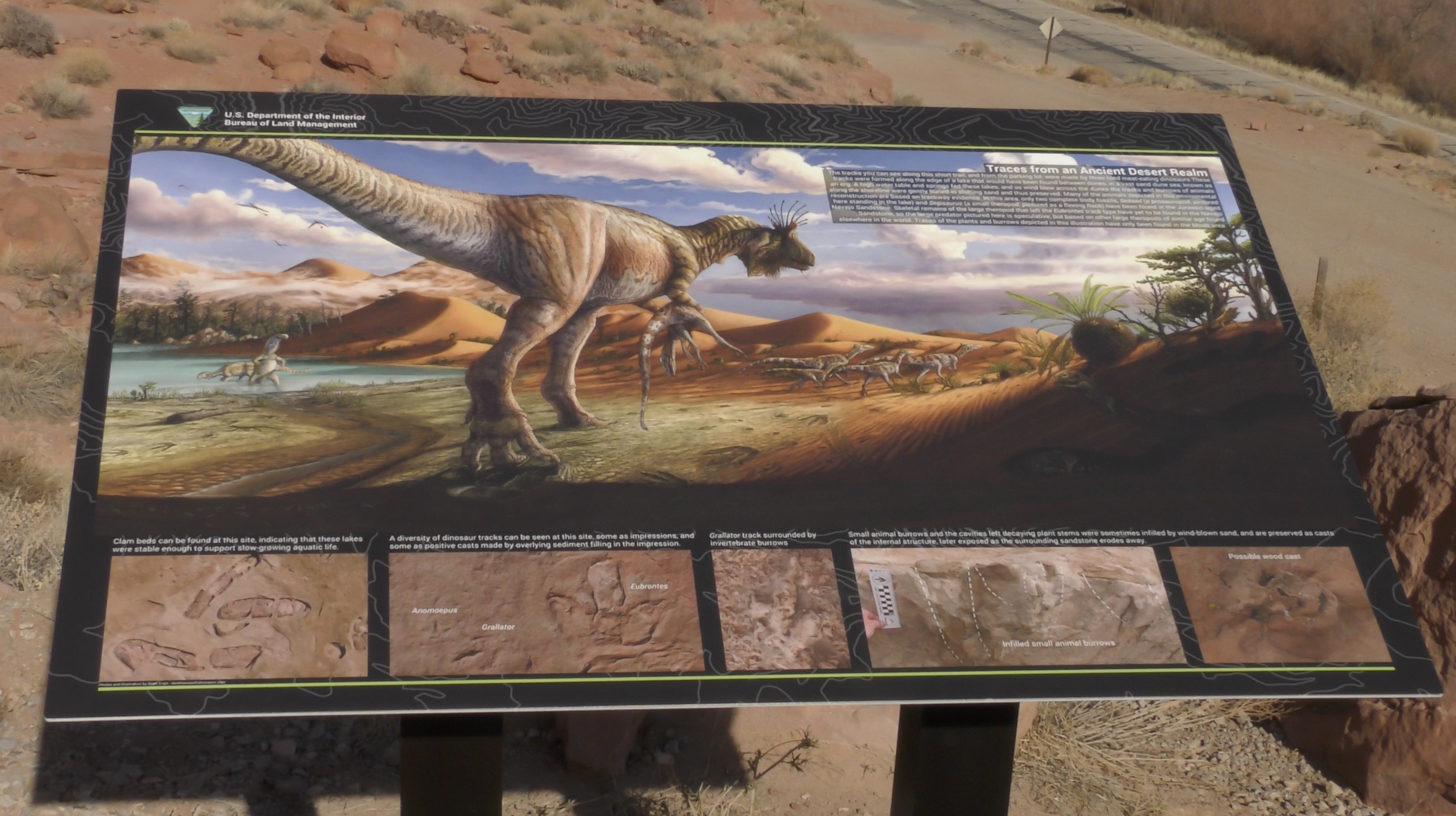
My Modern Look at Dilophosaurus video also features art commissioned by paleontologist ReBecca Hunt-Foster through funding from Utah BLM / Utah Friends of Paleontology. The scene depicting an early Jurassic tracksite was created for an interpretive panel now at the Poison Spider Dinosaur Tracksite near Moab Utah. You can explore this fascinating early Jurassic tracksite (for free) on your public lands near Moab Utah. More information here: https://www.discovermoab.com/dinosaur-museums-and-hikes/
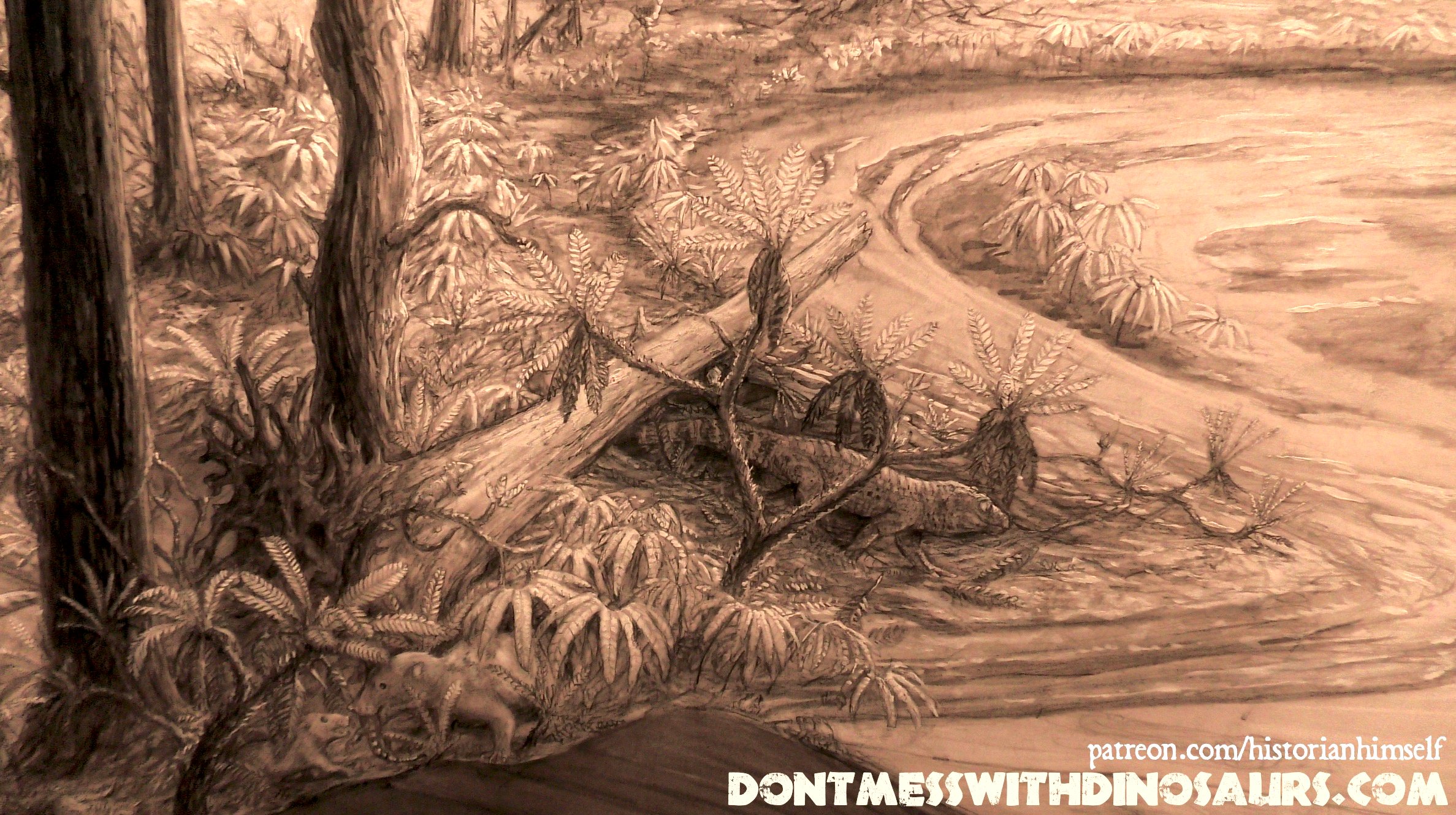
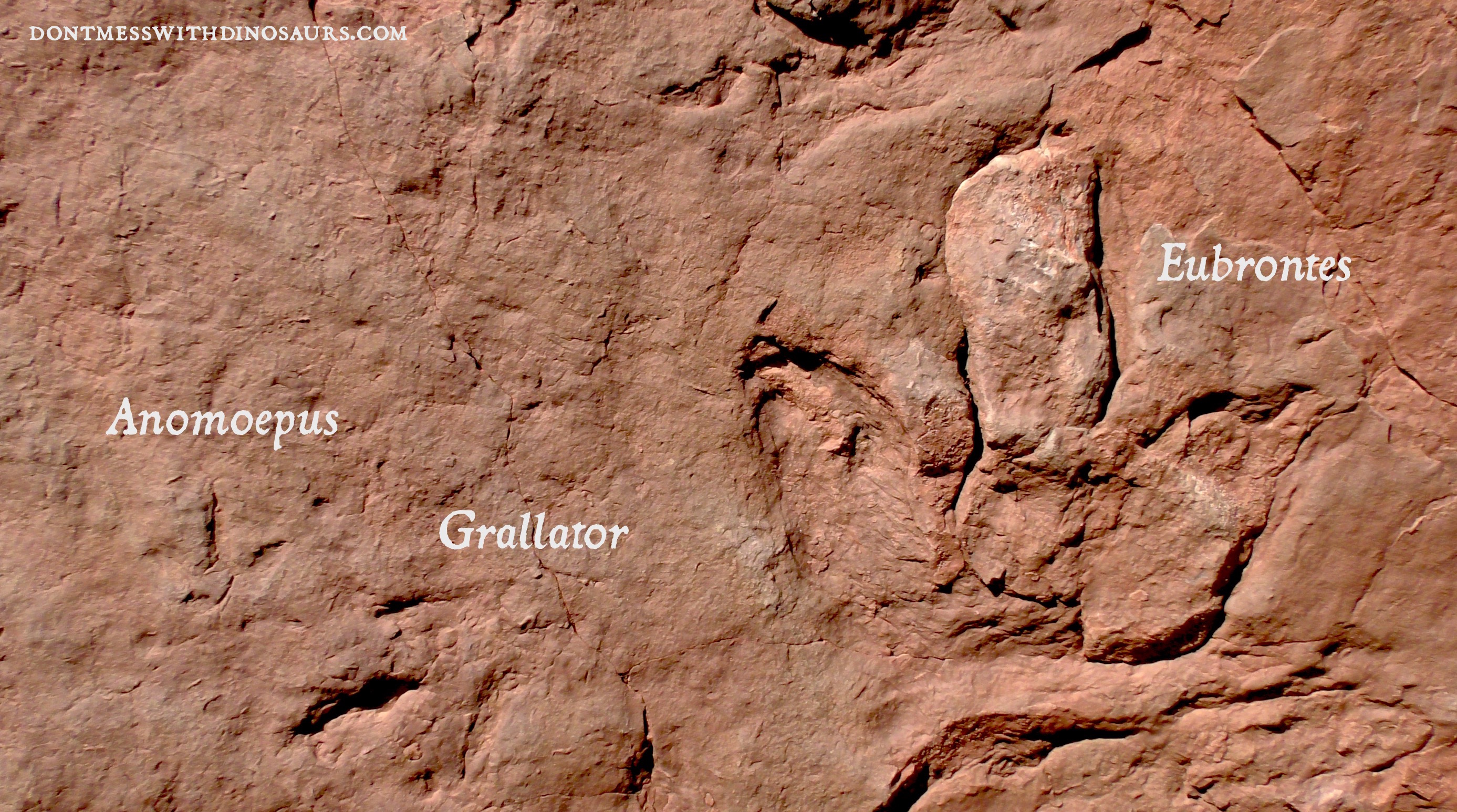
For those that can’t make the visit: the tracksite preserves a variety of tracks from early Jurassic animals along the shore of a lake that had formed in the middle of a dune field. If you look closely at my art you can make out many of the track makers: from tiny insects and protosuchid crocs, to early mammal relatives and, of course, various theropod dinosaurs.
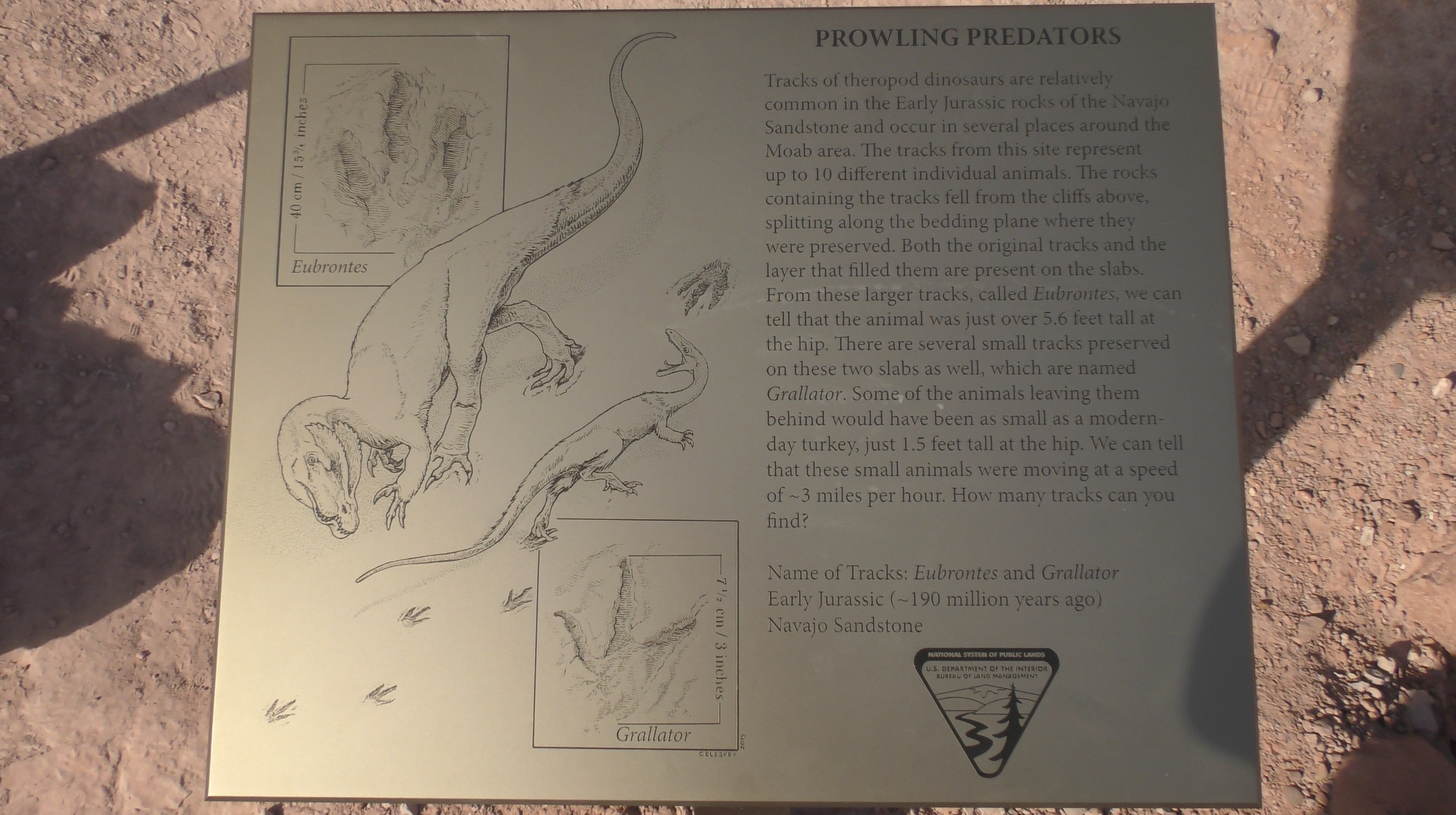
The site also features signs with interpretive art by the great Matt Celeskey
The late Triassic scene featured in the above video is a work in progress, also commissioned by ReBecca/UFOP for another tracksite on the edge of the Bears Ears National Monument. The tracksite is called the Shay Canyon Tracksite and features a bunch of tracks of primarily non-dinosaur weirdos from the Triassic. The animals in my art are reconstructed after skeletal finds from Petrified Forest, and several Utah Sites being excavated by Randy Irmiss and Andrew Milner.
The end Triassic extinction, and the recovery of earth’s ecologies that followed in the early Jurassic is a really important time for our species to study & understand because it relates directly to climate change. Data from geology, paleobotany and paleontology suggests that a huge catestrophic extinction that ended the Triassic period was brought about by a sudden increase in atmospheric CO2 which cause runaway global warming and ocean acidification. While the CO2 spike at the end of the Triassic was caused by volcanic eruptions in what is now the central Atlanic which cooked through a bunch of marine carbonate rocks and released the vast amounts of CO2 stored in them, the latest data indicates that the rate of CO2 flooding into the atmosphere at the end of the Triassic was about the same as the rate at which humans are flooding the atmosphere with CO2 by burning carbon-rich fossil fuels. This is really really scary. You should be shook. This extinction wiped out many of the most badass rugged, gnarly, armored prehistoric monsters that have ever lived, and which had thrived all over the planet for millions of years when the extinction took place. Here are a few links to get you started on your journey of understanding extinction and the role we play in it: https://en.wikipedia.org/wiki/Triassic%E2%80%93Jurassic_extinction_event https://ucmp.berkeley.edu/seedplants/ginkgoales/ginkgofr.html https://www.sciencedirect.com/science/article/pii/S1342937X13003043